


In one drawing, dozens of men sit crammed into a single room, hunched with their knees together, every inch of space occupied. In another, they lie back to back on the floor, their faces straining with discomfort.
Fourteen sketches smuggled out of Myanmar’s Insein Prison and interviews with eight former prisoners offer a rare glimpse inside the country’s most notorious jail, where thousands of political prisoners have been sent since last year’s military coup and communication with the outside world is sharply limited.
The rough, blue-ink sketches show daily life for groups of male prisoners in their dormitories, queuing for water from a trough to wash, talking or lying on the floor in the tropical heat.
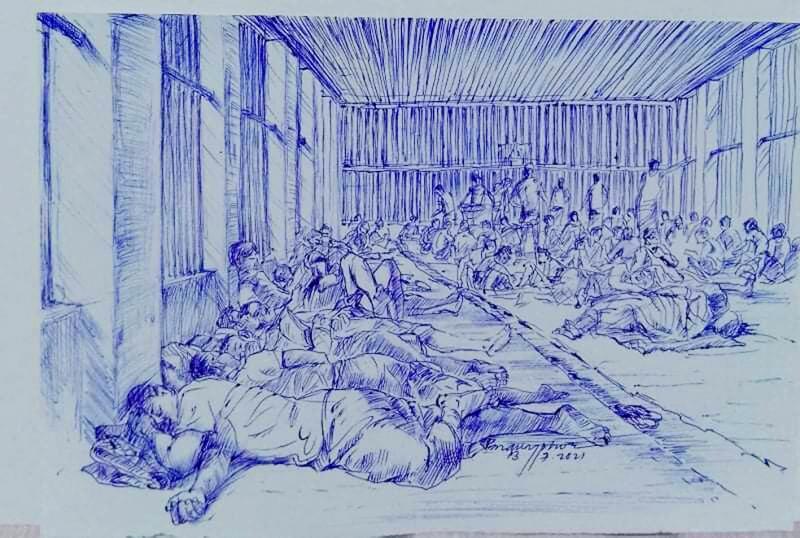
Photo: Reuters
Beyond those depictions, the eight recently released inmates said the colonial-era facility in Yangon is infested with rats, a place where bribes are common, prisoners pay for sleeping space on the floor and widespread illness goes untreated.
“We’re no longer humans behind bars,” said Nyi Nyi Htwe, 24, who smuggled the sketches out of the prison when he was released in October, after spending several months for a defamation conviction, on charges he denies, in connection with joining protests against the coup.
The accounts by former inmates could not be independently verified.
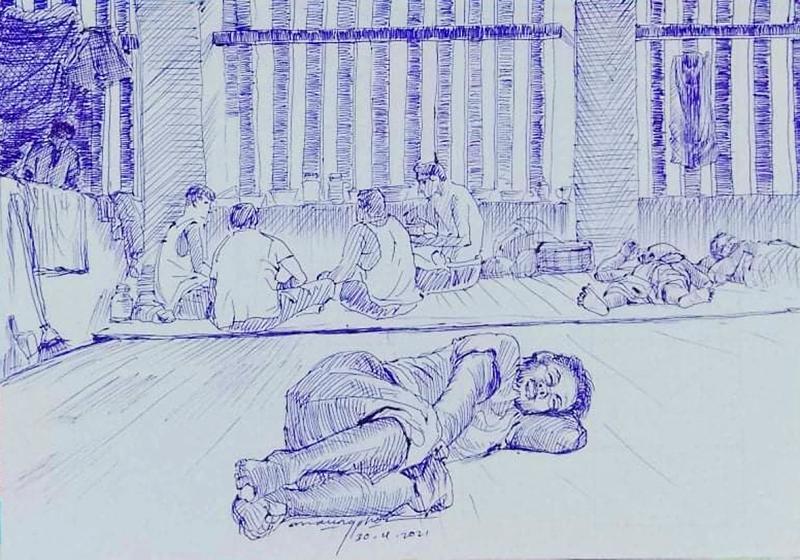
Photo: Reuters
Myanmar’s junta, which seized power from the elected government of Nobel laureate Aung San Suu Kyi, and prison administration did not respond to multiple requests for comment on conditions shown in the sketches and described by the former inmates.
Rights groups including the International Committee of the Red Cross said that they have been denied access to the jail.
Built by the British in 1871, Insein is Myanmar’s largest prison, housing many people arrested for opposing the junta.
Reuters journalists Wa Lone and Kyaw Soe Oo, convicted of breaking Myanmar’s Official Secrets Act in 2017, spent most of their 511 days behind bars in Insein. They were released in a 2019 amnesty, before the latest coup.
PRISON POPULATION SWELLS
The artist drew the prison sketches between April and July of last year. Later released, he declined to be interviewed or identified, telling Nyi Nyi Htwe he feared rearrest.
Nyi Nyi Htwe, who met the artist in prison, said he sketched prisoners if asked and drew prison scenes wherever he went, saying he felt more relaxed while drawing. He gave Nyi Nyi Htwe the sketches as a birthday present.
Nyi Nyi Htwe said he smuggled them out on his release to show friends, family and others the conditions inside.
Since the coup, 10,072 people have been detained in the Southeast Asian country, including Suu Kyi and most of her cabinet, and over 1,730 people have been killed, according to the nonprofit Assistance Association for Political Prisoners, whose tallies are widely cited. The junta has said AAPP’s figures are exaggerated.
Many of those detained have been sent to Insein.
Built to incarcerate around 5,000 people, the prison has seen inmate numbers swell to over 10,000 since the coup, said a spokesperson for the AAPP. The figures could not be confirmed.
The sketches reflect the increase in the months after the coup, said Nyi Nyi Htwe.
In one from late April, a few prisoners sit apart in their dorm, some reading books. A picture from June shows about 60 people in the same room — many lying in tight rows down the center, the rest hunched against the walls.
Nyi Nyi Htwe said he and as many as 100 others were packed well beyond capacity into a room where they “slept a finger-width apart,” and that he watched prison officers beat inmates with batons and had to pay bribes to send messages to family that they told him often did not arrive.
‘LUCKY NOT TO DIE’
With the overcrowding came water shortages, disease, fatigue, fighting between prisoners and flourishing bribery, said people released in recent months.
“Rats ran around in the room. The toilets were filthy. The food was mixed with flies. Those who couldn’t pay a bribe had to sleep next to the toilet bucket,” said Sandar Win, a 42-year-old social worker jailed at Insein for several months for defamation after protesting against the junta.
She was released under an amnesty while awaiting sentencing for the charges, which she denies. She has since fled Myanmar.
Access to outdoor latrines was limited, forcing prisoners to defecate in buckets in their rooms, three women former inmates said. These unsanitary conditions allowed skin and bowel diseases to spread, and there was little medical help, they said.
A handwritten note by a group of anonymous Insein inmates, smuggled out to a prominent human rights activist in February, alleges several instances of medical negligence, including failure to treat people beaten unconscious and a person who had suffered a stroke and was paralyzed.
“These cases are happening right in front of us,” said the note, which was shown to Reuters by the activist, Nan Lin. “We request urgent help from international organizations and local organizations.”
Reuters could not independently verify the note’s authenticity, but several former inmates said they had witnessed or suffered beatings by guards and there was little medical support.
Despite a COVID-19 vaccination drive at Insein last summer that was publicized on state media, former inmates said the coronavirus thrived in the crowded prison. At least 10 prisoners are suspected to have died from the disease, according to the AAPP.
Nyi Nyi Htwe, who has joined an armed rebel group, said nearly two-thirds of his dormitory were sick with COVID symptoms last summer.
“They put all the sick people in our room — high fever, coughing and ill,” he said. “I was lucky enough not to die.”

Just after 6am, I walked up to the ticket gate at Taipei Main Station and entered the Taiwan Railway platform without scanning any ticket; instead, I flashed the Sanrio Fun Rail pass on my phone to the gate worker and was admitted. I found my train and prepared to board. My destination? This very same station. I was embarking on a 13-hour journey on one of two round-the-island trains operated by ezTravel. They run each day, one counterclockwise around the island and one clockwise. They differ in a number of ways from an ordinary Taiwan Railway train and can make for
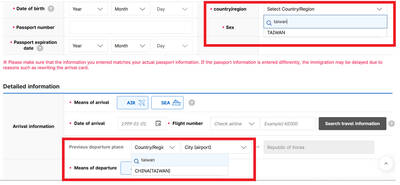
Jason Han says that the e-arrival card spat between South Korea and Taiwan shows that Seoul is signaling adherence to its “one-China” policy, while Taiwan’s response reflects a reciprocal approach. “Attempts to alter the diplomatic status quo often lead to tit-for-tat responses,” the analyst on international affairs tells the Taipei Times, adding that Taiwan may become more cautious in its dealings with South Korea going forward. Taipei has called on Seoul to correct its electronic entry system, which currently lists Taiwan as “China (Taiwan),” warning that reciprocal measures may follow if the wording is not changed before March 31. As of yesterday,
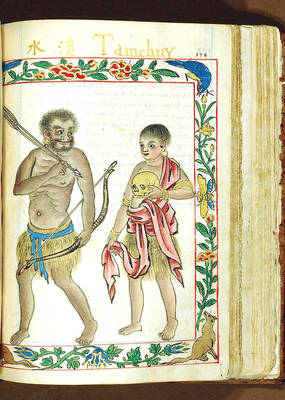
The Portuguese never established a presence on Taiwan, but they must have traded with the indigenous people because later traders reported that the locals referred to parts of deer using Portuguese words. What goods might the Portuguese have offered their indigenous trade partners? Among them must have been slaves, for the Portuguese dealt slaves across Asia. Though we often speak of “Portuguese” ships, imagining them as picturesque vessels manned by pointy-bearded Iberians, in Asia Portuguese shipping between local destinations was crewed by Asian seamen, with a handful of white or Eurasian officers. “Even the great carracks of 1,000-2,000 tons which plied
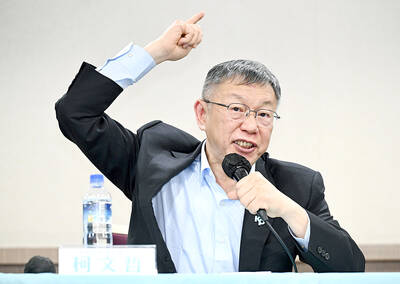
On Thursday, former Taipei mayor and founder of the Taiwan People’s Party (TPP) Ko Wen-je (柯文哲) was sentenced to 17 years in prison and had his civil rights suspended for six years over corruption, embezzlement and other charges. Seven others related to the case were also handed prison sentences, while two were found not guilty. It has been a bad week for the TPP. On Tuesday, prosecutors charged Chinese immigrant Xu Chunying (徐春鶯) with suspicion of taking part in Beijing-directed election interference. Xu has strong links to the TPP, which once offered her a party list legislator nomination. Tuesday also


 RSS
RSS