


Edward Greve orders all his meals in Taiwanese. If the server doesn’t understand, he’ll switch to English and then Mandarin as a last resort. But, he says, when a Taiwanese friend does the same, especially in Taipei, he’s often criticized for being vulgar or low-class.
“Taiwanese should be treated for what it is, but it really is discriminated against,” Greve, a US expat who goes by A-iong (阿勇), says. “As a foreigner, I don’t face that directly, but when I’m with people who speak Taiwanese, I see it.”
A-iong is one of a growing number of social media content creators who are promoting Taiwan’s struggling non-Mandarin languages that were suppressed for decades by the government. While attitudes and policy are changing, stereotypes or the lack of resources make preserving these languages a challenge.
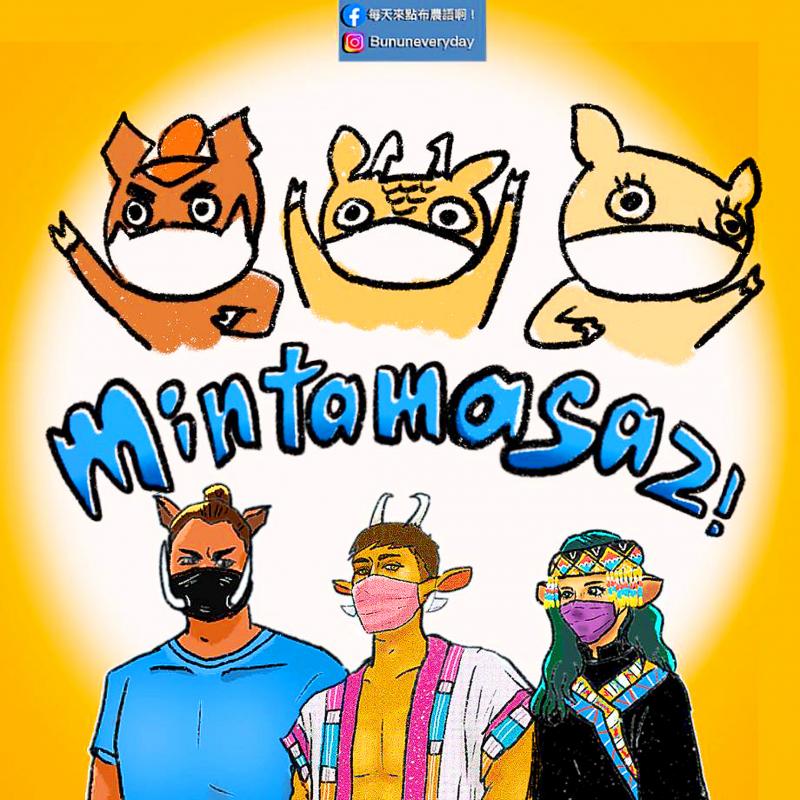
Photo courtesy of Umav Ispalakan
YouTuber Tsao Chen-ying (曹辰瑩), has only been learning the little-known Matsu dialect of the Eastern Min (閩東) language for less than a year. Unaccustomed to speaking the language with young people, Tsao often has to remind the older people on the remote offshore islands not to revert to Mandarin in her videos, which also introduce Matsu culture.
Umav Ispalakan’s Facebook page featuring Bunun language illustrations has become a conduit to present deeper issues such as cultural identity, indigenous rights and persistent stereotypes.
“When you start learning your mother tongue, you will inevitably run into these issues,” she says. “Why are so many young people unable to speak them? That has a lot to do with our history … If we don’t look at it from a transitional justice or a decolonization perspective, it’s really hard to even scratch the surface of our people’s circumstances and their needs.”
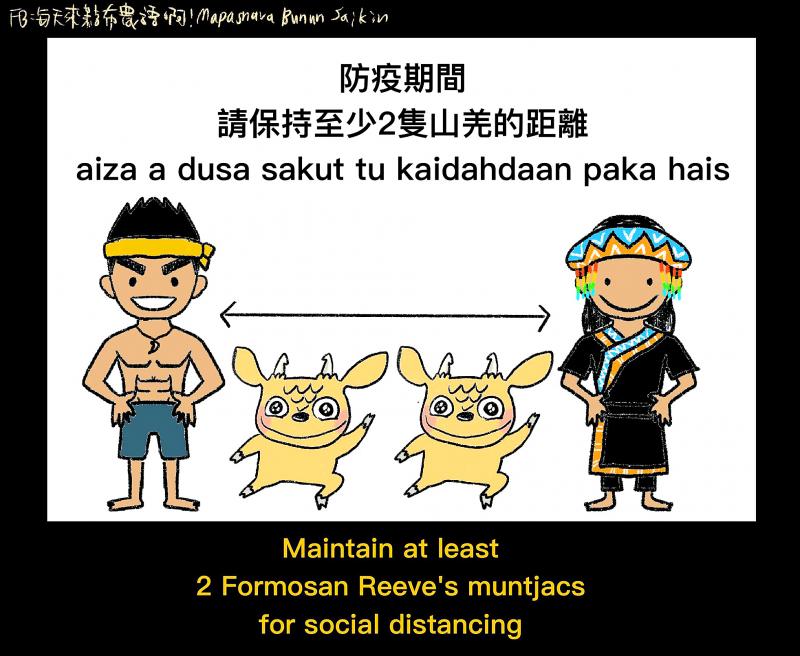
Photo courtesy of Umav Ispalakan
Neither three proclaim to be language teachers, but they hope that they can bring positive attention to these languages and serve as an alternative resource.
“Independent media and other non-official sources are also needed,” Umav says. “Sometimes official material differs from how the local community speaks, and learners should cross-reference between the two. I hope that there will be even more resources for the next generation.”
SPEAK THE LANGUAGE
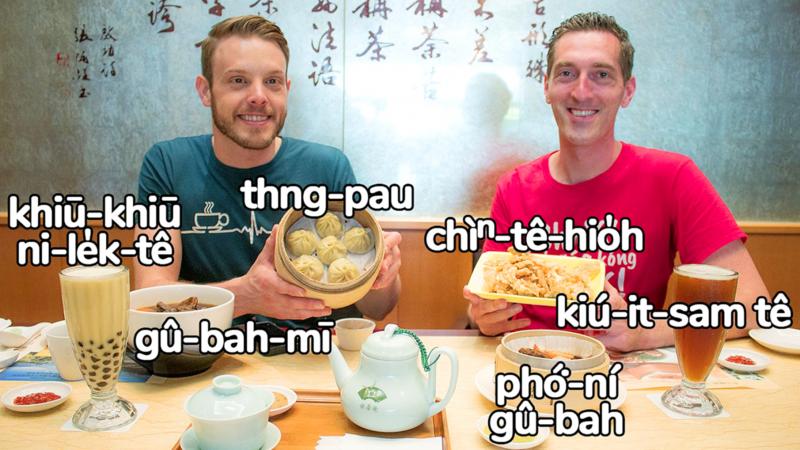
Photo courtesy of Aiong Taigi
Like most people her age from the outlying island of Matsu, Tsao’s parents barely spoke to her in the Matsu dialect. She drifted even further from it after living in Shanghai for six years, but after returning to Taiwan last summer due to the COVID-19 pandemic, she felt driven to learn it.
“At first, I wanted to make a podcast to record my progress,” she says. “But I couldn’t speak it well yet, and this is a language that few people know, so I wanted to add subtitles. Only later did I become a YouTuber.”
Tsao started by writing a script for her videos and asking her mother to correct it and read it back to her. In half a year, she was able to internalize the language and stop translating from Mandarin. She eventually moved back to Matsu, where she tries to speak it to everyone she sees.
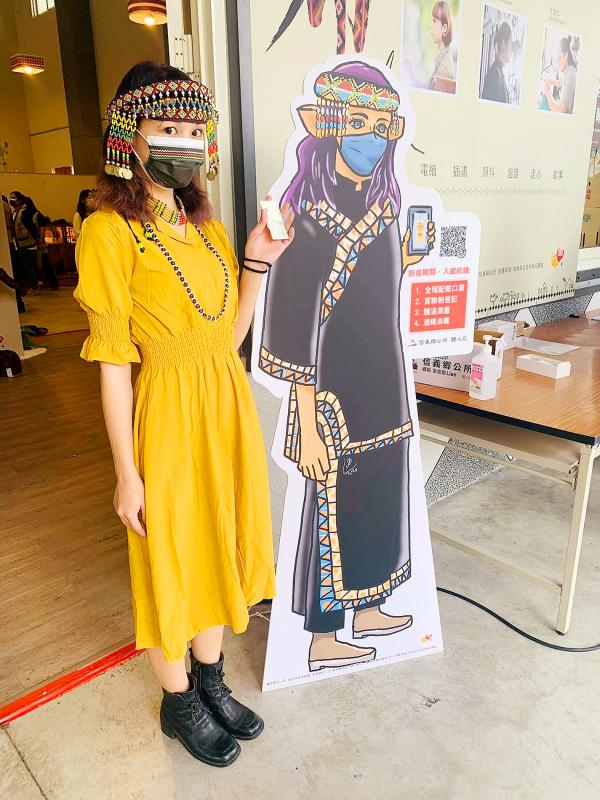
Photo courtesy of Umav Ispalakan
“Their first reaction was to reply in Mandarin, but I kept telling them, speak the language, speak the language,” she says.
At first, her family found her new-found interest annoying as she bugged them constantly, and some elders could not see the point of her exercise.
“Before, it was forbidden to speak it, and people who went to other places to study or work were discriminated against because of their accent,” Tsao says.
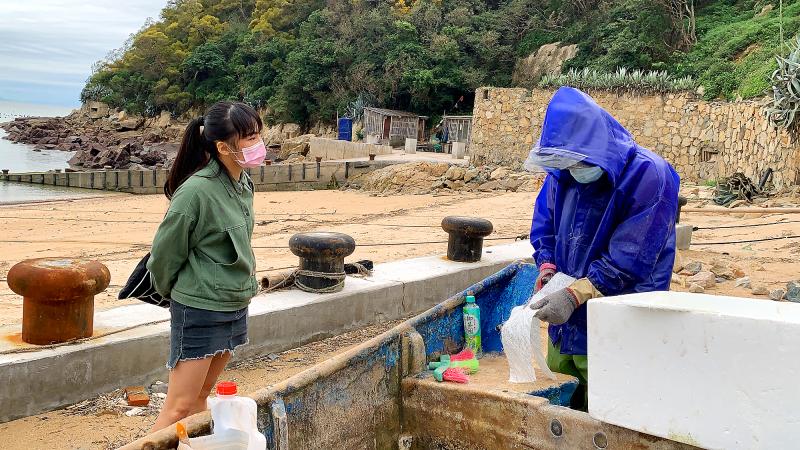
Photo courtesy of Tsao Chen-ying
But soon, people began to recognize her efforts.
“I wanted to use it to speak to the older generation,” she says. “If you use a language they’re more familiar with, you’ll get a deeper understanding and they’ll be more willing to share as well.”
Tsao feels that she’s inspired her friends too, and she’s noticed them speaking more in the Matsu dialect these days. And she’s reached others who know very little about Matsu or that it has a unique language.
“The old way of learning language is not suitable for today’s age,” Tsao says. “We are used to absorbing information in more visual and entertaining ways. Only if you enjoy the process can you stay motivated.”
For more information, visit: bit.ly/3DB620E.
CHALLENGING MANDARIN
A-iong had no idea that Taiwanese existed when he arrived in Taiwan from the US about 13 years ago. He started tackling the language when he moved to Kaohsiung around 2011, but says he’s only been seriously studying it for the past five years.
“What drew it to me initially was that it was what people spoke there,” he says. “There’s nothing fancy about it.”
What pulled him even in more was how few resources he could find, which challenged him to try even harder.
“Once I started understanding enough of it to sing songs, listen to speeches, I found them more interesting in Taiwanese than Mandarin,” he says. “I thought, ‘This is really cool, this is Taiwanese culture.’”
A-iong hopes to challenge the hegemony Mandarin has over Taiwan, which dominates after being forced upon the populace after World War II.
“What’s the role of Mandarin? If you want an international language that the whole world uses, there’s English, which people demonstrably want. What else do they want? They want to be Taiwanese, then there should be an English-Taiwanese thing going on.”
A-iong adds that any language commonly spoken on Taiwan would work too, but Taiwanese has the highest chance of breaking through.
“You’re not going to convince the population here to do everything in Pangcah or Paiwan — that would be great, but it’s not going to happen. With Taiwanese, there’s enough of a user base that it can happen. My hope is that Taiwanese can be the first one to break through the Mandarin wall, and once that’s down the people can be like, hey, we can do ours too.”
But it won’t happen as long as his Taiwanese friends keep getting glances or sneers for speaking it.
“I recognize that being white, people will take a second look whereas if it were a Taiwanese person they wouldn’t,” he says. “Maybe I can be a voice for some people who wouldn’t have gotten to speak up.”
A big part of A-iong’s videos focus on writing Hoklo, and he’s published a translation of The Little Prince with Chinese characters and romanized Taiwanese. This is important since much communication is done through text messaging today.
“Some people say it doesn’t matter, we’ll just talk, but it’s really hard to just pick up a language after a certain age. You need text. If you don’t have a commonplace written language, it’s going to die. You see a huge amount of information in writing every day now, and if everytime you see it you have to switch back to Mandarin or English, you’re not training your Taiwanese mind.”
Finally, A-iong also hopes the Taiwanese-speaking community cuts learners some slack: “One problem is that they have a very narrow band of acceptability; you’ve got to be right on the mark or people will complain and make fun of you.”
For more information, visit: bit.ly/3y3Ncy8.
IDENTITY STRUGGLES
As a half Bunun, half Atayal Aborigine, language is closely tied to Umav’s identity and cultural self-esteem. She recalls when she was 15, her school made her to use her now-defunct Chinese name for two years because her eight-character long Bunun name was too long.
“I actually felt embarrassed that I was causing them trouble, and my student ID showed a different name than my personal ID for two years,” she says. “Thinking back, that was ridiculous. After I learned to speak up for myself, all these experiences became my source of inspiration.”
Although Umav’s parents took pride in their identity, they spoke different languages and communicated in Mandarin at home. The family also moved around a lot, and Umav had little opportunity to practice in a community.
“My father is a Bunun language teacher, but he never forced us to speak it,” she says. “He wanted us to truly identify with it and desire to learn it on our own initiative.”
Umav started her illustration page in 2016 adding in Bunun words and phrases that she learned from her father. Today, the page seems to be just as much about identity, history and depicting the challenges and stereotypes indigenous people face, as she hopes to provide an alternative portrayal of her people than the mainstream media.
“Sometimes my posts are about language, sometimes current events, and sometimes I call offenders out on it. There are comics about the absurd things we encounter regularly as Aborigines.”
Interestingly, her page also attracted overseas Han Taiwanese, who tell her that they finally understand how she feels after living abroad as minorities.
“But this is every day for us,” she says. “I’m not trying to gain sympathy, but mainstream society just won’t learn. You all should reflect and try to understand our situation and learn what is respect and nonviolent communication. There is no way I can just look at this rationally. I invest a great deal of emotion in running this page.”
Some of her friends warn her about speaking too directly, but Umav doesn’t feel like pretending anymore.
“There is a reason we don’t speak our mother tongue, and that is because of the past unjust policies of the government. We have to continue this conversation. My drawings may be pretty and cute, but once you click in, you’ll see that what I want to say is quite serious.”
Umav acknowledges that it is hard to find an environment to speak Bunun these days.
“You have to be deliberate and diligent about it if you want to learn. But I’m not saying that one needs to speak their mother language to qualify as indigenous. There are many ways to embrace and preserve our culture.”
Umav hopes that she can inspire younger Aborigines who are going through similar identity struggles.
“I hope that they don’t feel so lonely, and my page can keep them company and also teach them how to educate others.
“Asa kata tu muskun mintamasaz,” she says. Let’s work hard together.
For more information, visit: www.facebook.com/bununeveryday.
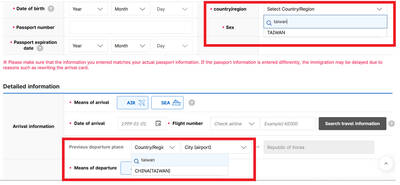
Jason Han says that the e-arrival card spat between South Korea and Taiwan shows that Seoul is signaling adherence to its “one-China” policy, while Taiwan’s response reflects a reciprocal approach. “Attempts to alter the diplomatic status quo often lead to tit-for-tat responses,” the analyst on international affairs tells the Taipei Times, adding that Taiwan may become more cautious in its dealings with South Korea going forward. Taipei has called on Seoul to correct its electronic entry system, which currently lists Taiwan as “China (Taiwan),” warning that reciprocal measures may follow if the wording is not changed before March 31. As of yesterday,

The Portuguese never established a presence on Taiwan, but they must have traded with the indigenous people because later traders reported that the locals referred to parts of deer using Portuguese words. What goods might the Portuguese have offered their indigenous trade partners? Among them must have been slaves, for the Portuguese dealt slaves across Asia. Though we often speak of “Portuguese” ships, imagining them as picturesque vessels manned by pointy-bearded Iberians, in Asia Portuguese shipping between local destinations was crewed by Asian seamen, with a handful of white or Eurasian officers. “Even the great carracks of 1,000-2,000 tons which plied

It’s only half the size of its more famous counterpart in Taipei, but the Botanical Garden of the National Museum of Nature Science (NMNS, 國立自然科學博物館植物園) is surely one of urban Taiwan’s most inviting green spaces. Covering 4.5 hectares immediately northeast of the government-run museum in Taichung’s North District (北區), the garden features more than 700 plant species, many of which are labeled in Chinese but not in English. Since its establishment in 1999, the site’s managers have done their best to replicate a number of native ecosystems, dividing the site into eight areas. The name of the Coral Atoll Zone might

Nuclear power is getting a second look in Southeast Asia as countries prepare to meet surging energy demand as they vie for artificial intelligence-focused data centers. Several Southeast Asian nations are reviving mothballed nuclear plans and setting ambitious targets and nearly half of the region could, if they pursue those goals, have nuclear energy in the 2030s. Even countries without current plans have signaled their interest. Southeast Asia has never produced a single watt of nuclear energy, despite long-held atomic ambitions. But that may soon change as pressure mounts to reduce emissions that contribute to climate change, while meeting growing power needs. The


 RSS
RSS