


From a canny look to a quizzical grumble, dogs have long conveyed the impression they know more about what their owners are up to than what might be expected. Now researchers have found fresh evidence of canine savviness, revealing dogs seem to be able to tell whether human actions are deliberate or accidental.
While theory of mind — the ability to attribute thoughts to others and to recognize that can result in certain behaviors — is often thought to be uniquely human, the study suggests at least some elements may be common to canines.
“Our findings provide important initial evidence that dogs may have at least one aspect of theory of mind: the capacity to recognize intention-in-action,” the authors write, noting among other animals to show such an ability are chimpanzees, African grey parrots and horses.
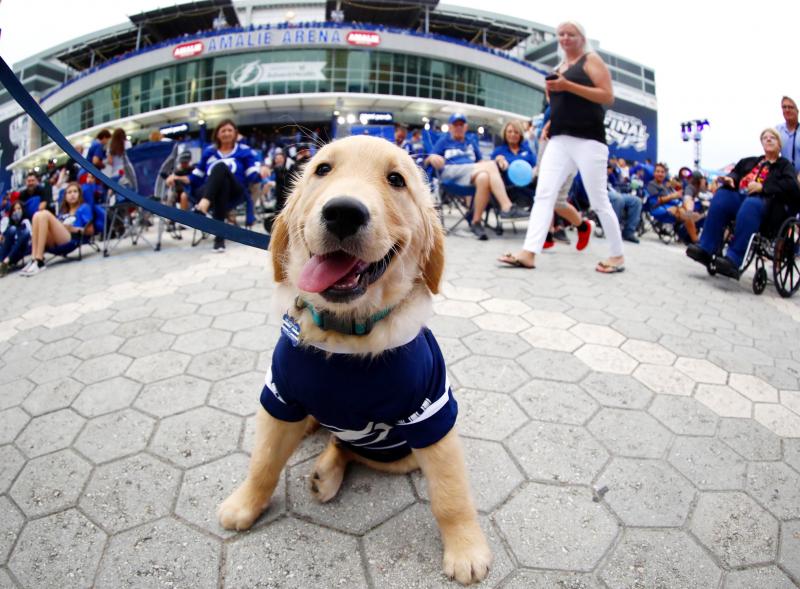
Photo: USA TODAY Sports
Previous research has suggested dogs can track human attention to decide when to snaffle food, and respond to pointing gestures. Additionally, many dogs get excited over certain cues that may hint at a forthcoming action — such as when a leash is picked up. However, experts say it was unclear whether dogs really grasp the notion of human intention.
Writing in the journal Scientific Reports, scientists in Germany describe how they sought to unpick the issue by asking a researcher to pass treats to a dog through a gap in a screen.
During the process the researcher tested the dog on three conditions: in one they attempted to offer a treat but “accidentally” dropped it on their side of the screen and said “oops!” In another, they tried to offer a treat but the gap was blocked. In a third, the researcher offered the treat, but then suddenly withdrew it and said: “Ha ha!”
“The idea of this experiment is that in all three situations they don’t get the food for some reason,” said Dr Juliane Brauer, co-author of the research from Max Planck Institute for the Science of Human History, adding that the key difference is whether that is down to the treat is being intentionally withheld or — at least apparently — not.
The results, based on analysis of video recordings of 51 dogs, reveal that the dogs waited longer before walking around the screen to get the treat directly in the case of the sudden withdrawal of the morsel than for the other two situations. They were also more likely to stop wagging their tail and sit or lie down.
The team writes that the dogs clearly show different behavior between the different conditions.
“This indicates that dogs indeed distinguish intentional actions from unintentional behavior,” they write.
However, they note further work is needed to explore whether dogs may have previously learned not to approach food that is withdrawn, or were responding to the different exclamations from the researcher.
Suilin Lavelle, a lecturer in philosophy at the University of Edinburgh, who was not involved in the study, said that while dog owners may find the outcome unsurprising, it is far from trivial.
“Distinguishing between intentional and non-intentional behavior within one’s species brings critical survival advantages; being able to generalize this to another species, albeit one that co-evolved with you lends further support to the claim that dogs are distinguishing the behaviors based on their intentions rather than some other cue,” she said.
While Lavelle said it was right the authors were cautious about how this ability is acquired, and noted it was possible dogs less familiar with humans might not make the same distinction, she said demonstrating the ability in domesticated animals was nevertheless a promising start.
But, Lavelle said: “Whether this ability is sufficient to attribute theory of mind to dogs is a more vexed question, as researchers debate just what level of understanding of another’s psychological states is required to merit this label.”
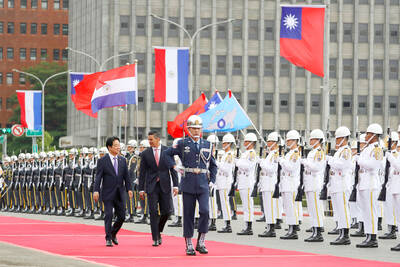
“China wants to unify with Taiwan at the lowest possible cost, and it currently believes that unification will become easier and less costly as time passes,” wrote Amanda Hsiao (蕭嫣然) and Bonnie Glaser in Foreign Affairs (“Why China Waits”) this month, describing how the People’s Republic of China (PRC) is playing the long game in its quest to seize Taiwan. This has been a favorite claim of many writers over the years, easy to argue because it is so trite. Very obviously, if the PRC isn’t attacking Taiwan, it is waiting. But for what? Hsiao and Glaser’s main point is trivial,
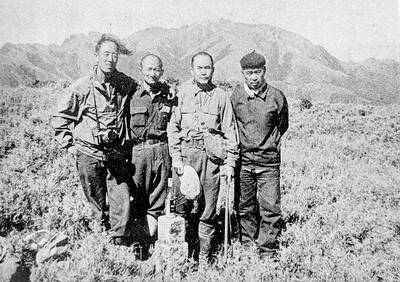
May 18 to May 24 Gathered on Yangtou Mountain (羊頭山) on Dec. 5, 1972, Taiwan’s hiking enthusiasts formally declared the formation of the “100 Peaks Club” (百岳俱樂部) and unveiled the final list of mountains. Famed mountaineer Lin Wen-an (林文安) led this effort for the Chinese Alpine Association (中華山岳協會). Working with other experienced climbers, he chose 100 peaks above 10,000 feet (3,048m) that featured triangulation points and varied in difficulty and character. The list sparked an alpine hiking craze, inspiring many to take up mountaineering and competing to “conquer” the summits. A common misconception is that the 100 Peaks represent Taiwan’s 100 tallest
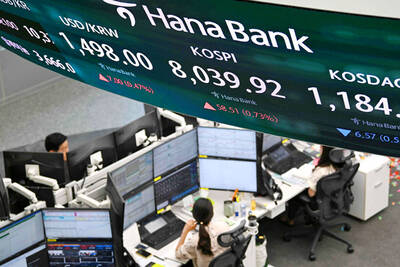
Taiwan’s overtaking of South Korea in GDP per capita is not a temporary anomaly, but the result of deeper structural problems in the South Korean economy says Chang Young-chul, the former CEO of Korea Asset Management Corp. Chang says that while it reflects Taiwan’s own gains, it also highlights weakening growth momentum in South Korea. As design and foundry capabilities become more important in the AI era, Seoul risks losing competitiveness if it relies too heavily on memory chips. IMF forecasts showing Taiwan widening its lead over South Korea have fueled debate in Seoul over memory chip dependence, industrial policy and

Yesterday, the Democratic Progressive Party (DPP) nominated legislator Puma Shen (沈伯洋) as their Taipei mayoral candidate, the Chinese Nationalist Party (KMT) put their stamp of approval on Wei Ping-cheng (魏平政) as their candidate for Changhua County commissioner and former legislator Tsai Pi-ru (蔡壁如) of the Taiwan People’s Party (TPP) has begun the process to also run in Changhua, though she has not yet been formally nominated. All three news items are bizarre. The DPP has struggled with settling on a Taipei nominee. The only candidate who declared interest was Enoch Wu (吳怡農), but the party seemed determined to nominate anyone


 RSS
RSS