


Vaccines are the latest flashpoint inflaming cross-strait tensions between China and Taiwan, as the latter tries to fend off its worst coronavirus outbreak since the pandemic began with a mostly unvaccinated population and the former rails against outside assistance from Taipei’s allies.
Global vaccination drives are widely seen as the only way out of the COVID-19 pandemic, but in Taiwan, just 3 percent of the population has received at least one dose. Now it is battling hundreds of cases a day and does not have enough vaccines for its 23.5 million people.
Affected by global shortages, low initial orders and accusations of geopolitical interference, it has received only a few million doses, and international allies are stepping up to help.
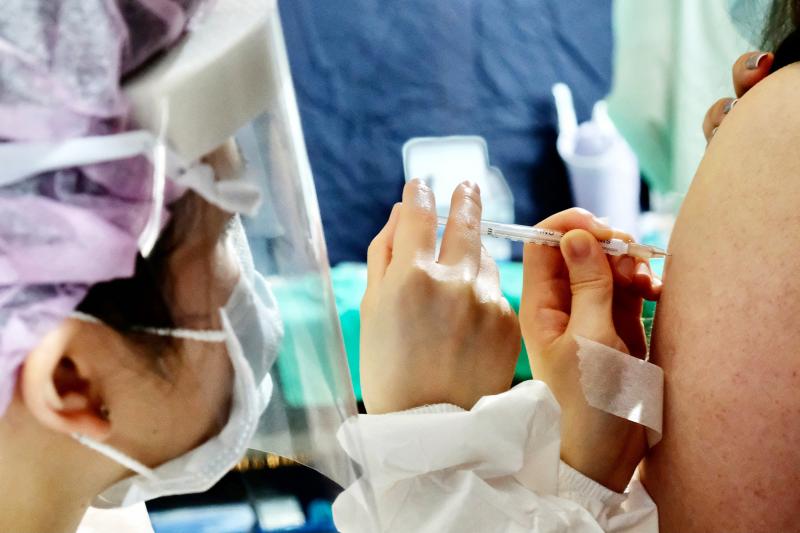
Photo: AFP
On 4 June, Japan sent a plane carrying 1.24 million AstraZeneca doses and days later a delegation of US senators flew to Taipei to announce a donation of 750,000 doses.
Both countries cited their close friendship with Taiwan and noted, respectively, Taiwan’s assistance to Japan after the 2011 tsunami and to the US early in the pandemic. The donations were enthusiastically welcomed by Taipei, with huge messages of thanks projected on to buildings in the city.
Beijing strongly objected. China’s foreign ministry suggested Japan was exploiting the pandemic “to put on political shows,” and accused the US of breaching the “one-China” principle, which asserts that Taiwan is a part of China.
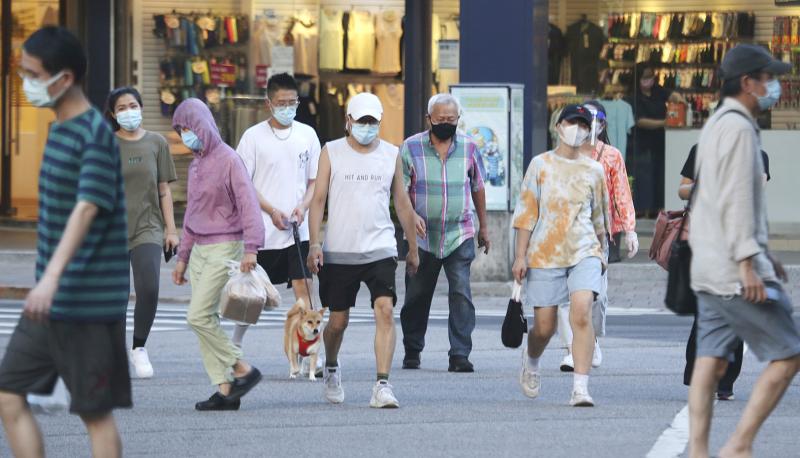
Photo: AP
Both donations showed how much less Tokyo and Washington worry about aggravating Beijing, amid deteriorating relations. Drew Thompson, a former US defense department official responsible for managing bilateral relations with China and Taiwan, said it was probably a logistical coincidence that Japan’s vaccines arrived on the hypersensitive anniversary of the Tiananmen Square massacre, and that the US senators flew in on a military plane. But previous administrations in Tokyo and Washington might have ensured they didn’t.
“The donations were less about the China relationship than they were about helping Taiwan,” Thompson said. “[Japan and the US] have a vested interest in supporting Taiwan. Taiwan is a major trading partner, a critical supply chain link, there’s over a million Japanese expats in Taiwan, there’s strong affinity between two cultures,” he said.
“Japan is really doing this because it’s in their interest to keep the population of Taiwan healthy,” he said, also citing Taiwan’s globally crucial semiconductor manufacturing.
“You’re not supporting Taiwan just to antagonize China, and that gets lost a lot in these conversations.”
Beijing says it has the answer to Taiwan’s problems, offering to supply vaccines to the government or, after Taiwan rejected that offer, directly to any resident who wants to fly to China for a jab.
China’s altruistic statements have been contradicted by its objections to the US and Japan donations, and by Taiwanese allegations (which China denies) that it actively blocked a deal Taiwan was working on with the German vaccine producer BioNTech.
“One of the major obstacles for Taiwan to obtain vaccines from foreign sources, such as BNT or even COVAX, is indeed the Chinese government,” said Chiou Wen-tsong (邱文聰), the director of Academica Sinica’s information law center.
Beijing considers Taiwan to be a breakaway province of China that must be retaken, by force if necessary. Under this constant existential threat, Taiwan’s government and population has low trust in Chinese vaccines.
If Taiwan accepted Chinese vaccines it would be the political “kiss of death for the DPP [Democratic Progressive Party],” Thompson said. “It’s quite likely China would take some sort of gratuitous swipe … see it as a capitulation or recognition of Beijing’s superiority.”
China said Fosun — the Shanghai-based manufacturer with exclusive regional production rights for Pfizer/BioNTech — had offered to supply Taiwan, but Taiwan had refused.
Thompson said there were scientific and transparency concerns about China’s vaccines, which made it unsurprising and potentially sensible for Taiwan to reject an offer of Chinese-developed vaccines. But if the Fosun offer is legitimate, refusing it is “entirely political.”
“Pfizer and BioNTech have a huge incentive to ensure that the Fosun product is equivalent, so I would think there is no concern,” he said. “There’s no reason not to take it.”
Polling has shown Taiwanese are largely opposed to receiving a Chinese-made vaccine, but not necessarily to a foreign vaccine produced in China, like the Fosun/BioNtech one.
Approval ratings for President Tsai Ing-wen (蔡英文) have plummeted from more than 70 percent to about 40 percent in the 12 months since her re-election, and her government is taking political heat for the outbreak and the vaccine shortage.
Before the current outbreak in Taiwan, so few members of priority groups were booking shots that authorities briefly opened vaccination up to the general population. But now community appetite is bigger than available supplies.
Minister of Health and Welfare Chen Shih-chung (陳時中) said Taiwan hoped to have 60 percent of the population receive at least one shot by October — a target that requires about 12 million doses and depends on no more delayed orders and on the production of domestic vaccines.
On Thursday, Chen said Taiwan had held talks with AstraZeneca to produce its vaccine but that the talks had fallen through. He previously said Taiwan was in talks with US companies about making their vaccines, though he did not name them.
Last week, a member of Taiwan’s vaccine review board who had recently resigned accused Tsai of putting undue pressure on the panel to approve domestic vaccines still in trial stage, when she publicly announced she expected doses to be available by July.
Under pressure, the government has said private organizations can import vaccines, though this is yet to happen and the offer is complicated by the fact that most vaccine manufacturers prefer to deal directly with governments.
The Chinese Nationalist Party (KMT) and several politicians at the local county level have sought to capitalize on the vaccine difficulties, leading to political slanging matches. But Lev Nachman, a visiting scholar at National Taiwan University, said it still seemed “in the DPP’s electoral interest not to get any China vaccines.”
Vaccine doses are being steadily administered to priority groups, and a domestic vaccine candidate was given emergency approval on Thursday. Nachman said these developments might keep the DPP’s head above the political water, but if not, the question of accepting Chinese vaccines could become more realistic.
“It would be foolish to say no, but it would be a measure of last resort,” Nachman said.

If one asks Taiwanese why house prices are so high or why the nation is so built up or why certain policies cannot be carried out, one common answer is that “Taiwan is too small.” This is actually true, though not in the way people think. The National Property Administration (NPA), responsible for tracking and managing the government’s real estate assets, maintains statistics on how much land the government owns. As of the end of last year, land for official use constituted 293,655 hectares, for public use 1,732,513 hectares, for non-public use 216,972 hectares and for state enterprises 34 hectares, yielding
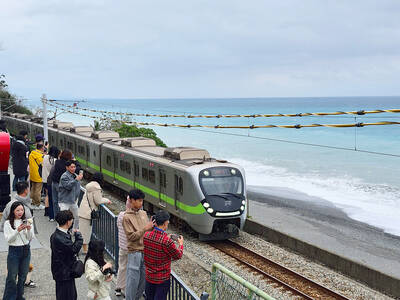
The small platform at Duoliang Train Station in Taitung County’s Taimali Township (太麻里) served villagers from 1992 to 2006, but was eventually shut down due to lack of use. Just 10 years later, the abandoned train station had become widely known as the most beautiful station in Taiwan, and visitors were so frequent that the village had to start restricting traffic. Nowadays, Duoliang Village (多良) is known as a bit of a tourist trap, with a mandatory, albeit modest, admission fee of NT$10 giving access to a crowded lane of vendors with a mediocre view of the ocean and the trains
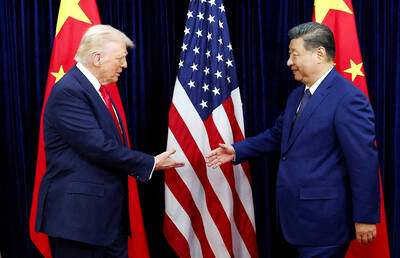
The March/April volume of Foreign Affairs, long a purveyor of pro-China pablum, offered up another irksome Beijing-speak on the issues and solutions for the problems vexing the People’s Republic of China (PRC) and the US: “America and China at the Edge of Ruin: A Last Chance to Step Back From the Brink” rang the provocative title, by David M. Lampton and Wang Jisi (王緝思). If one ever wants to describe what went wrong with US-PRC relations, the career of Wang Jisi is a good place to start. Wang has extensive experience in the US and the West. He was a visiting

One of the challenges with the sheer availability of food in today’s world is that lots of us end up spending many of our waking hours eating. Whether it’s full meals, snacks or desserts, scientists have found that it’s not uncommon for us to be mindlessly grazing at some point during all of our 16 or so waking hours. The problem? As soon as this food hits the bloodstream in the form of glucose, it initiates the release of the hormone insulin. This in turn activates a switch present in every one of our cells, which is responsible for driving cell


 RSS
RSS