


Restaurants, battling for survival amid the coronavirus, are starting to ask the question: Even when the lockdown lifts, how do we lure back skittish diners? Their margin for error is very small.
“All of a sudden, it’s like: ‘I don’t know if I want someone touching my food,’” said Bob Goldin, a partner at consulting firm Pentallect Inc.
Illustrating the scope of the challenge, he added: “I think we’re all learning we can live without restaurants.”
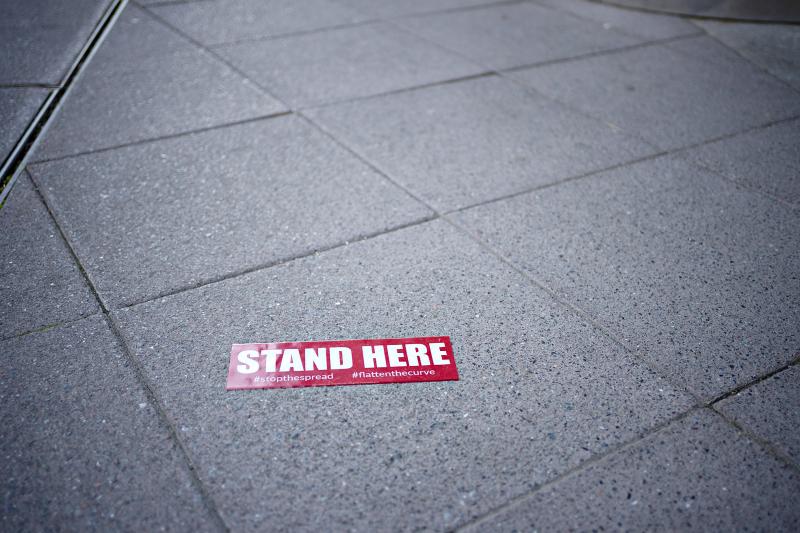
Photo: Bloomberg
There’s growing apprehension that restaurants have suddenly lost their appeal on a deeper level that will reverberate well after COVID-19 fades. Consumers, many of whom are cooking at home and facing dimmer economic prospects, will likely be slow to congregate again in bars and restaurants.
Restaurants are among the hardest-hit businesses in the pandemic, and they’re one of several industries that will face major hurdles in getting customers comfortable coming back. Retailers, sports leagues and music venues are also evaluating next steps.
Their plight is now a high-profile issue: Democratic presidential candidate Joe Biden said in a recent New York Times op-ed that “restaurants may need new layouts, with diners farther apart.”
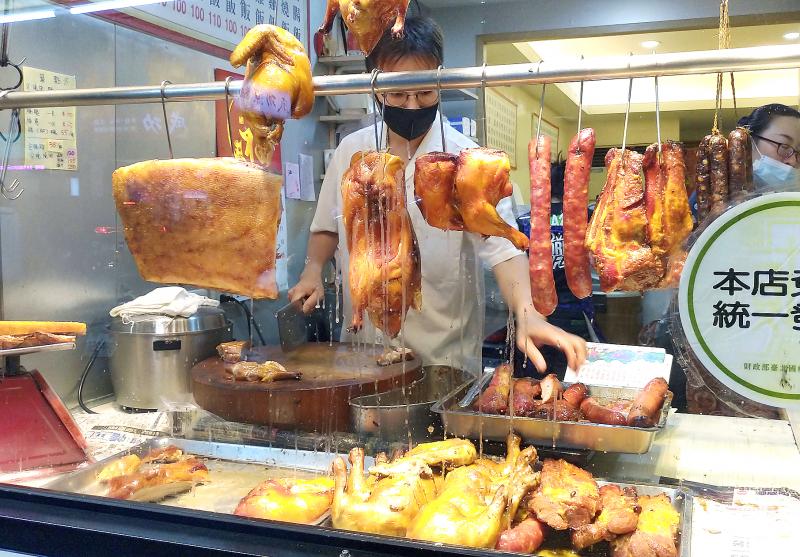
Photo: AP
President Donald Trump included industry leaders on phone calls Wednesday about how to revive the US economy. Post-coronavirus, states will have to balance restaurants’ economic importance with the reality that things can’t return to how they were before.
To survive, businesses will have to make customers feel safe by spacing them out more — like Starbucks has done in China — and finding ways to minimize human contact, such as digital ordering and payment. Operators will also look to China, which is farther along the COVID-19 timeline than the US, for guidance. There, restaurants are expanding delivery and even offering grocery delivery as the preference for eating at home persists.
“I would suspect that there is going to be a recommendation to maintain the social distancing for quite some time,” said Erin DiCaprio, an expert on food safety from the University of California, Davis. “I assume that consumers are going to have a lot of fear about going back out to crowded environments.”
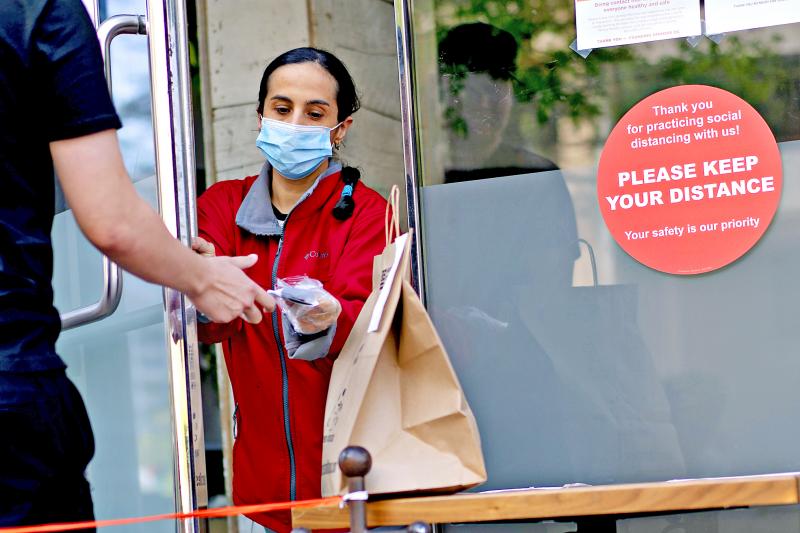
Photo: Bloomberg
While definitive studies on the virus are pending, social distancing has proved to be important in mitigating its spread, she said.
Jack Li, chief executive officer of industry research firm Datassential, said restaurants will have to create more distance between tables. They’ll also look to adopt contactless payment methods that don’t require handling cash or credit cards, he said.
BIG CHANGES
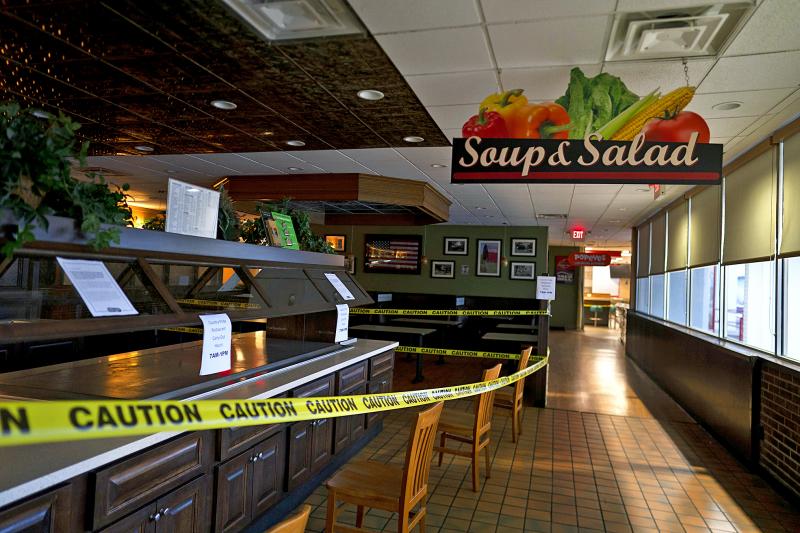
Photo: AP
Almost all aspects of restaurant operations will need to be addressed. Buffet services may disappear. Workers’ may need to wear gloves and masks, while utensils may be individually wrapped. Appetizers off of shared plates may be discontinued. California Governor Gavin Newsom said this week that temperature checks at the door could become commonplace.
About one-third of consumers still think it won’t be safe to dine out in three months, a recent survey from Li’s Datassential shows. Consumers aren’t ready “for big crowds that make it impossible to keep your distance,” according to the report.
Companies will have to offer more carryout and delivery with a focus on safety. Pizza Hut is now providing contactless curbside pickup and next week will begin using tamper-proof safety seals to takeout containers. Restaurants may also have to keep prices accessible amid widespread unemployment.
Romano’s Macaroni Grill is focusing on quarantined families right now with value deals and discounts, CEO Nishant Machado said. This will continue post-lockdown, he said, noting that “coming out of this, we’re going to be in a recession.”
Right now, the company is advertising a five-person meal with pasta, salad and bread for US$25.
“I don’t think it’s going to be a quick snap back,” he said. “There’s going to be a level of concern from consumers about going out. Alleviating this fear — I don’t think that happens overnight.”
DIFFICULT PLANNING
While restaurants want to formulate post-crisis plans, the dizzying array of variables make this hard to do. Unanswered questions include: Will isolation measures be re-enacted if the virus returns? What will unemployment be? What kind of government aid will be available? How willing will consumers be to leave home?
“When you work through the crisis, learn and do the consumer research, it’s hard to know when the new normal will come,” said Taco Bell Chief Operating Officer Mike Grams.
He said the chain, which is owned by Yum! Brands, has a team working on “the vision coming out of the crisis, so whatever that date is, we are positioned.”
For now, he offered few details on what that could look like, instead noting Taco Bell is “dynamic” and “flexible enough” to react quickly after the health crisis.
CHINA EXPERIENCE
Companies will be closely watching China for clues of what does and doesn’t work. Yum China Holdings, for example, is trying out catering and delivering raw food as diners in the Asian nations prove reluctant to eat out.
The owner of Pizza Hut and KFC in China is offering customized menus for corporate clients that allow employees to order food through KFC’s mobile app tailored to their budget. Pizza Hut now delivers uncooked steaks — complete with detailed preparation instructions. Delivery is “contactless:” riders drop the food off and stand two meters away to watch people pick up their items.
In Wuhan, the central Chinese city where the virus first emerged, restaurants are using live-streaming channels — featuring models eating in their outlets — in an attempt to show consumers that it’s safe to come again.
About 60 percent of listed restaurant operators in China are at risk of running out of cash within six months, according to data compiled by Bloomberg and company reports. Many medium and small-sized operators have already shut down. Food delivery has boomed.
HIGH DEBT
This means larger companies, with their bigger pools of cash and credit, are better poised to survive. In the US, Michael Halen, a restaurant analyst for Bloomberg Intelligence, warns that many restaurants’ high debt levels make them particularly vulnerable.
“We will see chains default on their debt covenants, lots of bankruptcies and lots of closed restaurants in the US,” he said.
There’s yet another factor to juggle: Consumers may permanently warm to home cooking.
“People are going regularly to the supermarkets, they’re going regularly to fill their freezers,” said Adnan Durrani, CEO of food manufacturer Saffron Road said. “People are really changing their lifestyle in a fast way. I feel like this is a change in behavior that’s here to stay.”
For now, companies are putting on a brave face and forecasting that things will — someday — return to normal. But it will take a long time, likely into 2021, according to Andy Wiederhorn, chief executive officer of Fat Brands, the owner of Fat Burger and Elevation Burger.
“It will be a gradual restart, not a sharp restart,” he said. “Companies need to be thinking and planning that way. It’s not like your sales are going to go from 70 percent or 80 percent off back to 100 percent.”
One silver lining could come from Americans’ newfound devotion to scrubbing vegetables, according to Amesh Adalja, an infectious disease physician and senior scholar at Johns Hopkins Center for Health Security.
“Ironically,” he said, “you might see less salmonella, E coli and listeria.”
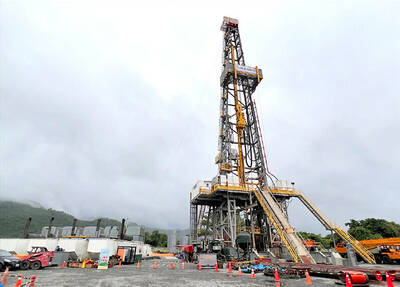
Taiwan’s renewable shortfall is a problem of execution, not resources. Japan’s long-cycle, joined-up energy planning is the model worth studying — but what Taiwan can borrow is the institutional machinery, not the politics. When Nvidia CEO Jensen Huang (黃仁勳) used his visit to Taipei last month to warn that the country needs far more electricity, he was naming a constraint its own planners already know well: Taiwan Power Co (Taipower, 台電) expects demand from the semiconductor and artificial intelligence (AI) sector alone to exceed 5 gigawatts (GW) by 2030. The harder question is not whether to build more capacity but which
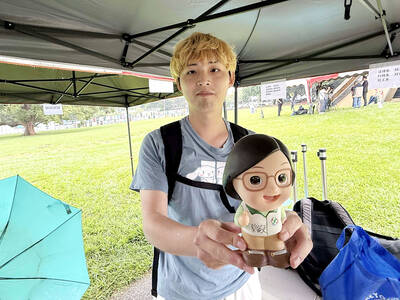
In a projection room, visitors at the Re: Battle City exhibition at Kaohsiung’s Neiwei Arts Center are invited to sit and watch a 20-minute animated movie. Artist Chang Li-ren (張立人) created the movie with dolls he made by molding paper into crude, painted figurines. The dolls interact in a detailed and realistic Taiwanese cityscape. Outside the projection room, visitors can wander around a massive model of the city. A sizeable crowd happily takes pictures of what looks like the best dollhouse in Taiwan: the same props that were used to tell the story of the country’s descent into techno-dictatorship in the movie. The
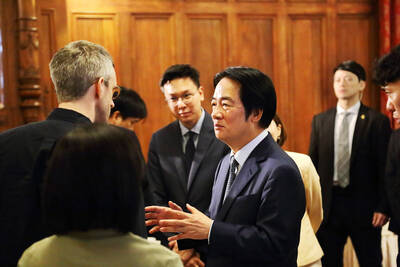
The last time Taiwan’s foreign correspondents were invited to a special briefing with a sitting president was in 2015. That was two presidents ago under Ma Ying-jeou (馬英九). But Thursday morning, President William Lai (賴清德) welcomed the nation’s international press corps warmly, speaking specifically to the theme of press freedom. Lai addressed Taiwan’s foreign press corps saying, “You live, work and report in Taiwan.” “Thank you for your professionalism and upholding the spirit of press freedom,” he continued. “As you engage in your work of journalism, you let the world see Taiwan.” The timing of this event, hosted by the Taiwan Foreign
Chinese Nationalist Party (KMT) Chairwoman Cheng Li-wun’s (鄭麗文) recent trip to the US highlighted her party’s anti-Taiwan defense policies. Disapproval of their policies was strong among those who met with her. Republican Senator Dan Sullivan, said that the KMT was “playing with fire.” Democratic Representative Tom Suozzi reportedly said that Cheng’s party was “weakening deterrence.” Foreign policy maven David Sacks observed in Asia Nikkei that “many Americans struggle to see the logic behind the KMT’s refusal to fund the portion of the special defense budget pertaining to indigenous defense production.” The logic of the KMT’s decision to purchase only US


 RSS
RSS