


Located near Da-an Forest Park, the newly opened L’Air Cafe Neo Bistro offers nouvelle cuisine made with seasonal ingredients. Head chef Dana Yu (游育甄) says that after 10 years of working as a chef at top restaurants including Justin’s Signatures and L’Atelier Joel Robuchon, she was ready to strike out on her own. Yu opened L’Air Cafe last month with her friend Lin Shu-chen (林淑真), the owner of nearby cafes Bunny Listens to the Music (兔子聽音樂) and Boute de Bijou (珠寶盒).
Yu’s goal is to showcase fresh ingredients by crafting the best balances of flavors and textures using French cooking methods.
“If I can create something in just three steps, then I will use just three steps,” Yu says. “I want to make sure each ingredient stands out.”
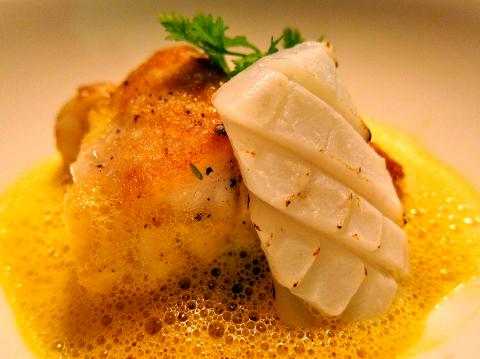
Photo: Catherine Shu, Taipei Times
A la carte options are available, but L’Air Cafe’s set menu (NT$2,200 plus 10 percent service charge) not only offers the best value, but allows diners to experience a carefully calibrated sequence of dishes designed to engage all of the senses.
Last weekend’s menu prominently featured seafood, which L’Air Cafe buys daily from sellers in Keelung’s fishing ports. One of our first dishes was a crisp spear of white asparagus topped with tender slices of steamed abalone and a smooth and creamy sauce. A scallop salad also showcased a tantalizing medley of flavors. It featured a paper-thin slice of phyllo pastry layered with caramelized onions lightly drizzled with sherry vinegar, large scallops, thin slices of bamboo shoots, arugula leaves, cilantro and prosciutto. Our final seafood dish was fresh fish and lightly seared squid served in a white wine and clam sauce.
The highlight of our meal and main course was duck breast from “cherry” ducks, a breed raised in Yilan County. The meat was slow-roasted to lock in moisture and each serving was plated with duck liver that had been marinated in milk before being lightly simmered. The richness of the meat was complemented by a slightly tart red wine and raspberry sauce. The sublime duck cut like butter and melted in the mouth.
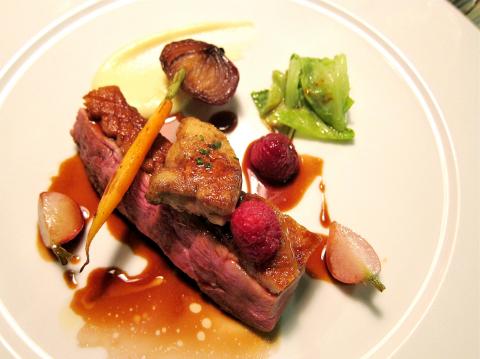
Photo: Catherine Shu, Taipei Times
Our desserts included a refreshing lemon granita with coconut milk, tiramisu and pate de fruit and chocolate served with tea. L’Air Cafe offers a selection of red and white wines from Italy, Spain, France and New Zealand and California, as well as Champagne and sparkling wine. Their house sauvignon blanc paired very well with the set menu’s seafood courses.
L’Air Cafe’s service is excellent. Though my companion and I were seated in a small alcove out of the main counter’s sightline, we never had trouble getting the attention of the server. The pacing of our dishes needed some fine-tuning: our amuse-bouche and seafood courses arrived very quickly, but there was a slight lull before our duck was served. Our waitress offered us constant refills of toasted French bread and herbed butter as we waited, however, and kept our water glasses full.
L’Air Cafe’s menu changes weekly based on what ingredients are available. Dishes can be customized for diners who have dietary requirements. Yu says that since the restaurant’s soft opening at the end of last month, she has created eight different set menus to make sure repeat customers are satisfied.
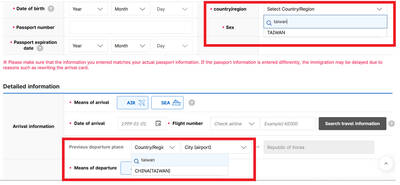
Jason Han says that the e-arrival card spat between South Korea and Taiwan shows that Seoul is signaling adherence to its “one-China” policy, while Taiwan’s response reflects a reciprocal approach. “Attempts to alter the diplomatic status quo often lead to tit-for-tat responses,” the analyst on international affairs tells the Taipei Times, adding that Taiwan may become more cautious in its dealings with South Korea going forward. Taipei has called on Seoul to correct its electronic entry system, which currently lists Taiwan as “China (Taiwan),” warning that reciprocal measures may follow if the wording is not changed before March 31. As of yesterday,

The Portuguese never established a presence on Taiwan, but they must have traded with the indigenous people because later traders reported that the locals referred to parts of deer using Portuguese words. What goods might the Portuguese have offered their indigenous trade partners? Among them must have been slaves, for the Portuguese dealt slaves across Asia. Though we often speak of “Portuguese” ships, imagining them as picturesque vessels manned by pointy-bearded Iberians, in Asia Portuguese shipping between local destinations was crewed by Asian seamen, with a handful of white or Eurasian officers. “Even the great carracks of 1,000-2,000 tons which plied
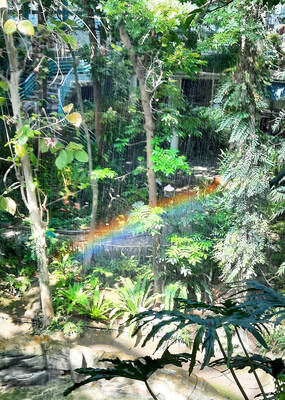
It’s only half the size of its more famous counterpart in Taipei, but the Botanical Garden of the National Museum of Nature Science (NMNS, 國立自然科學博物館植物園) is surely one of urban Taiwan’s most inviting green spaces. Covering 4.5 hectares immediately northeast of the government-run museum in Taichung’s North District (北區), the garden features more than 700 plant species, many of which are labeled in Chinese but not in English. Since its establishment in 1999, the site’s managers have done their best to replicate a number of native ecosystems, dividing the site into eight areas. The name of the Coral Atoll Zone might
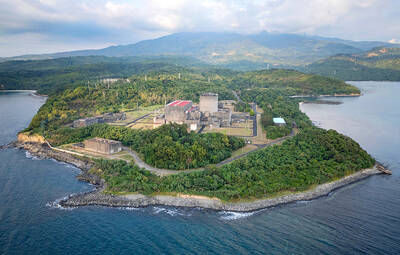
Nuclear power is getting a second look in Southeast Asia as countries prepare to meet surging energy demand as they vie for artificial intelligence-focused data centers. Several Southeast Asian nations are reviving mothballed nuclear plans and setting ambitious targets and nearly half of the region could, if they pursue those goals, have nuclear energy in the 2030s. Even countries without current plans have signaled their interest. Southeast Asia has never produced a single watt of nuclear energy, despite long-held atomic ambitions. But that may soon change as pressure mounts to reduce emissions that contribute to climate change, while meeting growing power needs. The


 RSS
RSS