


If takes a supremely confident and generous artist to share his stage with others. Award-winning composer and cellist Fan Tsung-pei (范宗沛) is just that kind of person.
Fan, who has swept through the four major awards in Taiwan (winning a Golden Horse Award for the Super Citizen Ko (超級大國民) soundtrack in 1997, an Asia Pacific Film Festival award for Connection by Fate (超級公民) in 1998, a Golden Bell Award for Formerly (曾經) in 2000, and a Golden Melody Award for Crystal Boys (孽子) in 2004), will perform with 12 other musicians in a concert titled Fan Tsung-pei’s Jamboree (范宗沛的同樂會) at Riverside Live House (河岸留言西門紅樓展演館) tonight. Miss Chamber (迷香柏樂團) and composer Mira Lin (米拉拉) will also take to the stage and images of impressionist paintings and passages from the Bible will be projected onto the wall.
“I want to dispel the notion that only music with vocals matters in the market,” Fan told the Taipei Times at his rehearsal studio on Tuesday. “A good piece of music can be performed instrumentally, allowing the audience members to fill in the lyrics with their own memories.”
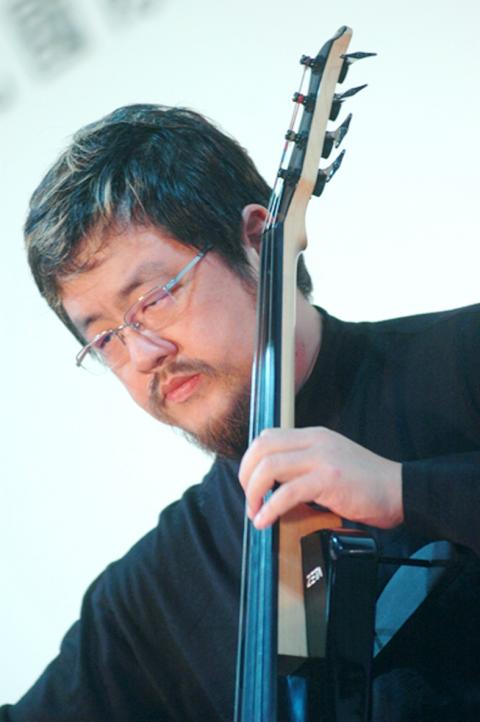
Photo Courtesy of Wind Music
Fan has been dubbed “genius of the score” (配樂鬼才) because of his roster of accolades. The down-to-earth and modest musician prefers to be called by his nickname, “the fat man” (胖子). In March, Fan released his latest album, A Misunderstanding (一場誤會), a genre-blending CD that mixes classical, new age, lounge, pop and electronica.
“This album serves as a memento at this stage of my life. It collects the different projects I took on over the past six years,” Fan said. “Much of it is done in MIDI. It’s a more upbeat album because of the lively rhythm.”
Before his foray into crossover albums, Fan was acclaimed for his score for director Tsao Jui-yuan’s (曹瑞原) 2003 Public Television Service (PTS, 公共電視) adaptation of author Kenneth Pai’s (白先勇) 1983 novel Crystal Boys, which depicts gay life in Taiwan during the conservative 1970s.
“I tried to learn about gay life but didn’t think I understood it,” Fan said. “In the end, I decided to treat it just like any human emotion. I borrowed the style of Brahms, who had a fatal crush on his mentor Schumann’s wife, to portray forbidden love.”
Before Crystal Boys, Fan had a string of successful collaborations with PTS including soundtracks for the dramas Formerly, Boat in a Stormy Sea (汪洋中的一條船) and The General’s Stone Tablet (將軍碑), all in 1999.
“I tried to branch out by taking on the project of the soap opera Material Queen (敗金女郎) recently,” Fan said, adding that he didn’t understand the humor and had to ditch the project at the last minute. “I found I excel in sadness. I am great with a strong narrative, with lyrical materials and with characters’ inner struggles.”
For his next album, Fan plans to collaborate with Aboriginal musicians to create a musically therapeutic album. “Aborigines are the black people in Taiwan. They have such innate exuberance and rhythm,” Fan said. “They would be great for creating gospel music.”

Taiwan’s overtaking of South Korea in GDP per capita is not a temporary anomaly, but the result of deeper structural problems in the South Korean economy says Chang Young-chul, the former CEO of Korea Asset Management Corp. Chang says that while it reflects Taiwan’s own gains, it also highlights weakening growth momentum in South Korea. As design and foundry capabilities become more important in the AI era, Seoul risks losing competitiveness if it relies too heavily on memory chips. IMF forecasts showing Taiwan widening its lead over South Korea have fueled debate in Seoul over memory chip dependence, industrial policy and
“China wants to unify with Taiwan at the lowest possible cost, and it currently believes that unification will become easier and less costly as time passes,” wrote Amanda Hsiao (蕭嫣然) and Bonnie Glaser in Foreign Affairs (“Why China Waits”) this month, describing how the People’s Republic of China (PRC) is playing the long game in its quest to seize Taiwan. This has been a favorite claim of many writers over the years, easy to argue because it is so trite. Very obviously, if the PRC isn’t attacking Taiwan, it is waiting. But for what? Hsiao and Glaser’s main point is trivial,
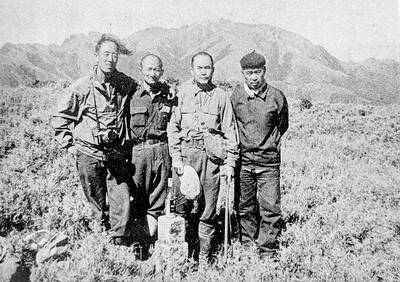
May 18 to May 24 Gathered on Yangtou Mountain (羊頭山) on Dec. 5, 1972, Taiwan’s hiking enthusiasts formally declared the formation of the “100 Peaks Club” (百岳俱樂部) and unveiled the final list of mountains. Famed mountaineer Lin Wen-an (林文安) led this effort for the Chinese Alpine Association (中華山岳協會). Working with other experienced climbers, he chose 100 peaks above 10,000 feet (3,048m) that featured triangulation points and varied in difficulty and character. The list sparked an alpine hiking craze, inspiring many to take up mountaineering and competing to “conquer” the summits. A common misconception is that the 100 Peaks represent Taiwan’s 100 tallest

Yesterday, the Democratic Progressive Party (DPP) nominated legislator Puma Shen (沈伯洋) as their Taipei mayoral candidate, the Chinese Nationalist Party (KMT) put their stamp of approval on Wei Ping-cheng (魏平政) as their candidate for Changhua County commissioner and former legislator Tsai Pi-ru (蔡壁如) of the Taiwan People’s Party (TPP) has begun the process to also run in Changhua, though she has not yet been formally nominated. All three news items are bizarre. The DPP has struggled with settling on a Taipei nominee. The only candidate who declared interest was Enoch Wu (吳怡農), but the party seemed determined to nominate anyone


 RSS
RSS