


White Label is gonna fight ... for your right ... to picnic.
With City Life Art Festival tomorrow and Sunday at Huashan 1914 Creative Park (華山創意園區) (formerly known as Huashan Culture Park, 華山文化園區), the group is putting a new spin on the CAMPO-style outdoor market/music festival. Drawing inspiration from the Tokyo Picnic Club (www.picnicclub.org), White Label is urging Taipei residents to reclaim their urban spaces through the power of the picnic. Admission is free and attendees are encouraged to bring their own food and drinks.
“It will be an urban picnic event from now on,” said White Label founder Chen Yu-hsin (陳昱興), better known as A-Li. “We would like people to not just come to see the bands and to buy things at the market. They should ask their friends to come picnic with them.”
White Label began in 2008 when A-Li, cofounder of CAMPO (Cinema Art Music People Original), decided to branch out. Like CAMPO, the new venture was to be a monthly gathering of artists and musicians sharing and selling their work in an environment free from commercial influences. But although he loved the grass-roots, independent feel of the CAMPO experience, he wanted White Label to be more urban and edgy.
White Label hosted six events in the first half of 2008, but organizers grew frustrated with the city government’s noise, decor and flyer restrictions for the use of Red House Theater (西門紅樓) in Ximending. For A-Li, there were just “too many rules.” As a result, the White Label went on hiatus for more than a year.
“I’m an office man now,” A-Li said. “I can’t hold as many events as CAMPO used to, but I still want to do something.”
Bands and DJs are performing all weekend at City Life Art Festival, but tomorrow is the big day and will include the fuzzy shoegazer sounds of Boyz and Girl and the video game-inspired electronica of Unfamiliar Friends Party (不熟的朋友派對). Also tomorrow, the First Film Festival (firstfilm.pixnet.net), which is showing the debut films of 30 Taiwanese directors in 10 days at different locations across Taipei, will screen its first film, Sunday Morning (星期天早晨), by director and curator Alfie Chen (陳建軒). An outdoor installation art exhibit and a flea market selling products made by independent artists and designers are planned for both days.
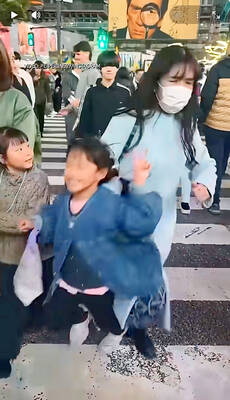
It starts out as a heartwarming clip. A young girl, clearly delighted to be in Tokyo, beams as she makes a peace sign to the camera. Seconds later, she is shoved to the ground from behind by a woman wearing a surgical mask. The assailant doesn’t skip a beat, striding out of shot of the clip filmed by the girl’s mother. This was no accidental clash of shoulders in a crowded place, but one of the most visible examples of a spate of butsukari otoko — “bumping man” — shoving incidents in Japan that experts attribute to a combination of gender

The race for New Taipei City mayor is being keenly watched, and now with the nomination of former deputy mayor of Taipei Hammer Lee (李四川) as the Chinese Nationalist Party’s (KMT) candidate, the battle lines are drawn. All polling data on the tight race mentioned in this column is from the March 12 Formosa poll. On Christmas Day 2010, Taipei County merged into one mega-metropolis of four million people, making it the nation’s largest city. The same day, the winner of the mayoral race, Eric Chu (朱立倫) of the Chinese Nationalist Party (KMT), took office and insisted on the current

Last week the government announced that by year’s end Taiwan will have the highest density of anti-ship missiles in the world. Its inventory could exceed 1,400, or enough for the opening two hours of an invasion from the People’s Republic of China (PRC). Snark aside, it sounds impressive. But an important piece is missing. Lost in all the “dialogues” and “debates” and “discussions” whose sole purpose is simply to dawdle and delay is what the Chinese Nationalist Party (KMT) alternative special defense budget proposal means for the defense of Taiwan. It is a betrayal of both Taiwan and the US. IT’S
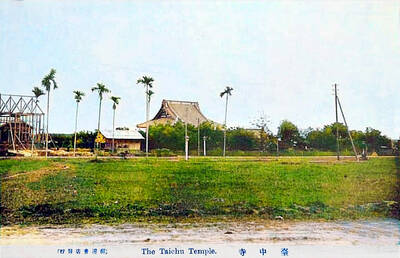
March 16 to March 22 Hidden for decades behind junk-filled metal shacks, trees and overgrowth, a small domed structure bearing a Buddhist swastika resurfaced last June in a Taichung alley. It was soon identified as a remnant of the 122-year-old Gokokuzan Taichuu-ji (Taichung Temple, 護國山台中寺), which was thought to have been demolished in the 1980s. In addition, a stone stele dedicated to monk Hoshu Ono, who served as abbot from 1914 to 1930, was discovered in the detritus. The temple was established in 1903 as the local center for the Soto school


 RSS
RSS