

Top Five Mandarin Albums Album chart compiled from G-Music (www.g-music.com.tw), based on retail sales | |
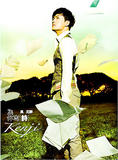 | 1. Kenji Wu (吳克群) and (為你寫詩) with 6.56 percent of retail sales |
| 2. BoA (寶兒) and (千顏兒語) with 3.97% | |
| 3. One Million Star 2 (星光二班) and (星光燦爛) with 2.36% | |
| 4. Compilation 合輯 and (嘻哈寶典談戀愛) with 1.55% | |
| 5. Joanna Wang (王若琳) and (新力博德曼) with 1.41% | |
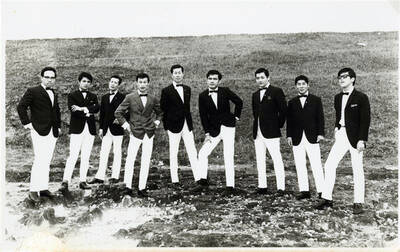
Sept. 28 to Oct. 4 Opening in 1971, Singapore’s Wisma Theatre (海燕歌劇院) was entirely modeled after Taiwanese live variety shows, combining singing, dancing and drama. Even its performers were recruited from Taiwan. The formula was an instant hit, selling out on the third night with the crowd fighting outside for tickets. Among its key figures was 31-year-old Chi Li-nan (紀利男), an acclaimed saxophonist and band leader who had entered Taiwan’s live entertainment scene at age 19 with zero musical training. Chi wasn’t even supposed to be there. He had accompanied his girlfriend, pop singer Shang Kuan Ping (上官萍), to negotiations with Wisma’s agent.
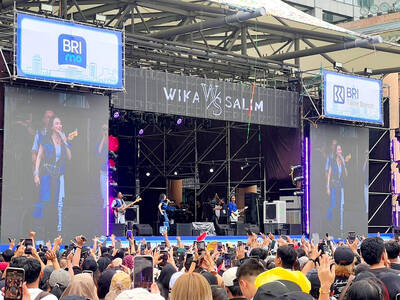
Apetition on the Web site of the National Development Council (NDC) arguing that non-citizens receiving National Health Insurance (NHI) should make up payments from their birth to their current age has reached 5,000 signatures last week, the threshold requiring a response. The comments under the petition are predictably odious, proving once again that the Venn diagram of racism and idiocy is a perfect circle. Also last week, the Ministry of the Interior proudly announced that the 400th “high-level professional” was approved for citizenship on Aug. 26. Four hundred carefully selected dual citizens! At that rate, sometime around the year 2600, Taiwan
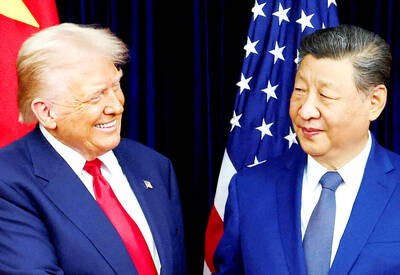
The tussle between the Chinese Nationalist Party (KMT) and its pro-People’s Republic of China (PRC) allies and fellow travelers, and the pro-Taiwan side in politics is in part a struggle over defining the nation’s agency in international spaces. What kind of agency does Taiwan have? The United Daily News (UDN) recently reported that former National Security Council secretary-general and longtime KMT stalwart Su Chi (蘇起), popularizer of the fake “1992 consensus,” contended that the US was both unable and unwilling to protect Taiwan. He also asserted that the threat from the PRC was rising and that the future depended on the
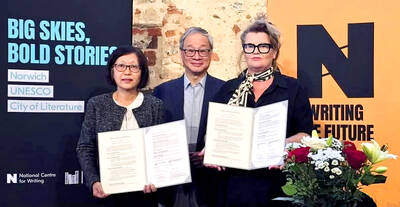
Serving as interpreter during Culture Minister Li Yuan’s (李遠) visit to Britain offered an unusual view of cultural diplomacy — not as ceremony, but as a series of conversations capable of becoming lasting relationships. During four intensive days, from Sept. 6 to Sept. 9, the delegation moved between museums, arts centers, universities and literary organizations. The program ranged from urban planning and museum access to translation, illustration and contemporary dance. Yet one question connected these encounters: How can an initial meeting become a relationship that lasts? Li described himself as “greedy” about the possibilities. The word was characteristically humorous, but the ambition


 RSS
RSS