

Sept. 28 to Oct. 4
Opening in 1971, Singapore’s Wisma Theatre (海燕歌劇院) was entirely modeled after Taiwanese live variety shows, combining singing, dancing and drama. Even its performers were recruited from Taiwan. The formula was an instant hit, selling out on the third night with the crowd fighting outside for tickets.
Among its key figures was 31-year-old Chi Li-nan (紀利男), an acclaimed saxophonist and band leader who had entered Taiwan’s live entertainment scene at age 19 with zero musical training.
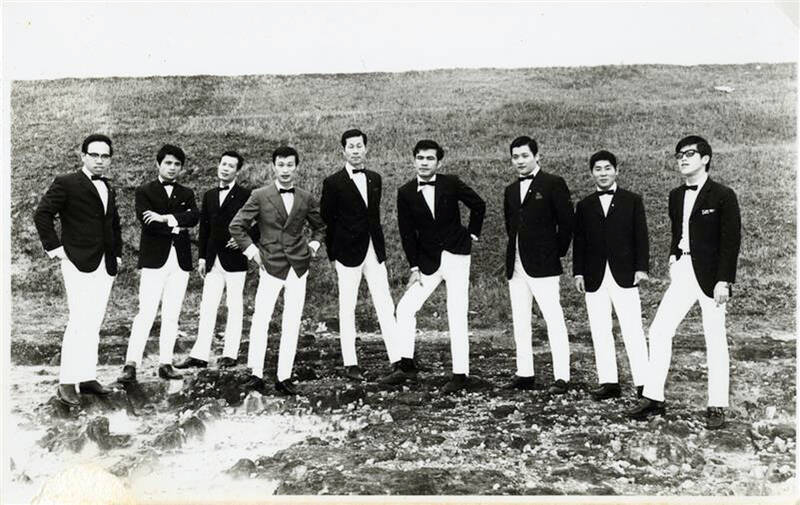
Photo courtesy of Taiwan Music Institute
Chi wasn’t even supposed to be there. He had accompanied his girlfriend, pop singer Shang Kuan Ping (上官萍), to negotiations with Wisma’s agent. He casually remarked, “You’re recruiting so many singers, why don’t you recruit musicians too?” The agent, who had recognized Chi from his live performances, surprisingly agreed, and the couple ended up heading to Singapore together.
Upon arriving, Chi noticed that the stage was poorly designed and persuaded the owners to rebuild it, delaying opening for a month. He then saved the first show from disaster with quick thinking and held a meeting that night to establish protocol for future performances. Three months later, he was promoted to the theater’s musical director and programmer.
A year later, Chi tried his hand at composing. His first song, Regret Loving You (後悔愛上你), was a huge success, with Teresa Teng (鄧麗君) among the singers who recorded it. Chi would go on to become better known as a songwriter and producer, creating more than 1,000 songs and numerous hits.
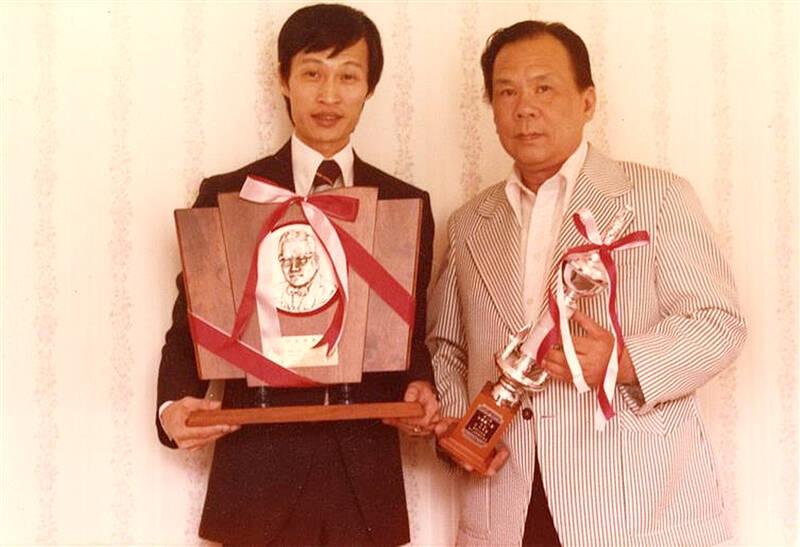
Photo courtesy of Taiwan Music Institute
JOINING THE GOLDEN CATS
Chi was born in 1940 in Shuinan Village (水南) Yunlin County, where his grandfather started out poor but became the area’s largest sugarcane grower. By the time Chi was in elementary school, however, the family had lost their fortune to land reform and bad deals.
Chi was expelled from high school in Chiayi after a physical altercation with a teacher, he recalls in his memoir, Life in Music (音樂人生). Afraid to go home, he wandered the streets for a while before heading to Taipei to find his father, who worked as a firetruck driver.
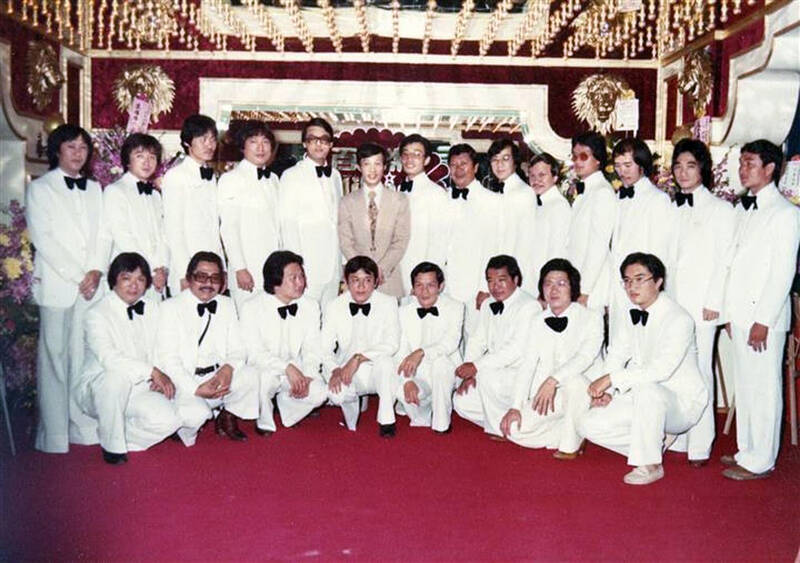
Photo courtesy of Taiwan Music Institute
Chi was interested in the music industry, as he had been an avid listener since childhood, particularly enamored with the songs of Japanese crooner Hibari Misora. His father connected him with pop singer Chi Lu-hsia (紀露霞, no relation), who introduced him to acclaimed composer Yang San-lang (楊三郎).
Yang had just sold his popular Black Cat Song and Dance Troupe (黑貓歌舞團) and was preparing to form the Golden Cat troupe with younger, trendier performers. He immediately took Chi in as a disciple.
Learning vocal techniques from Yang while helping out with the troupe, Chi took the stage a month later. The 30-plus-member troupe traveled around Taiwan, staying about 10 days in each town. The show consisted of an hour of singing and dancing, and an hour of musical drama.
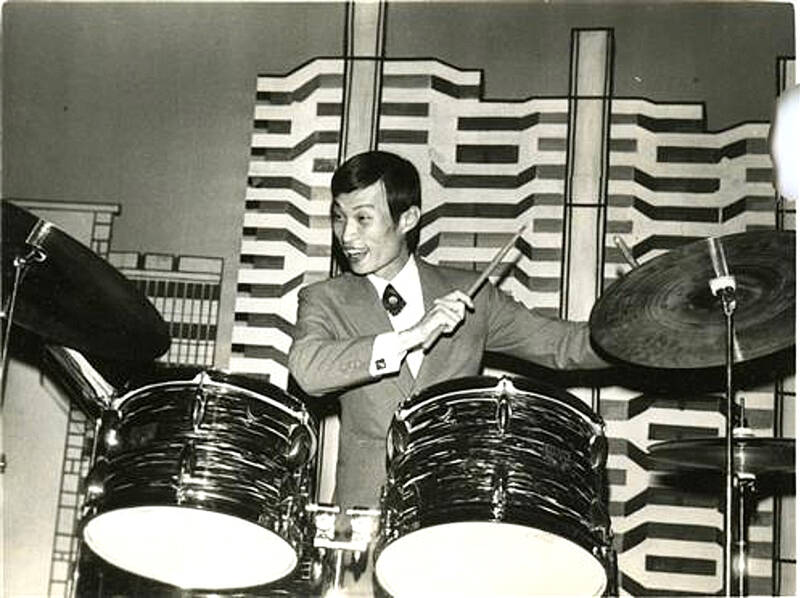
Photo courtesy of Taiwan Music Institute
FALL AND RISE
After about eight months, Chi expressed an interest in musical arranging. Yang wanted him to focus on singing first, but after being impressed by the work Chi did in his free time, he began teaching him music theory. Chi could not afford an instrument, but Yang happened to have a saxophone that one of his students had sold to a pawn shop without his knowledge. Chi Lu-hsia gave Chi the money to buy it back, and it became his main instrument.
Yang taught Chi every night after performances, and Chi recalls asking exhaustive questions because he needed to understand everything thoroughly. The two often argued, but Yang remained patient and recognized his talent.
Two years later, the troupe had fallen on hard times. Audiences preferred the more experienced Black Cats and their bigger-name performers, and eventually all the musicians quit, leaving only Yang and Chi. The Golden Cats eventually disbanded.
The two worked at a Taichung nightclub before joining the Black Cats for a short period. They eventually found themselves playing in bars and sharing a small borrowed room. Chi recalls seeing Yang cry for the first time, saddened that despite his fame and talent, he had been reduced to such a life.
Yang later moved to Taipei and became one of the scene’s most in-demand saxophone players, known for his improvisational ability. He met Shang Kuan through work, and the two began dating.
SONGWRITING
In 1970, Singaporean entrepreneur Wang Te-nan (王德南) visited Taiwan and was impressed by its live entertainment scene. He established Wisma Theatre in a building leased for 10 years from the Indonesian Embassy, and began recruiting performers from Taiwan.
Chi brought his own nine-person band, and helped guide the theater to quick success.
He and Shang Kuan married in 1972. That year, Chi tried his hand at songwriting for a Wisma compilation album. Regret Loving You was originally written for singer Hung Yen-ping (洪燕萍), but Life Records (麗風唱片) artist Yang Hsiao-ping (楊小萍) heard someone humming it backstage and decided to record it as well. During production in Hong Kong, a 19-year-old Teresa Teng heard the song and recorded it too.
Chi initially struggled with his next compositions, which Life Records considered “too artistic.” But he soon grasped the nuances of pop-writing with Shang Kuan’s help. His next major hit was the 1976 Sunset Again for Yu Tien (余天).
Other notable works included A Boat in the Vast Ocean (汪洋中的一條船), based on the story of Cheng Feng-hsi (鄭豐喜), who overcame physical disability to earn a law degree, and a rearrangement of Plum Blossom (梅花) into a military march commissioned by general Chiang Wei-kuo (蔣緯國).
PROLIFIC PRODUCER
In 1978, Chi decided to test the Japanese market. Through Yang’s connections, he became the first foreigner to join the Japan Composer’s Association. A year later, he won a silver medal at the Koga Awards with First Love (初戀).
Wisma closed in 1981, and Chi returned to Taiwan while visiting Taiwan monthly in an attempt to break into the industry. He also continued working with Taiwanese and Hong Kong artists, notably penning 11 songs for Liza Wang (汪明荃), including Hot Coffee (熱咖啡).
But the Japanese market proved difficult and he abandoned the effort after seven years. Chi recalled struggling to get major stars to sing his songs — though he was too stubborn to give them to lesser-known singers. He recalled that the sign to give up was when a friend of Misora, his childhood idol, promised to introduce his songs to the singer but died before it could happen.
After seeing CD technology in Japan, Chi recorded an album with Shang Kuan on vocals in 1984 — at a time when no producer in Taiwan was familiar with the technology and the couple didn’t even have the means to play it at home.
Back in Taiwan, record companies considered Chi’s music “too progressive,” prompting him to move his family to Singapore and start his own production company. He found renewed success there. In 1992, he staged a Wisma reunion concert and even ran the New Wisma Theatre for a year.
He had wanted to produce a greatest-hits album for Yang, but Yang died in 1989 before the project could begin. Chi eventually enlisted singer Chen Fen-lan (陳芬蘭) and a Chinese orchestra to record 10 of Yang’s Taiwanese songs. The album won Best Record at the Golden Tripod Awards.
During the 2000s, Chi focused on producing audiophile recordings with well-known singers and Buddhist pop music. He continued recording until about 10 months before his death from a liver tumor on Oct. 4, 2016.
Taiwan in Time, a column about Taiwan’s history that is published every Sunday, spotlights important or interesting events around the nation that either have anniversaries this week or are tied to current events.

Apetition on the Web site of the National Development Council (NDC) arguing that non-citizens receiving National Health Insurance (NHI) should make up payments from their birth to their current age has reached 5,000 signatures last week, the threshold requiring a response. The comments under the petition are predictably odious, proving once again that the Venn diagram of racism and idiocy is a perfect circle. Also last week, the Ministry of the Interior proudly announced that the 400th “high-level professional” was approved for citizenship on Aug. 26. Four hundred carefully selected dual citizens! At that rate, sometime around the year 2600, Taiwan

The tussle between the Chinese Nationalist Party (KMT) and its pro-People’s Republic of China (PRC) allies and fellow travelers, and the pro-Taiwan side in politics is in part a struggle over defining the nation’s agency in international spaces. What kind of agency does Taiwan have? The United Daily News (UDN) recently reported that former National Security Council secretary-general and longtime KMT stalwart Su Chi (蘇起), popularizer of the fake “1992 consensus,” contended that the US was both unable and unwilling to protect Taiwan. He also asserted that the threat from the PRC was rising and that the future depended on the

Serving as interpreter during Culture Minister Li Yuan’s (李遠) visit to Britain offered an unusual view of cultural diplomacy — not as ceremony, but as a series of conversations capable of becoming lasting relationships. During four intensive days, from Sept. 6 to Sept. 9, the delegation moved between museums, arts centers, universities and literary organizations. The program ranged from urban planning and museum access to translation, illustration and contemporary dance. Yet one question connected these encounters: How can an initial meeting become a relationship that lasts? Li described himself as “greedy” about the possibilities. The word was characteristically humorous, but the ambition

THEY SUPPRESS YOUR APPETITE FALSE: “GLP-1 medications mimic Glucagon-like peptide-1 — one of the hormones involved in appetite regulation. It doesn’t completely suppress hunger, but it is powerful,” says Federica Amati, nutrition lead at Imperial College School of Medicine and author of The Appetite Reset. “The medicine is about 1,000 times stronger than what we naturally produce from our gut,” she explains. As food passes through the gut, cells called L-cells sense the nutrients, which sparks the production of the GLP-1 hormone. Without the drugs, these bursts of GLP-1 production last a few minutes. “It’s a bit like a sparkler.


 RSS
RSS