


Barbie and Angel are globe trotters whose travels to exotic locales are more like pilgrimages than sightseeing trips. Three years ago, the two Taipei girls visited Pushkar, India, and were inspired by the Hindu holy city's temples and shops.
"We saw a lot of foreigners in Pushkar, and we felt very comfortable in the shops there," Barbie told the Taipei Times. "We wanted to open up a restaurant with a similar feel in Taipei."
The result: The Peacock.
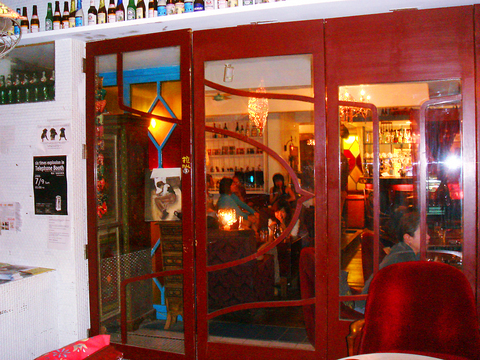
PHOTO: MAX HIRSCH, TAIPEI TIMES
The Shida night market bar and restaurant boasts a menu that is as eclectic as its decor. And behind the bistro's French doors, a dimly lit lounge that could pass for a set on That '70s Show enchants diners with its retro feel and twilight lighting.
Angel's touch -- besides her haunting paintings -- is the tasty Italian cuisine, which she learned to cook while running an Italian bistro before she opened the Peacock with Barbie. The two also traveled to Goa, India, to learn how to make Indian cuisine from a master chef. That pilgrimage resulted in their adding Tandoori lamb, as well as lamb and chicken masala dishes to the menu.
From vegetarian dishes, appetizers, entrees, to beers, wines, and cocktails, the Peacock has something for everybody. The pizzas are especially popular with diners, Barbie said. Smokers can taste a Hookah pipe -- a Middle Eastern "bong" with a long tube through which users inhale tobacco smoke. At the Peacock, smokers can sample a variety of flavored tobacco. Ever wonder what strawberry, peach, or cherry-flavored Hookah tobacco tastes like? Well, if you do, you don't have to go to Pakistan or Turkey to find out.
Whether on your food or in your lungs, the Peacock's exotic herbs make for a memorable outing. For diners more interested in conventional Western food, however, they won't be disappointed. Plenty of less adventurous dishes and beverages keep traditional tastebuds happy.
What may make diners a bit unhappy, though, is the quality of service, which is sometimes slack. You may have to fetch your own napkin or a water pitcher at peak hours, but a little patience will see you through. The bistro's laidback ambiance, complete with the hippest tunes around, keeps diners comfortable and engaged. Free wireless Internet service and a downstairs parlor for large groups are also plusses. A newly built enclosed front porch is open to customers who prefer to nurse a cocktail or eat a meal outside.
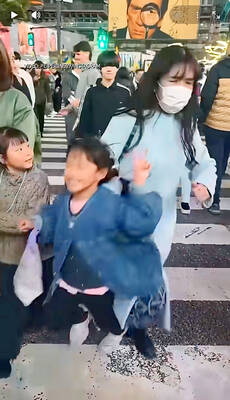
It starts out as a heartwarming clip. A young girl, clearly delighted to be in Tokyo, beams as she makes a peace sign to the camera. Seconds later, she is shoved to the ground from behind by a woman wearing a surgical mask. The assailant doesn’t skip a beat, striding out of shot of the clip filmed by the girl’s mother. This was no accidental clash of shoulders in a crowded place, but one of the most visible examples of a spate of butsukari otoko — “bumping man” — shoving incidents in Japan that experts attribute to a combination of gender

The race for New Taipei City mayor is being keenly watched, and now with the nomination of former deputy mayor of Taipei Hammer Lee (李四川) as the Chinese Nationalist Party’s (KMT) candidate, the battle lines are drawn. All polling data on the tight race mentioned in this column is from the March 12 Formosa poll. On Christmas Day 2010, Taipei County merged into one mega-metropolis of four million people, making it the nation’s largest city. The same day, the winner of the mayoral race, Eric Chu (朱立倫) of the Chinese Nationalist Party (KMT), took office and insisted on the current

Last week the government announced that by year’s end Taiwan will have the highest density of anti-ship missiles in the world. Its inventory could exceed 1,400, or enough for the opening two hours of an invasion from the People’s Republic of China (PRC). Snark aside, it sounds impressive. But an important piece is missing. Lost in all the “dialogues” and “debates” and “discussions” whose sole purpose is simply to dawdle and delay is what the Chinese Nationalist Party (KMT) alternative special defense budget proposal means for the defense of Taiwan. It is a betrayal of both Taiwan and the US. IT’S
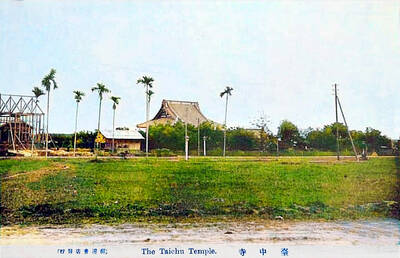
March 16 to March 22 Hidden for decades behind junk-filled metal shacks, trees and overgrowth, a small domed structure bearing a Buddhist swastika resurfaced last June in a Taichung alley. It was soon identified as a remnant of the 122-year-old Gokokuzan Taichuu-ji (Taichung Temple, 護國山台中寺), which was thought to have been demolished in the 1980s. In addition, a stone stele dedicated to monk Hoshu Ono, who served as abbot from 1914 to 1930, was discovered in the detritus. The temple was established in 1903 as the local center for the Soto school


 RSS
RSS