


Longing to taste Shanghai cuisine without leaving Taiwan? The Grand Hyatt Taipei might just satiate that craving.
Last Wednesday, the hotel began a 12-day-long journey back to what it says was the Shanghai of yesteryear, giving customers a chance to eat an authentic Shanghai meal in an authentic Shanghai setting.
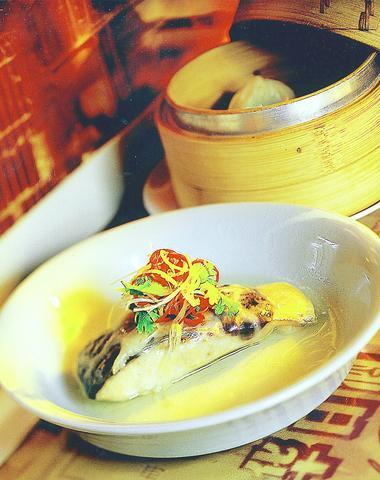
PHOTO COURTESY OF GRAND HYATT
Naturally, Chinese cuisine varies from province to province, with some dishes saltier than others and some sweeter than others. Shanghai cuisine incorporates sweet and salty tastes with a healthy dose of oil, lending a somewhat slippery texture to each dish.
"The Shanghai style of food served in Shanghai, compared to Taiwan, is stronger," said Johnny Liao, the head chef who has been cooking Shanghai style for almost four decades.
Among some of the dishes on the "Shanghai Shanghai" menu were steamed shad with pickled cucumber and Yunnan ham wrapped in a crepe; braised seafood bean curd parcel in a crab roe sauce; steamed pork dumplings; and a creamy walnut and peanut soup for desert.
The steamed shad, a type of fish, was unique in that it was not scaled. Each piece was wrapped in a thin, filmy substance resembling Saran-Wrap. (Don't worry, it's edible.) The fish was then steamed using nothing but its own juices, creating a taste that was both clean and light on the pallet. Just remember, though, to watch out for the bones.
Another dish on the menu was braised seafood bean curd parcel. Like the shad, this dish also used a thin, edible material -- the skin of bean curd -- to wrap up the seafood. The bundle is then sauteed using a technique that makes it slippery and wet. The bean curd skin, lightly fried, was rather fun to eat.
Apart from the seafood dishes, there was also steamed marrow and pork dumplings. Many dumplings in Taiwan are often over steamed, leaving the inside bone dry. These dumplings, however, were oozing with juices, so much so that a spoon was required to avoid spillage. The dumpling's filling was heavy on the chopped scallions, lending a biting though zesty taste.
For desert, there was a creamy walnut and peanut soup, served luke-warm. The sweetness, mixed with nuts, somehow successfully managed to counterbalance the main dish's salty and oily flavors, satisfactorily rounding up the entire meal.
Liao, the head chef who has been plying his trade for over three decades, said it's seldom one comes across a restaurant in Taiwan serving genuine Shanghai-style cuisine.
As for the different types of cuisine offered at the Grand Hyatt, Liao said, "It's important to keep changing styles. You have to add fresh feelings, otherwise guests will not come back."
The Shanghai Shanghai special ends on Sept. 12. Apart from the food, the atmosphere of the Shanghai Court conjures up the feeling of 1930s Shanghai, complete with the decorations and music of the time.
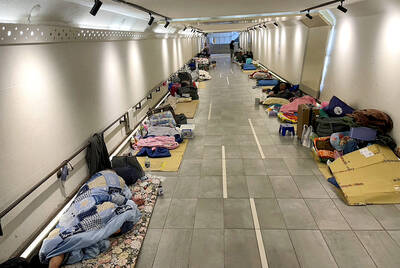
From the last quarter of 2001, research shows that real housing prices nearly tripled (before a 2012 law to enforce housing price registration, researchers tracked a few large real estate firms to estimate housing price behavior). Incomes have not kept pace, though this has not yet led to defaults. Instead, an increasing chunk of household income goes to mortgage payments. This suggests that even if incomes grow, the mortgage squeeze will still make voters feel like their paychecks won’t stretch to cover expenses. The housing price rises in the last two decades are now driving higher rents. The rental market
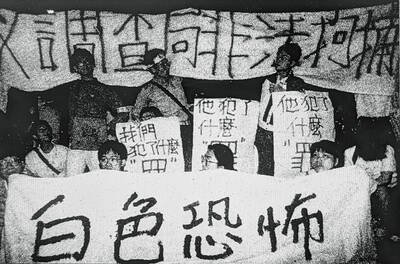
July 21 to July 27 If the “Taiwan Independence Association” (TIA) incident had happened four years earlier, it probably wouldn’t have caused much of an uproar. But the arrest of four young suspected independence activists in the early hours of May 9, 1991, sparked outrage, with many denouncing it as a return to the White Terror — a time when anyone could be detained for suspected seditious activity. Not only had martial law been lifted in 1987, just days earlier on May 1, the government had abolished the Temporary Provisions Effective During the Period of National Mobilization for Suppression of the Communist
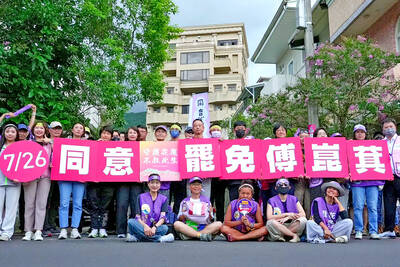
Hualien lawmaker Fu Kun-chi (傅?萁) is the prime target of the recall campaigns. They want to bring him and everything he represents crashing down. This is an existential test for Fu and a critical symbolic test for the campaigners. It is also a crucial test for both the Chinese Nationalist Party (KMT) and a personal one for party Chairman Eric Chu (朱立倫). Why is Fu such a lightning rod? LOCAL LORD At the dawn of the 2020s, Fu, running as an independent candidate, beat incumbent Democratic Progressive Party (DPP) lawmaker Hsiao Bi-khim (蕭美琴) and a KMT candidate to return to the legislature representing
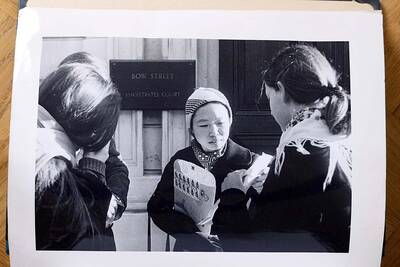
Fifty-five years ago, a .25-caliber Beretta fired in the revolving door of New York’s Plaza Hotel set Taiwan on an unexpected path to democracy. As Chinese military incursions intensify today, a new documentary, When the Spring Rain Falls (春雨424), revisits that 1970 assassination attempt on then-vice premier Chiang Ching-kuo (蔣經國). Director Sylvia Feng (馮賢賢) raises the question Taiwan faces under existential threat: “How do we safeguard our fragile democracy and precious freedom?” ASSASSINATION After its retreat to Taiwan in 1949, the Chinese Nationalist Party (KMT) regime under Chiang Kai-shek (蔣介石) imposed a ruthless military rule, crushing democratic aspirations and kidnapping dissidents from


 RSS
RSS