


Late afternoon rains didn't spoil MTV's Taipei Music Festival Saturday night, but MTV's VJs almost did. Deployed to hype a crowd estimated between 60,000 and 80,000, the best Katherine Wang (
Having already spent several minutes chanting Stanley Huang's (
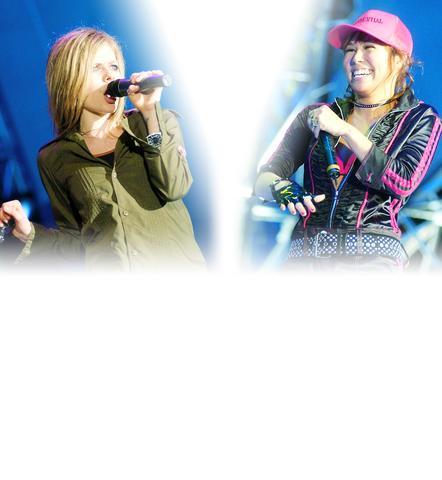
PHOTO: AP
Huang was understandably reluctant to take the stage following an opening salvo fired by Canadian singer-songwriter Avril Lavigne. She played the five songs she was scheduled to sing, accepted an "award" designed to give various local figureheads photo time with the young superstar -- in this case Taipei City Deputy Mayor Yeh Jin-chuan (

PHOTO: AP
Not surprisingly, the media besieged Lavigne's every move during her stay in Taiwan. They met her at the airport Thursday night, followed her to Snake Alley night market that night, then met her officially at a Friday afternoon press conference where she wowed them.
She performed a two-song acoustic set with the help of one of the members of her band and showed that she's much more than just her mascara. Though provided a microphone, she didn't need one. Her voice was heard clearly even in the back of the Grand Formosa ballroom where the press conference was held. She was given an award -- surprise! -- and sat to answer some hard-hitting questions from Taiwan's media: Did she like Chinese food? Had she ever heard of spicy hot pot and would she be interested in trying it? Was she really as cool as she seemed, or was it just an act? Answers: "Sure," "No, so, dunno," and "Hunh?"
No wonder that by the time she took the stage Saturday night, she looked ready to get out of Taipei. Her face had a pinched expression, as if she'd maybe left something in her hotel room. Or it might have been the look of someone who'd just tried spicy hot pot for the first time.
But by all accounts, her Saturday night show and her press conference went off better than anyone else's. Japan's Naohito Fujiki (
Likewise, no one understood what South Korean soap-opera-star-cum-pop-singer, Rain, was crooning about, but he was at least much better looking than Fujiki and didn't demand to be addressed in a certain way. He garnered screams from the tens of thousands of 13-year-old girls in the crowd, then had to head home early to shoot his soap opera.
For the local acts, Jay Chou (
At the end of it all, more than 15 performers (a few of them musicians) played for three hours in what MTV billed as the "biggest music event this summer in Taipei." If that sounds a bit like MTV preening its pop plumage, it is. The growing success of both the Formoz and HoHaiYan festivals have ruffled feathers at the network and they seem eager to remind everyone that they're the "world's most valuable media brand."
Maybe next year they can have Katherine Wang chant that between sets. "All together now: World's most valuable media brand! World's most valuable media brand!"
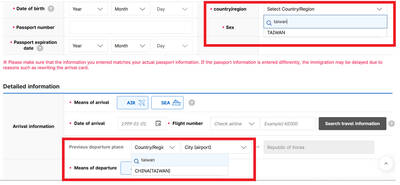
Jason Han says that the e-arrival card spat between South Korea and Taiwan shows that Seoul is signaling adherence to its “one-China” policy, while Taiwan’s response reflects a reciprocal approach. “Attempts to alter the diplomatic status quo often lead to tit-for-tat responses,” the analyst on international affairs tells the Taipei Times, adding that Taiwan may become more cautious in its dealings with South Korea going forward. Taipei has called on Seoul to correct its electronic entry system, which currently lists Taiwan as “China (Taiwan),” warning that reciprocal measures may follow if the wording is not changed before March 31. As of yesterday,

The Portuguese never established a presence on Taiwan, but they must have traded with the indigenous people because later traders reported that the locals referred to parts of deer using Portuguese words. What goods might the Portuguese have offered their indigenous trade partners? Among them must have been slaves, for the Portuguese dealt slaves across Asia. Though we often speak of “Portuguese” ships, imagining them as picturesque vessels manned by pointy-bearded Iberians, in Asia Portuguese shipping between local destinations was crewed by Asian seamen, with a handful of white or Eurasian officers. “Even the great carracks of 1,000-2,000 tons which plied
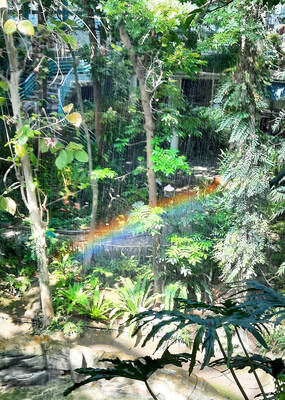
It’s only half the size of its more famous counterpart in Taipei, but the Botanical Garden of the National Museum of Nature Science (NMNS, 國立自然科學博物館植物園) is surely one of urban Taiwan’s most inviting green spaces. Covering 4.5 hectares immediately northeast of the government-run museum in Taichung’s North District (北區), the garden features more than 700 plant species, many of which are labeled in Chinese but not in English. Since its establishment in 1999, the site’s managers have done their best to replicate a number of native ecosystems, dividing the site into eight areas. The name of the Coral Atoll Zone might
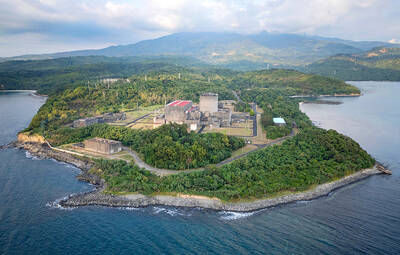
Nuclear power is getting a second look in Southeast Asia as countries prepare to meet surging energy demand as they vie for artificial intelligence-focused data centers. Several Southeast Asian nations are reviving mothballed nuclear plans and setting ambitious targets and nearly half of the region could, if they pursue those goals, have nuclear energy in the 2030s. Even countries without current plans have signaled their interest. Southeast Asia has never produced a single watt of nuclear energy, despite long-held atomic ambitions. But that may soon change as pressure mounts to reduce emissions that contribute to climate change, while meeting growing power needs. The


 RSS
RSS