


Faith Yang (
Tomorrow night she is set to rock the National Taiwan University Stadium (台大綜合體育館), a new venue which has only recently completed construction after eight years and is said to have cost NT$3 million to rent for the event. Able to seat 7,000, organizers Magic Stone (魔岩) are obviously expecting a big turn-out.
Lin Wei-tse (林暐哲), who has been behind most of Yang's biggest hits as songwriter, will be bowing out of Yang's back-up band to be her producer for this show. With the massive light show and sound effects planned for this huge occasion, he wanted to dedicate all his attention to planning Yang's largest-ever Taipei concert.

PHOTO COURTESY OF MAGIC STONE
The Back to Music concert -- perhaps a veiled reference to comments about her personality and too-cool-for-you attitude -- will see the first use of a 3D rotating projector so that images will be projected over a 360-degree screen. The combination of visual effects and the KTV videos of Proof and other tracks that have powered sales of her new album are all peripheral to what Yang herself is focusing on, namely the music.
Yang has often insisted that a singer needs to hold firm to her integrity, and her latest hit Queen continues in that tradition. The neurotic lament of Silence which is the flip-side of her ultra-cool stage persona is brought to a new level of realization, with Queen combining both narrative and emotional elements as never before. As one of the few singers to break the mold of lachrymose Mando-pop with a strong dose of attitude, Yang is one of the few singers in mainstream music who lets her personality come through in her songs. For all that, her sense of fashion seems to have taken a buffeting, and after Silence, she seems to be trying to turn herself into a cheaper version of Faye Wong (
Performance Notes:
What: Faith Yang Back to Music Concert.
When: July 7
Where: NTU Stadium, corner of Hsinhai Road (辛亥路) and Hsinsheng South Road (新生南路).
Tivkets: NT$800 for standing area, NT$1000 for seating area. Tickets through Acer ticket outlets.

And so, in the wake of US President Donald Trump’s trip to the People’s Republic of China (PRC), all the experts on the Strait of Hormuz suddenly became experts on US-China-Taiwan relations. The Internet has certainly expanded human knowledge. Lots of these sudden experts made noise this week about Trump’s words after the meeting with PRC dictator Xi Jin-ping (習近平). Trump is going to sell out Taiwan! Longtime Taiwan commentator J. Michael Cole summed the situation up neatly in the Guardian: “We need to keep in mind that he has a tendency to say many things — sometimes contradicting himself within
Ajay Verma, a consultant gastroenterologist at Kettering general hospital in Northamptonshire, says our gut is a “complex machine.” “It is constantly providing us with the nutrition we need, initially to grow and develop, and then for us to survive, thrive and repair from injury and illness.” How can we keep it functioning well? Put simply: “Make sure what you put into it is balanced, and that you clear out its waste products adequately,” Verma says. “In a general gastroenterology clinic, the most common conditions we see are irritable bowel syndrome (IBS), gastroesophageal reflux disease, inflammatory bowel disease and constipation,” says Nisha

Last week US President Donald Trump was asked by a reporter whether he would speak on the phone to the President of Taiwan. “l’ll speak to him. I speak to everybody. We have that situation very well in hand,” Trump said. This marked the second time in a couple of weeks he had said he would talk to the President of Taiwan. In 2016 he famously took a call from then-president Tsai Ing-wen (蔡英文), when he was president-elect. Despite warnings that the apocalypse was nigh because of a phone call, the world quickly forgot about the conversation between two democratically-elected presidents.
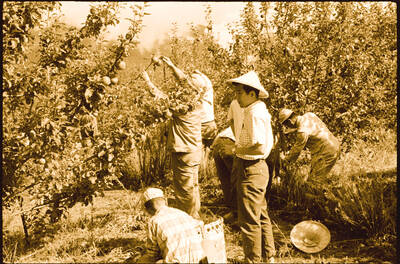
May 25 to May 31 Few believed that apples could be cultivated on a commercial scale in Taiwan’s high mountains. When horticulturalist Cheng Chao-hsiung (程兆熊) first proposed the idea in 1955, both American and Taiwanese colleagues dismissed it as implausible, arguing that temperate fruit could not be reliably grown on a subtropical island, especially on rugged terrain. However, it was this terrain in the Central Mountain Range where many Chinese Civil War veterans were resettled in the late 1950s. With limited job prospects and no family in Taiwan, they were placed on cooperative farms aimed toward self-sufficiency. Some say the conditions


 RSS
RSS