


After the meeting between Chinese Nationalist Party (KMT) Chairwoman Cheng Li-wun (鄭麗文) and Chinese President Xi Jinping (習近平), the Chinese Communist Party immediately announced 10 new Taiwan-related measures, including the resumption of pilot programs allowing residents from some regions in China to travel to Taiwan independently.
At the same time, claims about “1.4 billion tourists flooding into Taiwan” and travel to Taiwan from China being treated as domestic tourism began circulating online. However, these statements are misleading if not outright false.
The core of the issue is not the number of people traveling to Taiwan, but the nature of the activity. Under normal international relations, tourism is a form of exchange between people. However, given the highly asymmetrical reality of the cross-strait relationship, Chinese tourists have never been “just ordinary travelers” — they could be recruited to participate in “united front” efforts, information gathering or even political operations. When a tour group’s itinerary, spending and even the people they interact with are systematically arranged by authorities on the other side of the strait, it ceases to be tourism and instead becomes a politically orchestrated activity. During periods when group tours were permitted, there were already instances of low-cost tour groups squeezing the profits of local industries, monopolizing reception through specific channels and having highly closed itineraries that were disconnected from the general public, demonstrating that such exchanges had long deviated from the original essence of tourism.
Whether to open up to cross-strait tourism should not be unilaterally decided by Beijing.
As a democratic society, Taiwan has the right to decide if and how to open its doors to Chinese tourists based on its own national security, institutional integrity and social capacity. This is not a rejection of cross-strait exchanges, but a refusal to passively bear the associated risks under unequal conditions. The question of opening up should not be a concession made under political pressure, but one guided by clear national security reviews and risk management standards.
Other democratic countries generally impose stricter entry screening mechanisms on travelers from higher-risk or sensitive countries. For example, the US could, alongside standard visa procedures, conduct more in-depth background checks, require in-person interviews, or even restrict entry eligibility on national security grounds for some applicants to ensure exchanges do not lead to security leaks.
If Taiwan were hasty in opening up, without reciprocal conditions or proper institutional design, tourism could become the weakest link in its system.
What requires even greater vigilance is information warfare. Saying that 1.4 billion people would be able to come to Taiwan whenever they want or that restrictions are being completely lifted is, in essence, a form of psychological manipulation aimed at creating a sense of fait accompli influence public opinion within Taiwan and weaken awareness of national security risks.
Exchanges can be conducted in good faith, but institutions cannot afford to be naive.
When the conditions governing exchange are unequal, it ceases to be exchange — it becomes a form of infiltration.
Hsiao Hsi-huei is a freelancer.
Translated by Kyra Gustavsen
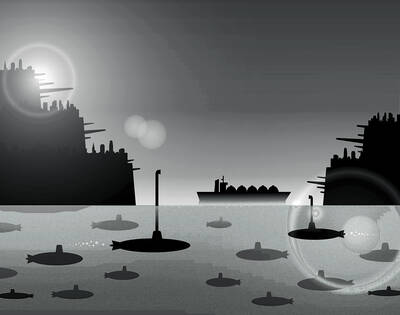
In the event of a war with China, Taiwan has some surprisingly tough defenses that could make it as difficult to tackle as a porcupine: A shoreline dotted with swamps, rocks and concrete barriers; conscription for all adult men; highways and airports that are built to double as hardened combat facilities. This porcupine has a soft underbelly, though, and the war in Iran is exposing it: energy. About 39,000 ships dock at Taiwan’s ports each year, more than the 30,000 that transit the Strait of Hormuz. About one-fifth of their inbound tonnage is coal, oil, refined fuels and liquefied natural gas (LNG),
To counter the CCP’s escalating threats, Taiwan must build a national consensus and demonstrate the capability and the will to fight. The Chinese Communist Party (CCP) often leans on a seductive mantra to soften its threats, such as “Chinese do not kill Chinese.” The slogan is designed to frame territorial conquest (annexation) as a domestic family matter. A look at the historical ledger reveals a different truth. For the CCP, being labeled “family” has never been a guarantee of safety; it has been the primary prerequisite for state-sanctioned slaughter. From the forced starvation of 150,000 civilians at the Siege of Changchun
The two major opposition parties, the Chinese Nationalist Party (KMT) and the Taiwan People’s Party (TPP), jointly announced on Tuesday last week that former TPP lawmaker Chang Chi-kai (張啟楷) would be their joint candidate for Chiayi mayor, following polling conducted earlier this month. It is the first case of blue-white (KMT-TPP) cooperation in selecting a joint candidate under an agreement signed by their chairpersons last month. KMT and TPP supporters have blamed their 2024 presidential election loss on failing to decide on a joint candidate, which ended in a dramatic breakdown with participants pointing fingers, calling polls unfair, sobbing and walking
In recent weeks, Taiwan has witnessed a surge of public anxiety over the possible introduction of Indian migrant workers. What began as a policy signal from the Ministry of Labor quickly escalated into a broader controversy. Petitions gathered thousands of signatures within days, political figures issued strong warnings, and social media became saturated with concerns about public safety and social stability. At first glance, this appears to be a straightforward policy question: Should Taiwan introduce Indian migrant workers or not? However, this framing is misleading. The current debate is not fundamentally about India. It is about Taiwan’s labor system, its


 RSS
RSS