


China is stepping up efforts to court international tourists as part of a broader push to boost domestic spending. However, for travelers to take advantage, Beijing still has more work to do.
Last month, nine government bodies led by the Chinese Ministry of Commerce introduced new policies to woo overseas visitors. They promised to expand the number of countries granted unilateral visa-free entry beyond the 50 percent it already allows, as well as encourage ubiquitous online platforms, including ride-hailing apps and food-delivery firms, to offer more language options for users unable to read Chinese.
Officials are right to address the digital divide. It is one of the biggest challenges for vacationers navigating a completely different online landscape. It is not just a language issue. While the digital ecosystem is highly advanced and serves hundreds of millions, it was built for people who have local identification, mobile phone numbers and bank accounts. Something as simple as buying a train ticket might not be possible for tourists without standing in line, creating unnecessary stress for holidaymakers otherwise ready to dive into fresh experiences.
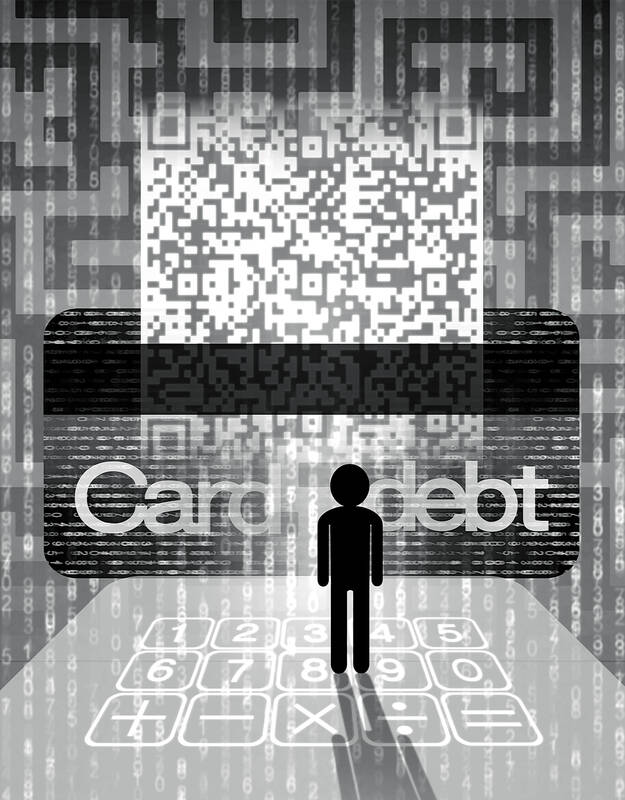
Illustration: Yusha
China is also a near-cashless society where most people can go about their daily lives with only their phones for payment. This is not the norm in most countries. Go to Europe or the US and you could whip out your credit card or hand over cash. However, in China, even visitors who have dutifully linked their credit cards to the most popular payment platforms would need help when something goes wrong.
The government is aware of the issues. In 2023, under pressure for years from regulators wanting to bolster the economy, Alipay (支付寶) and WeChat Pay (微信支付) — the two biggest digital wallet providers — allowed visitors to link their international Visa or Mastercard accounts. In theory, they should have been able to pay like locals, but friction remained. That is why, in a separate announcement, 11 agencies including the cyberspace regulator laid out a two-year framework for removing these obstacles.
That would be impossible without the backing of Ant Group Co (螞蟻集團) and Tencent Holdings Ltd (騰訊), the two companies behind Alipay and WeChat Pay, respectively. They need to up their game in terms of support. Some solutions could include physical kiosks at airports staffed by multilingual staff who could help travelers make trial payments and 24-hour hotlines to troubleshoot when the apps get glitchy.
A reliable fix could help lift foreign arrivals above pre-pandemic levels. After reopening its borders in January 2023 following a three-year shutdown, Beijing began to loosen visa rules to revive business and tourism. However, although the total number of border crossings — including trips made by Chinese nationals — hit a record high last year, international arrivals have not reached their 2019 peak.
That is not surprising. Appealing holiday destinations should project a sense of openness, warmth, and accessibility. That was hardly China’s image during the pandemic, when it was the subject of many unfavorable headlines. An ongoing geopolitical tussle with the US has not been helping either.
Weighed down by an economic slump, it was smart of officials to reverse a long-standing approach of granting visa-free access largely to countries that offered the same deal to China. The new open-door policy did not work immediately, but last year, the number of visitors who took advantage of the scheme rose by 50 percent, official data show, giving a boost to tourism revenue.
China should continue to add countries to the list if it is serious about becoming a compelling place to visit. Having already relaxed the rules for Australia, Canada, and the UK — Western countries with which it has sparred diplomatically — Beijing should consider waiving visas for Americans as a gesture of goodwill when Chinese President Xi Jinping (習近平) and US President Donald Trump meet in May.
To become a more attractive destination, access must go beyond permission to enter. With Chinese digital life so divorced from the rest of the world, travelers must feel confident about doing basic things like booking taxis or paying for meals. Beijing has said it is committed to making the experience as hassle-free as possible. Now it has to deliver.
Juliana Liu is a columnist for Bloomberg Opinion’s Asia team, covering corporate strategy and management in the region. She was previously CNN’s senior business editor for Asia, and a correspondent at BBC News and Reuters. This column reflects the personal views of the author and does not necessarily reflect the opinion of the editorial board or Bloomberg LP and its owners.
What began on Feb. 28 as a military campaign against Iran quickly became the largest energy-supply disruption in modern times. Unlike the oil crises of the 1970s, which stemmed from producer-led embargoes, US President Donald Trump is the first leader in modern history to trigger a cascading global energy crisis through direct military action. In the process, Trump has also laid bare Taiwan’s strategic and economic fragilities, offering Beijing a real-time tutorial in how to exploit them. Repairing the damage to Persian Gulf oil and gas infrastructure could take years, suggesting that elevated energy prices are likely to persist. But the most
In late January, Taiwan’s first indigenous submarine, the Hai Kun (海鯤, or Narwhal), completed its first submerged dive, reaching a depth of roughly 50m during trials in the waters off Kaohsiung. By March, it had managed a fifth dive, still well short of the deep-water and endurance tests required before the navy could accept the vessel. The original delivery deadline of November last year passed months ago. CSBC Corp, Taiwan, the lead contractor, now targets June and the Ministry of National Defense is levying daily penalties for every day the submarine remains unfinished. The Hai Kun was supposed to be

Most schoolchildren learn that the circumference of the Earth is about 40,000km. They do not learn that the global economy depends on just 160 of those kilometers. Blocking two narrow waterways — the Strait of Hormuz and the Taiwan Strait — could send the economy back in time, if not to the Stone Age that US President Donald Trump has been threatening to bomb Iran back to, then at least to the mid-20th century, before the Rolling Stones first hit the airwaves. Over the past month and a half, Iran has turned the Strait of Hormuz, which is about 39km wide at
There is a peculiar kind of political theater unfolding in East Asia — one that would be laughable if its consequences were not so dangerous. Chinese Nationalist Party (KMT) Chairwoman Cheng Li-wun (鄭麗文) on April 12 returned from Beijing, where she met Chinese President Xi Jinping (習近平) and spoke earnestly about preserving “peace” and maintaining the “status quo.” It is a position that sounds responsible, even prudent. It is also a fiction. Taiwan is, by any honest definition, an independent country. It governs itself, defends itself, elects its leaders, and functions as a free and sovereign democracy. Independence is not a


 RSS
RSS