


Since taking office in 2024, President William Lai (賴清德) has faced an opposition-held majority in the legislature. Major policy initiatives have been blocked, with ramifications for governing efficiency and Taiwan’s broader political climate.
When executive-legislative tensions ran high while Lee Teng-hui (李登輝) and Chen Shui-bian (陳水扁) were president, they convened national affairs conferences to build consensus, opening the door for cross-party cooperation and national development.
In 1990, the Wild Lily student movement sparked a wave of reform. Lee convened a national affairs conference, bringing together opposition and ruling party members, as well as academics, experts and community representatives, to deliberate on constitutional and political reforms. As a result, the Temporary Provisions Effective During the Period of National Mobilization for Suppression of the Communist Rebellion were abolished and the legislature was re-elected.
That helped lay the foundations for democratization, shifting the arena of political confrontation from the streets to formal institutions.
In December 1996, following his re-election earlier in the year, Lee convened another conference focused on improving the constitutional system, cross-strait relations and economic development. It achieved a consensus on streamlining provincial governments and privatizing state-owned enterprises, providing direction for institutional reforms and an economic transition.
The elections in 2000 saw the formation of Taiwan’s first minority government, with Chen at the helm. To ease confrontation, Chen convened a cross-party leaders’ summit followed by the Economic Development and Advisory Conference, which brought together voices from politics, labor, business, academia and think tanks. The meeting helped advance the cross-strait economic principle of “active opening, effective management,” generating a cooperative consensus for reform.
Today, multiple reform initiatives and major infrastructure proposals advanced by the government — including a defense budget and tariff agreement with the US — have been blocked by the legislature, with some unable to be referred to committee. Aside from having substantial implications for Taiwan’s development, the two proposals bear heavily on the nation’s cooperation and relationship with the US. The opposition’s repeated obstructions of the bills have drawn Washington’s attention, with a bipartisan group of US lawmakers cosigning a letter to express their concern.
Chinese Nationalist Party (KMT) Chairwoman Cheng Li-wun (鄭麗文) last month said that “the US is our benefactor, but China is our family.” Yet she has attacked the tariff decisions and arms procurement deals involving toward the “benefactor” that are critical to Taiwan’s future, while affording few opportunities for dialogue with members of the ruling party, who, as fellow Taiwanese, must surely count as “family.”
At this impasse, convening a national affairs conference could offer an institutional platform for consensus-building through cross-party dialogue, paving the way forward through democratic processes. If the opposition refuses to participate, the public would see the government offering an olive branch and the opposition too beset by division to engage, from which they could form their own judgements.
With the Lunar New Year holiday passed, the time is ripe to seek a new political atmosphere. Indeed, Lai invited the heads of the five branches of government to an event on Monday, the first working day after the holiday. Legislative Speaker Han Kuo-yu (韓國瑜) issued a statement placing the special defense budget as the top priority for the new session and the Taiwan People’s Party caucus has also said it would send a bill to committee.
Glimmers of cross-party cooperation are emerging, but Lai must go further and convene a conference.
Constitutional and historical issues of greater complexity were faced and worked through by leaders such as Lee and Chen. More than 30 years after democratization, Taiwan’s institutions are more mature and its people more rational. Taiwan can safeguard sovereignty, build an internal consensus and chart a more stable future.
Chen Yu-hsin is a former Taichung County deputy commissioner.
Translated by Gilda Knox Streader
KMT Chairwoman Cheng Li-wun’s (鄭麗文) recent visit to Beijing and her upcoming visit to Washington will serve as a high-level test of her diplomatic mettle. In Beijing, Cheng was received with symbolic gestures, a warm reception, and high-level access. In Washington, she will receive far less pomp and far sharper questions about the KMT’s vision for the future of Taiwan. Her challenge will be to persuade Washington that the KMT’s engagement with China can coexist with strong deterrence. Cheng’s April 7-12 visit to mainland China coincided with an intense period of conflict in Iran. Despite the strategic significance of Cheng’s trip,
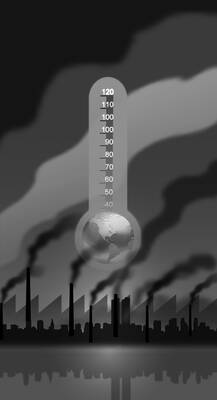
The closure of the Strait of Hormuz has sent the vast Asian chemicals industry into a tailspin. Deprived of the likes of Qatari natural gas and Saudi Arabian oil, the region’s fertilizer and plastics plants are slowing production or even shutting down. Everywhere except China, that is. In petrochemicals, China is unique. As well as a traditional industry that uses oil and gas as feedstock, it has parallel output that relies on its abundant domestic coal. Unsurprisingly, India and other regional powers want to copy and paste the Chinese method. This would not be easy — or climate friendly. The
Indonesian President Prabowo Subianto says he knows how to fix the problems facing Indonesia. Yet his economic mismanagement and authoritarian tendencies are steering the nation toward a familiar mix of currency instability and political chaos. The world’s fourth-most populous nation risks reversing the hard-won democratic and business reforms that came after the Asian Financial Crisis in 1997. At that time, the rupiah collapsed and the political upheaval that followed forced former president Haji Mohamed Suharto from power. Prabowo’s administration is ignoring similar warning signs. That disconnect was apparent in a national address on Wednesday, when Prabowo projected the swagger that has
“Of course you can choose not to be Taiwanese, just do not stay here,” chairwoman of Taipei 101 operator Taipei Financial Center Corp Janet Chia (賈永婕) said in an online interview with local entertainer Tai Chih-yuan (邰智源), triggering intense discussion on social media, with politicians across party lines weighing in. In the interview, which was aired on May 14, Chia and Tai’s discussion over a meal in Taipei 101 covered Chia’s career change from entertainer to chairwoman and US climber Alex Honnold’s free solo climb up the Taipei 101 building. During the interview, Chia said, “Being on this land, we


 RSS
RSS