


The Victorian statesman Viscount Palmerston’s definition of undogmatic foreign policy remains as pertinent today as when first formulated in an 1840 speech. “Our interests are eternal and perpetual, and those interests it is our duty to follow.” Out of tact, Palmerston’s name would not have been on British Prime Minister Keir Starmer’s lips during his four-day courtesy call on Xi Jinping (習近平) “to build a more sophisticated relationship,” but that is still the name of the diplomatic game.
China’s nationalists date the start of its “century of humiliation” as the First Opium War from 1839 to 1842, brought to a winning end by Palmerston after he forced the Qing Dynasty to open to world trade — including narcotics from British-ruled India. The Chinese Communist Party justifies its dictatorial rule today by pointing to this era of domestic weakness and foreign invasions.
Today, Palmerstonian pragmatism continues to shape British foreign policy, and is as sure a guide to modern Chinese diplomacy as Marxist-Leninist ideology. Xi is happy to assure a stream of overseas dignitaries, Starmer very much included, that he is a more stable partner than his superpower rival, the mercurial US President Donald Trump. Divide and rule it is.
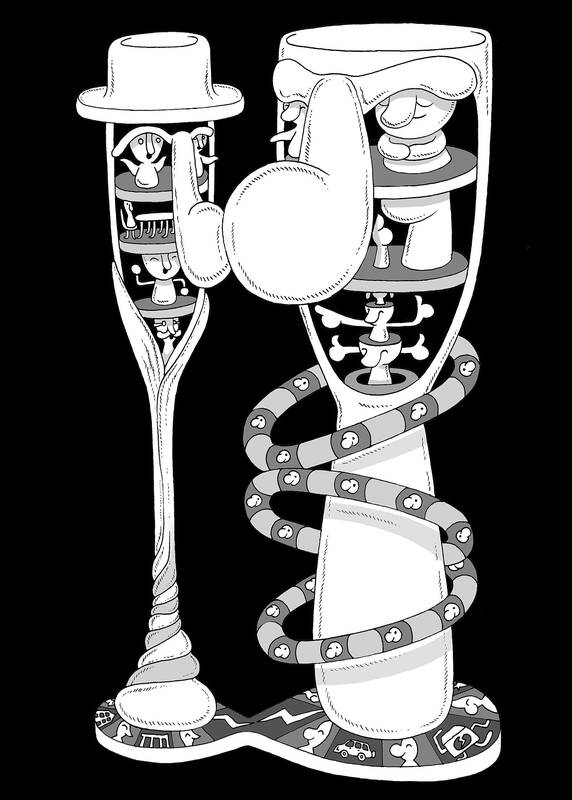
Illustration: Mountain People
Unusually, Xi went out of his way to praise the record of Labour Party governments for making “important contributions to the growth of UK-China relations.” In return the UK has refused to designate China unambiguously as a national security threat, unlike Russia and Iran. Blaise Metreweli, MI6’s new chief, downplayed Beijing’s aggressive espionage and cyberoperations in her first public speech last month, to make sure the topic did not overshadow the visit.
However, China’s economic policy has reverted to the Qing-era autarchy the UK once opposed. Goldman Sachs Group Inc estimates that China’s US$1.2 trillion trade surplus is the largest in economic history. Xi also smiles on Starmer because the British government levies lower tariffs on Chinese exports than the EU or the US, letting him flood the UK with its goods.
So what does Starmer’s Labour government get out of this sophisticated liaison? Very little in terms of trade and national security, but rather more politically.
Starmer has claimed a few small wins from his visit. Travel bans were lifted on six British China hawks (mostly Conservative Party members). He secured visa-free travel for Britons traveling to China for less than 30 days — good news for the Chinese hospitality industry. Tariffs on whisky were halved, from 10 percent to 5 percent — which might play well with voters in upcoming elections in Scotland, but is hardly groundbreaking. Further talks were promised on a bilateral services deal, as they have been after many Sino-British summits before.
Starmer’s Conservative opponents complained that even these meager concessions have been bought at the price of gifting China a mega-embassy on the edge of the City of London. The Conservatives say that would create “a huge spy bunker in the heart of London” equipped with “dungeons,” which could be used for torturing dissidents. They exaggerate. China would use the site to replace six existing buildings that together occupy more space and are perhaps more difficult to monitor. For dungeon, read basement.
In all of this a real Chinese challenge to European security scarcely gets raised by critics: Xi continues to bankroll Russian President Vladimir Putin’s war on Ukraine. With its catastrophic losses in soldiers and munitions, Russia would be hard put to fight on this winter without Chinese finance, trade and materiel. Xi’s purge of his army’s high command could also presage an invasion of Taiwan.
Ministers on the Beijing trip have been reminding journalists of China’s importance as a trading partner, but this is overdone. While British exports to China were worth £30.5 billion (US$41.75 billion) in the year to June, its trade deficit with Beijing was more than £42 billion. At the end of 2023, China was responsible for 0.2 percent of foreign direct investment in the UK. Its companies would like to invest more in British technology, but it would be unwise to give them unfettered access.
Deliberations about how the commercial relationship should work are complicated. Should Chinese-related companies be so heavily involved in British ports, and how is the phaseout of Chinese investment in the nuclear sector going? On all of that, the government is a closed book.
Sales of Chinese electric vehicles in the UK are soaring, at the same time as the number of vehicles manufactured in the UK hit a low not seen since 1952. Starmer is being pressed to let China build electric vehicle factories, but skeptics such as Charles Parton, a former Beijing-based diplomat, fear that they would produce “surveillance vehicles on wheels.” The US prohibits any imports of vehicles if they contain Chinese software.
There is talk too of Chinese wind turbines, but they can be switched off remotely and component supplies could be interrupted if Beijing and London ever fall out.
Trade and good relations are not umbilically linked in any case. Diplomatic ties soured after the Dalai Lama’s visit to the UK in 2012, but exports rose in the following years. After then-British prime minister David Cameron proclaimed “a golden era of relations” in 2015, exports fell.
The politics of being seen to engage China do favor Starmer. Conservative leader Kemi Badenoch’s call for him to put off his visit sounded like youthful naivete back home. Even red-blooded British populists would think it sensible to talk to the leader of the world’s alternative military and economic superpower, if only on the “know your enemy” principle.
Starmer, like German Chancellor Friedrich Merz who would be following him to Beijing this month, also has another audience in mind. Of late Trump has been taking his most loyal European allies for granted — even insulting them — while buddying up to Putin and Xi. Starmer and Merz are both instinctive Atlanticists. A gentle reminder to the White House that two can play this game is well in order. However, the revival of British prosperity is unlikely to lie in trade with Beijing. Wedded to the notion of self-reliance, the Chinese Communist Party proclaimed 2025 as the year of “Made in China.”
Martin Ivens is the editor of the Times Literary Supplement. Previously, he was editor of the Sunday Times and its chief political commentator. This column reflects the personal views of the author and does not necessarily reflect the opinion of the editorial board or Bloomberg LP and its owners.
A gap appears to be emerging between Washington’s foreign policy elites and the broader American public on how the United States should respond to China’s rise. From my vantage working at a think tank in Washington, DC, and through regular travel around the United States, I increasingly experience two distinct discussions. This divergence — between America’s elite hawkishness and public caution — may become one of the least appreciated and most consequential external factors influencing Taiwan’s security environment in the years ahead. Within the American policy community, the dominant view of China has grown unmistakably tough. Many members of Congress, as
The shifting geopolitical tectonic plates of this year have placed Beijing in a profound strategic dilemma. As Chinese President Xi Jinping (習近平) prepares for a high-stakes summit with US President Donald Trump, the traditional power dynamics of the China-Japan-US triangle have been destabilized by the diplomatic success of Japanese Prime Minister Sanae Takaichi in Washington. For the Chinese leadership, the anxiety is two-fold: There is a visceral fear of being encircled by a hardened security alliance, and a secondary risk of being left in a vulnerable position by a transactional deal between Washington and Tokyo that might inadvertently empower Japan
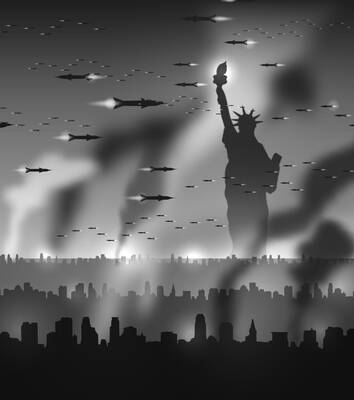
After declaring Iran’s military “gone,” US President Donald Trump appealed to the UK, France, Japan and South Korea — as well as China, Iran’s strategic partner — to send minesweepers and naval forces to reopen the Strait of Hormuz. When allies balked, the request turned into a warning: NATO would face “a very bad” future if it refused. The prevailing wisdom is that Trump faces a credibility problem: having spent years insulting allies, he finds they would not rally when he needs them. That is true, but superficial, as though a structural collapse could be caused by wounded feelings. Something
Former Taipei mayor and Taiwan People’s Party (TPP) founding chairman Ko Wen-je (柯文哲) was sentenced to 17 years in prison on Thursday, making headlines across major media. However, another case linked to the TPP — the indictment of Chinese immigrant Xu Chunying (徐春鶯) for alleged violations of the Anti-Infiltration Act (反滲透法) on Tuesday — has also stirred up heated discussions. Born in Shanghai, Xu became a resident of Taiwan through marriage in 1993. Currently the director of the Taiwan New Immigrant Development Association, she was elected to serve as legislator-at-large for the TPP in 2023, but was later charged with involvement


 RSS
RSS