


Hours before his life and the fate of his country was changed dramatically, Venezuelan President Nicolas Maduro was exchanging smiles and handshakes with a Chinese delegation in the presidential palace in Caracas.
On Friday evening last week, shortly before he was seized by US forces, Maduro wrote on Telegram of his meeting with China’s Special Representative of the Chinese Government on Latin American and Caribbean Affairs Qiu Xiaoqi (邱小琪): “A fraternal meeting that reaffirms the strong bonds of brotherhood and friendship between China and Venezuela. Through thick and thin!”
Those bonds would be put to the test now that US President Donald Trump has upended the government of one of China’s key “all-weather” strategic partners in Latin America, the term officially adopted in a joint statement signed in 2023 by Maduro and Chinese President Xi Jinping (習近平).
China has, unlike European countries, led the charge in condemning the US’ actions in removing by force the head of a foreign state. China has also called for Maduro’s release and backed a UN Security Council meeting, requested by Colombia, to debate Trump’s decision to seize him.
Chinese Minister of Foreign Affairs Wang Yi (王毅) said: “We have never believed that any country can act as the world’s police, nor do we accept that any nation can claim to be the world’s judge.”
Chinese social media was awash with content condemning the US operation, with many accusing Washington of colonialism, while content that celebrated Maduro’s capture appeared to be censored.
Renmin University Institute of International Affairs director Wang Yiwei (王義桅) said Trump’s actions were “imperialist” and that Venezuela was likely “just the first” country in Latin America to be subjected to this kind of assault.
China has been boosting its diplomacy and investment in Latin America for years, challenging US influence in Washington’s backyard. Last year, Beijing hosted a dialogue between China and Latin American and Caribbean countries, and announced that China-Latin America trade had reached a record high of US$519 billion.
So, Beijing would also be concerned about what the crisis in Venezuela means for China’s interests in the oil-rich country and for its influence in the region.
Venezuela is the fourth-biggest recipient of loans from Chinese official lenders, receiving about US$106 billion in commitments between 2000 and 2023, according to AidData, a research institute at William and Mary University in Virginia. In 2024, Venezuela’s debts to China were thought to total about US$10 billion.
China’s top financial regulator on Monday asked major lenders to report their exposure to Venezuela, Bloomberg reported, citing unnamed sources.
University of California San Diego professor Victor Shih said: “If under US pressure, the Venezuelan government, which is highly indebted to multiple actors, places US creditors and claimants well ahead of Chinese ones, Chinese banks may see a significant amount of losses.”
As with the US, many of China’s interests in Venezuela are linked to oil.
For years, Beijing has extended credit to Venezuela in loan-for-oil deals, which has made China the biggest buyer of Venezuelan crude. Last month, a tanker bound for China and thought to be carrying Venezuelan oil was seized by US forces as part of Trump’s campaign against Maduro’s regime.
The money owed by Venezuelan borrowers is likely to be more important to Beijing than the oil itself. Venezuelan oil only accounts for about 4 percent of China’s total imports.
Shih said Beijing might be able to use its well-established leverage against the US, such as its ability to halt the export of rare earths, to force the US to come to some kind of deal with Chinese creditors.
“For example, future oil proceeds can be split in a way that still leaves substantial cash flows to Chinese creditors, who can restructure the debt to have slightly lower interest and longer duration.”
The economic repercussions for China might rest upon who ultimately takes control in Venezuela.
Trump said the US would “run” the South American country, but this might be in the form of a puppet regime rather than US forces. That would provide Beijing with cover to seek a settlement with Caracas directly rather than negotiate with the US in the midst of an already challenging trade war.
The US would exploit Venezuela’s rich oil reserves to “rebuild” the country, Trump said, while US Secretary of State Marco Rubio has suggested the US would hold Venezuela’s oil exports hostage to exert leverage on the new leadership in Caracas.
Senior international relations academic Shen Dingli (沈丁立) said: “Should Venezuela’s new government decide not to honor agreements made by the Maduro administration, China would have no choice but to pursue international litigation.”
Any legal action would be targeted at Venezuela rather than the US, Shen said.
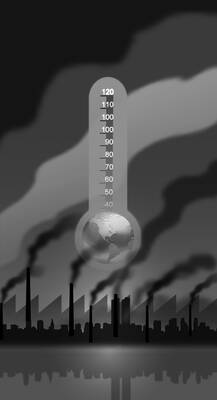
The closure of the Strait of Hormuz has sent the vast Asian chemicals industry into a tailspin. Deprived of the likes of Qatari natural gas and Saudi Arabian oil, the region’s fertilizer and plastics plants are slowing production or even shutting down. Everywhere except China, that is. In petrochemicals, China is unique. As well as a traditional industry that uses oil and gas as feedstock, it has parallel output that relies on its abundant domestic coal. Unsurprisingly, India and other regional powers want to copy and paste the Chinese method. This would not be easy — or climate friendly. The
KMT Chairwoman Cheng Li-wun’s (鄭麗文) recent visit to Beijing and her upcoming visit to Washington will serve as a high-level test of her diplomatic mettle. In Beijing, Cheng was received with symbolic gestures, a warm reception, and high-level access. In Washington, she will receive far less pomp and far sharper questions about the KMT’s vision for the future of Taiwan. Her challenge will be to persuade Washington that the KMT’s engagement with China can coexist with strong deterrence. Cheng’s April 7-12 visit to mainland China coincided with an intense period of conflict in Iran. Despite the strategic significance of Cheng’s trip,
History might remember 2026, not 2022, as the year artificial intelligence (AI) truly changed everything. ChatGPT’s launch was a product moment. What is happening now is an anthropological moment: AI is no longer merely answering questions. It is now taking initiative and learning from others to get things done, behaving less like software and more like a colleague. The economic consequence is the rise of the one-person company — a structure anticipated in the 2024 book The Choices Amid Great Changes, which I coauthored. The real target of AI is not labor. It is hierarchy. When AI sharply reduces the cost
US President Donald Trump recently repeated his claim that “Taiwan stole America’s chip industry,” reigniting public debate on the issue. As a former Taiwanese minister of economic affairs and an entrepreneur deeply involved in semiconductor supply chain development, I feel a responsibility to clarify this misunderstanding. From the perspective of global industrial evolution and the economic principle of comparative advantage, such a statement appears overly simplistic and risks obscuring the essence of the issue. The rise of Taiwan’s semiconductor industry was not built on “replacing America,” but rather emerged as a result of countries pursuing different development paths within the


 RSS
RSS