


China’s attempts to hold its tourists hostage have yet again failed, Japan being a case in point. Taiwan is familiar with this bullying tactic: In hindsight, hysterical outbursts from Beijing helped Taiwan to control the COVID-19 pandemic in 2019.
The region is no stranger to Chinese bans on tourism. In an attempt to punish and sabotage Seoul for allowing Washington to deploy the Terminal High Altitude Area Defense missile system, China banned group tours to South Korea in 2017. Not only did it fail to push Seoul to succumb, US-South Korea security cooperation has improved under successive administrations in Washington.
Although China remains one of its top three sources of tourists, South Korea has since de-risked, with Chinese tourists at roughly 23 percent of the total, down from 47 percent in 2017.
Taiwan experienced a ban on individual tourists from China in the middle of 2019. That was a ploy to hurt the local economy to punish views that the Chinese Communist Party leadership did not condone.
However, the ban helped then-president Tsai Ing-wen (蔡英文) better control the COVID-19 pandemic.
Through Taipei’s effective control of the pandemic, the nation won global praise and significantly boosted its soft power through the “Taiwan Can Help” campaign.
China’s ban gave Tsai the mandate to diversify Taiwan’s tourism industry from reliance on Chinese visitors. She aggressively pivoted to welcome others in the region, including Japanese, South Korean and Southeast Asian tourists. Despite a short-term drop in tourism revenue, the figures have rebounded and have been supplemented by tourists from elsewhere.
This is a lesson that Japan has already learned from, as it focuses on tourism from nations other than China. Chinese efforts to coerce the administration of Japanese Prime Minister Sanae Takaichi into toeing its line have backfired.
What is striking is the positive political effects that the Taiwan and Japan bans have brought. In the case of Japan, not only has Takaichi’s defiance in not kowtowing to Chinese President Xi Jinping’s (習近平) line following the ban boosted her popularity, it has also given her the perfect ammunition to address and resolve tourism issues that she and her allies campaigned on.
Not only has Takaichi’s public approval rating soared to a record 75 percent weeks after China’s ban, Japan’s partnership with Taiwan has blossomed. Just last week, a delegation of 30 Japanese lawmakers visited Taiwan, including ruling-party heavyweights who previously had been seen taking a friendlier stance toward China, such as former Japanese foreign and defense minister Taro Kono.
If such bullying tactics are aimed at isolating Taiwan, it has only brought the nation closer to its key democratic partners. What is apparent is how limited the effect of tourism bans are and how Chinese aggression is putting the global spotlight on Taiwan.
As Beijing continues to unilaterally disrupt regional peace through its armed forces, including this week’s “Justice Mission 2025” live-fire drills around Taiwan, it will only draw more condemnation from its neighbors, highlight the security risk that it poses, and push its neighbors to edge away from the Chinese economy and its consumers.
Rath Wang is a senior policy fellow at Safe Spaces, a consulting firm based in Taipei and Washington focusing on Taiwan’s politics, media, civil society and key issues influencing Taiwan’s future. He is a producer and host of political talk shows and podcasts, and has worked on political campaigns and advocacies in Taiwan, Japan and the US. He can be reached at rathwang@safespacesllc.com.
A gap appears to be emerging between Washington’s foreign policy elites and the broader American public on how the United States should respond to China’s rise. From my vantage working at a think tank in Washington, DC, and through regular travel around the United States, I increasingly experience two distinct discussions. This divergence — between America’s elite hawkishness and public caution — may become one of the least appreciated and most consequential external factors influencing Taiwan’s security environment in the years ahead. Within the American policy community, the dominant view of China has grown unmistakably tough. Many members of Congress, as
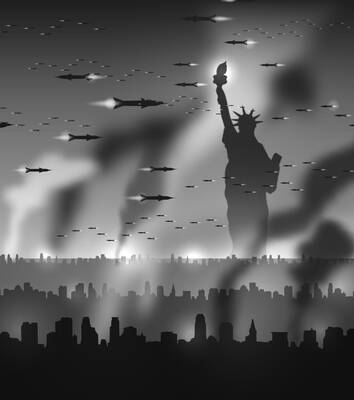
After declaring Iran’s military “gone,” US President Donald Trump appealed to the UK, France, Japan and South Korea — as well as China, Iran’s strategic partner — to send minesweepers and naval forces to reopen the Strait of Hormuz. When allies balked, the request turned into a warning: NATO would face “a very bad” future if it refused. The prevailing wisdom is that Trump faces a credibility problem: having spent years insulting allies, he finds they would not rally when he needs them. That is true, but superficial, as though a structural collapse could be caused by wounded feelings. Something
Former Taipei mayor and Taiwan People’s Party (TPP) founding chairman Ko Wen-je (柯文哲) was sentenced to 17 years in prison on Thursday, making headlines across major media. However, another case linked to the TPP — the indictment of Chinese immigrant Xu Chunying (徐春鶯) for alleged violations of the Anti-Infiltration Act (反滲透法) on Tuesday — has also stirred up heated discussions. Born in Shanghai, Xu became a resident of Taiwan through marriage in 1993. Currently the director of the Taiwan New Immigrant Development Association, she was elected to serve as legislator-at-large for the TPP in 2023, but was later charged with involvement
Out of 64 participating universities in this year’s Stars Program — through which schools directly recommend their top students to universities for admission — only 19 filled their admissions quotas. There were 922 vacancies, down more than 200 from last year; top universities had 37 unfilled places, 40 fewer than last year. The original purpose of the Stars Program was to expand admissions to a wider range of students. However, certain departments at elite universities that failed to meet their admissions quotas are not improving. Vacancies at top universities are linked to students’ program preferences on their applications, but inappropriate admission


 RSS
RSS