


Climate change is a multiplier of conflict, and governance gaps are a multiplier of climate risk. The connection between Sustainable Development Goal 16 on peace, justice and strong institutions, and goal 13 on climate action can no longer be ignored. India and Taiwan are well-placed to advance both goals in tandem through cooperation grounded in resilience, transparency and shared societal strengths.
Climate exposure already shapes internal stability in India. Extreme heat has increased sharply, with temperature records tumbling across northern India in recent years, exacerbating water shortages and heightening rural distress. In Rajasthan, Maharashtra and Telangana states, local administrations now routinely activate heat action plans — early warning systems, public-cooling centers, and coordination between health and disaster-response departments to protect vulnerable populations.
These efforts illustrate how effective institutions reduce climate impacts and preserve social stability. This was first demonstrated in Ahmedabad, where a municipal heat action plan introduced after a deadly 2010 heatwave lowered heat-related mortality in subsequent years and serves today as a model for other cities.
Taiwan’s achievements in disaster-risk governance are widely recognized, especially in typhoon preparedness and earthquake response. The Central Weather Administration’s real-time alert systems, an extensive culture of community drills and strong coordination between local and central authorities have saved lives.
Typhoon Morakot triggered catastrophic landslides in 2009. The government subsequently undertook institutional reform by investing in slope-land monitoring, rapid-evacuation protocols and deeper indigenous consultation in hazard-prone areas.
Deepening India-Taiwan cooperation offers a chance to jointly advance institutional solutions for peace and climate stability. While academic collaborations already cover ecological engineering, disaster management and community adaptation, expanding these into structured joint research or practical working groups would ensure progress even with limited formal diplomacy.
Taiwan’s expertise in remote sensing, early warning systems and digital governance could support India’s efforts to modernize disaster response infrastructure, while India’s large-scale climate adaptation experiments, such as the National Disaster Response Force, the National Cyclone Resilience Programme and community-driven watershed restoration in states like Rajasthan offer lessons that Taiwan’s smaller communities could quickly adapt.
In India, the critical functions in managing water resources, relief distribution and community harmony during climate-related shocks are performed by local self-help groups, farmer cooperatives and women-led governance bodies. Taiwan’s community volunteers, neighborhood wardens and indigenous councils do the same.
In several parts of India, migration rises when the monsoon patterns fail; such migration can stress urban systems and sharpen social tensions. Taiwan also faces water shortages that impair semiconductor production and food supplies. Taiwan’s advanced water-recycling technologies and management systems could support adaptation in India’s water-stressed industrial clusters, whereas India’s large-scale solar-energy rollout could support Taiwan in accelerating its energy transition without destabilizing local communities. By reducing economic volatility, both countries could lower the risk of social grievances that often escalate into political instability.
Cooperation on peace and climate is a pathway that could be insulated from political sensitivities through diplomatic channels. Because climate and disaster-management partnerships are often less politically contentious than security or economic agreements, they can function as low-risk, high-benefit avenues of engagement even within the constraints of geopolitics.
By explicitly linking climate governance with social stability, India and Taiwan could demonstrate how democratic partnerships contribute to peace in the Indo-Pacific region. Their collaboration could serve as a model, showing that climate protection and peace are interdependent and best achieved through open, cooperative approaches between democracies.
Sutandra Singha is an independent researcher with a doctorate in international studies from Jawaharlal Nehru University in New Delhi, specializing in climate change.
A gap appears to be emerging between Washington’s foreign policy elites and the broader American public on how the United States should respond to China’s rise. From my vantage working at a think tank in Washington, DC, and through regular travel around the United States, I increasingly experience two distinct discussions. This divergence — between America’s elite hawkishness and public caution — may become one of the least appreciated and most consequential external factors influencing Taiwan’s security environment in the years ahead. Within the American policy community, the dominant view of China has grown unmistakably tough. Many members of Congress, as
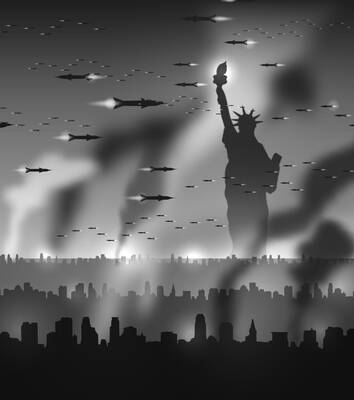
After declaring Iran’s military “gone,” US President Donald Trump appealed to the UK, France, Japan and South Korea — as well as China, Iran’s strategic partner — to send minesweepers and naval forces to reopen the Strait of Hormuz. When allies balked, the request turned into a warning: NATO would face “a very bad” future if it refused. The prevailing wisdom is that Trump faces a credibility problem: having spent years insulting allies, he finds they would not rally when he needs them. That is true, but superficial, as though a structural collapse could be caused by wounded feelings. Something
Former Taipei mayor and Taiwan People’s Party (TPP) founding chairman Ko Wen-je (柯文哲) was sentenced to 17 years in prison on Thursday, making headlines across major media. However, another case linked to the TPP — the indictment of Chinese immigrant Xu Chunying (徐春鶯) for alleged violations of the Anti-Infiltration Act (反滲透法) on Tuesday — has also stirred up heated discussions. Born in Shanghai, Xu became a resident of Taiwan through marriage in 1993. Currently the director of the Taiwan New Immigrant Development Association, she was elected to serve as legislator-at-large for the TPP in 2023, but was later charged with involvement
Out of 64 participating universities in this year’s Stars Program — through which schools directly recommend their top students to universities for admission — only 19 filled their admissions quotas. There were 922 vacancies, down more than 200 from last year; top universities had 37 unfilled places, 40 fewer than last year. The original purpose of the Stars Program was to expand admissions to a wider range of students. However, certain departments at elite universities that failed to meet their admissions quotas are not improving. Vacancies at top universities are linked to students’ program preferences on their applications, but inappropriate admission


 RSS
RSS