


The public debate surrounding the impeachment campaign against President William Lai (賴清德) has been framed as a clash of political wills: a defiant president versus an aggrieved legislature. That framing is not only misleading — it conceals a deliberate inversion of constitutional logic being pursued by the Chinese Nationalist Party (KMT) and the Taiwan People’s Party (TPP).
What is unfolding is not simply political theater, but a calculated effort to turn the Constitution’s safeguards on their head, while pretending to defend them.
Using their combined majority in the Legislative Yuan, the KMT and the TPP pushed through revisions to the Act Governing the Allocation of Government Revenues and Expenditures (財政收支劃分法) that would dramatically increase the central government’s financial obligations. Under existing constitutional and legal constraints, implementing this framework would force the government to borrow beyond permissible limits.
Borrowing limits exist to prevent reckless fiscal behavior and to protect long-term state stability. A law that compels unconstitutional borrowing is itself constitutionally defective.
This is why the Executive Yuan refused to countersign the measure. Countersignature is not ceremonial. It is a constitutional safeguard. By countersigning, the executive certifies that a policy is lawful, executable and constitutionally sound. Refusing to countersign a measure that would require unconstitutional borrowing is not obstruction; it is the system functioning as designed.
The matter should have returned to legislative revision. Instead, the KMT and the TPP — led vocally by TPP Chairman Huang Kuo-chang (黃國昌) — accused Lai of “breaking the Constitution” by refusing to countersign a measure that would itself violate constitutional borrowing limits. The logic was flipped: The act of preventing a constitutional breach was reframed as the breach itself.
This inversion is the core political strategy.
By collapsing a complex chain of responsibility into a simple slogan — “the legislature passed a law, the president refused to sign” — the KMT and the TPP recast executive restraint as authoritarianism. Cause becomes effect. Prevention becomes defiance. The original constitutional problem disappears from view.
Those advancing this maneuver know better. Budgetary mechanics and countersignature authority are not obscure matters to veteran legislators. Huang, in particular, is well aware that impeachment was designed for clear, egregious abuses of power, not policy disputes manufactured by forcing the Executive Yuan into an unconstitutional corner.
The impeachment campaign proceeds, because the real objective is reputational damage.
Even a doomed impeachment serves a political purpose: It plants the impression that “so many people want the president removed, so he must be a bad president.” The damage is inflicted at the level of perception, not law.
Theater ends when the curtain falls. This campaign seeks to normalize the idea that constitutional safeguards are suspect, that refusing to certify illegality is tyranny, and that executive restraint itself constitutes constitutional misconduct.
If this logic is allowed to stand, Taiwan’s checks and balances would be quietly hollowed out. A future legislature would learn that it can force the Executive Yuan into an impossible choice: Contravene the Constitution or be accused of doing so. Either way, the Executive Yuan loses.
Democracies rarely fail because rules are openly broken. They weaken when rules are deliberately misrepresented, inverted and abused — until citizens can no longer tell which institutions are protecting them and which are manipulating them.
Taiwanese should not fall into this trap. Whether you voted for him or not, Lai is still the president, and impeachment is the most serious step a democracy can take against its own leader. Before forming a view based on slogans or headline numbers, Taiwanese should pause and ask themselves a basic question: Do I actually understand what the president is being accused of, and why? Or am I being asked to condemn him simply for refusing to go along with something that could not be responsibly carried out?
Every citizen owes it to themselves — and to Taiwan — to look past the noise and understand the issue before taking sides.
John Cheng is a retired businessman from Hong Kong now living in Taiwan.
KMT Chairwoman Cheng Li-wun’s (鄭麗文) recent visit to Beijing and her upcoming visit to Washington will serve as a high-level test of her diplomatic mettle. In Beijing, Cheng was received with symbolic gestures, a warm reception, and high-level access. In Washington, she will receive far less pomp and far sharper questions about the KMT’s vision for the future of Taiwan. Her challenge will be to persuade Washington that the KMT’s engagement with China can coexist with strong deterrence. Cheng’s April 7-12 visit to mainland China coincided with an intense period of conflict in Iran. Despite the strategic significance of Cheng’s trip,
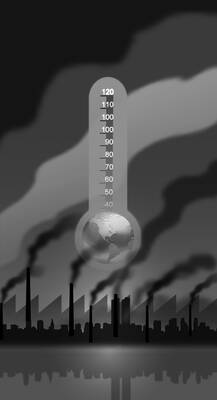
The closure of the Strait of Hormuz has sent the vast Asian chemicals industry into a tailspin. Deprived of the likes of Qatari natural gas and Saudi Arabian oil, the region’s fertilizer and plastics plants are slowing production or even shutting down. Everywhere except China, that is. In petrochemicals, China is unique. As well as a traditional industry that uses oil and gas as feedstock, it has parallel output that relies on its abundant domestic coal. Unsurprisingly, India and other regional powers want to copy and paste the Chinese method. This would not be easy — or climate friendly. The
Indonesian President Prabowo Subianto says he knows how to fix the problems facing Indonesia. Yet his economic mismanagement and authoritarian tendencies are steering the nation toward a familiar mix of currency instability and political chaos. The world’s fourth-most populous nation risks reversing the hard-won democratic and business reforms that came after the Asian Financial Crisis in 1997. At that time, the rupiah collapsed and the political upheaval that followed forced former president Haji Mohamed Suharto from power. Prabowo’s administration is ignoring similar warning signs. That disconnect was apparent in a national address on Wednesday, when Prabowo projected the swagger that has
“Of course you can choose not to be Taiwanese, just do not stay here,” chairwoman of Taipei 101 operator Taipei Financial Center Corp Janet Chia (賈永婕) said in an online interview with local entertainer Tai Chih-yuan (邰智源), triggering intense discussion on social media, with politicians across party lines weighing in. In the interview, which was aired on May 14, Chia and Tai’s discussion over a meal in Taipei 101 covered Chia’s career change from entertainer to chairwoman and US climber Alex Honnold’s free solo climb up the Taipei 101 building. During the interview, Chia said, “Being on this land, we


 RSS
RSS