


A preschool teacher in Taipei’s Xinyi District (信義) was indicted in August last year on charges of alleged sexual assault and offenses of forced obscenity against six girls. Prosecutors said the man was suspected of sexually abusing at least 20 girls.
There has been public anger toward not only the perpetrator, but also some government agencies that were accused of not being proactive enough.
The teacher, Mao Chun-shen (毛畯珅), is the son of the owner of Taipei Piramide School (私立培諾米達信義幼兒園), and prosecutors said they found that he possessed more than 600 sexually explicit images or videos of children he allegedly abused.
Parents reported the first suspected case to the authorities in July 2022. However, after watching the preschool’s surveillance footage, prosecutors found no clear signs of any wrongdoing, and Mao was not suspended from his teaching job, while the preschool was allowed to enroll more students. Prosecutors did not charge him due to a lack of evidence.
After more parents accused him of sexual abuse, prosecutors indicted and detained Mao in July last year — a year after the first case was reported.
There has been a public outcry, because the Taipei City Government seemed to have quickly dismissed the case in 2022, while prosecutors were still investigating it, allowing Mao to continue teaching.
Taipei Mayor Chiang Wan-an (蔣萬安), who took office in December 2022, bowed and apologized on July 19 to those affected by the case, accepted responsibility and promised that the city government would improve its policies.
Taiwan People’s Party (TPP) Chairman Ko Wen-je (柯文哲), Chiang’s predecessor as Taipei mayor, on the same day said there is room for improvement, and during investigations officials should be “protecting children,” while not “causing parents panic and deciding a suspect is guilty before any ruling.”
He also said that “apologizing is the easiest, but what is the use if you cannot solve the problem?” He was seemingly shifting the blame to Chiang.
However, Chinese-language Mirror Magazine on Tuesday last week revealed the city government’s meeting minutes from July and August 2022, when Ko was mayor. They showed that the education and social welfare departments were aware of the complaints, but passed the buck to each other and failed to follow up, with a document marked: “Noted and filed for reference.”
The city government on Friday last week announced 10 steps to improve policies and said the two departments would face a performance review committee.
It might be a relief to some parents that the preschool was shut down. The Taipei District Court is expected to reach a verdict in the case next month, and the city government has admitted its negligence and promised to revise its policies to prevent similar cases, including requiring the immediate suspension of suspects from teaching once a sexual assault report is made.
However, while seeking justice and holding officials accountable are important, the harm caused to victims and their family is irreparable. The victims should be carefully supported.
Laws must also be reviewed to better define which government agencies are responsible for handling such cases.
Moreover, the case is also a reminder for parents and schools to reconsider when they should start teaching children about the difference between appropriate and inappropriate touching to prevent sexual abuse. Parents and schools should trust children when they report uncomfortable experiences, while education and social welfare officials should receive periodic training so that they can handle such cases better.
A gap appears to be emerging between Washington’s foreign policy elites and the broader American public on how the United States should respond to China’s rise. From my vantage working at a think tank in Washington, DC, and through regular travel around the United States, I increasingly experience two distinct discussions. This divergence — between America’s elite hawkishness and public caution — may become one of the least appreciated and most consequential external factors influencing Taiwan’s security environment in the years ahead. Within the American policy community, the dominant view of China has grown unmistakably tough. Many members of Congress, as
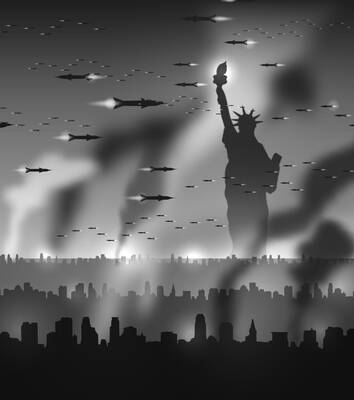
After declaring Iran’s military “gone,” US President Donald Trump appealed to the UK, France, Japan and South Korea — as well as China, Iran’s strategic partner — to send minesweepers and naval forces to reopen the Strait of Hormuz. When allies balked, the request turned into a warning: NATO would face “a very bad” future if it refused. The prevailing wisdom is that Trump faces a credibility problem: having spent years insulting allies, he finds they would not rally when he needs them. That is true, but superficial, as though a structural collapse could be caused by wounded feelings. Something
Former Taipei mayor and Taiwan People’s Party (TPP) founding chairman Ko Wen-je (柯文哲) was sentenced to 17 years in prison on Thursday, making headlines across major media. However, another case linked to the TPP — the indictment of Chinese immigrant Xu Chunying (徐春鶯) for alleged violations of the Anti-Infiltration Act (反滲透法) on Tuesday — has also stirred up heated discussions. Born in Shanghai, Xu became a resident of Taiwan through marriage in 1993. Currently the director of the Taiwan New Immigrant Development Association, she was elected to serve as legislator-at-large for the TPP in 2023, but was later charged with involvement
Out of 64 participating universities in this year’s Stars Program — through which schools directly recommend their top students to universities for admission — only 19 filled their admissions quotas. There were 922 vacancies, down more than 200 from last year; top universities had 37 unfilled places, 40 fewer than last year. The original purpose of the Stars Program was to expand admissions to a wider range of students. However, certain departments at elite universities that failed to meet their admissions quotas are not improving. Vacancies at top universities are linked to students’ program preferences on their applications, but inappropriate admission


 RSS
RSS