


China on Thursday last week launched military exercises titled “Joint Sword-2024A” around Taiwan, which it said were to “punish” Taiwan in response to President William Lai’s (賴清德) inaugural address. While these drills showcased Beijing’s advanced military capabilities, they were also born of its weakness and demonstrated once again its total inability, or unwillingness, to understand and respect the preferences of Taiwanese.
For all its “great rejuvenation,” Beijing cannot influence Taiwanese politics the way it would like. It is no closer to achieving “unification” on its own terms than when former Chinese leader Deng Xiaoping (鄧小平) issued his “message to Taiwanese patriots” in 1979.
Taiwanese have consistently shown that they believe that only they have the right to determine their future, and that this is a conversation Beijing has no right to be a part of. Unable to influence by persuasion, China resorts to violence instead.
Joseph Nye defined “soft power” as the “ability to obtain preferred outcomes by attraction rather than coercion or payment.” To its fury, Beijing has no soft power to bring Taiwan into its fold. Its military exercises are a reflection of its weakness rather than its strength.
On Taiwan, Beijing showcases what the historian and military strategist Edward Luttwak has termed “great state autism” — the collective lack of situational awareness on behalf of national leaders to understand the reality of the world beyond their borders.
Taiwanese want to determine their future in peace and free from external interference. They are especially protective of their hard-won democracy.
As Lai said in his speech: “I hope that China will face the reality of the Republic of China’s existence, respect the choices of the people of Taiwan.”
Beijing’s latest exercises demonstrate once again its unwillingness to come to terms with Taiwan as it is.
Beijing’s great state autism manifests itself in military exercises. It seems unable to grasp that the more coercion it applies, the more it installs in Taiwanese the determination to resist.
Coercive diplomacy — the use of threats or limited force to get your opponent to moderate or change their behavior — can be a useful tool in international relations. Beijing had little success with this policy tool during the 1995 to 1996 Third Taiwan Strait Crisis when it also deployed unprecedented large-scale military exercises attempting to influence the decisionmaking of then-president Lee Teng-hui (李登輝).
Coercion to prevent independence is now superfluous.
The content of Lai’s speech which so infuriated Beijing — that the Republic of China (ROC) and People’s Republic of China (PRC) are not subordinate to each other, and the Republic of China Taiwan is already a sovereign, independent country — is an agreed upon consensus in democratic Taiwan.
Beijing has reached a dead end with “coercive diplomacy.” Now all that is left is naked punishment — lashing out because you cannot get your way. This is the behavior of a schoolyard bully.
During the presidency of Ma Ying-jeou (馬英九), Beijing had thought it could co-opt pro-China forces to bring Taiwan into its fold. However, as Lev Nachman and Jonathan Sullivan wrote in their book Taiwan: A Contested Democracy Under Threat, despite Ma’s friendly overtures across the Taiwan Strait, his presidency illustrated that “no ROC president will be able to deliver what the PRC wants, i.e. a political resolution resulting in unification on the PRC’s terms.”
Rather than come to terms with the reality of Taiwan’s democracy, China lashes out with violence to punish Taiwan. For there ever to be regional peace and stability, Beijing must come to terms with the reality of Taiwan’s democracy.
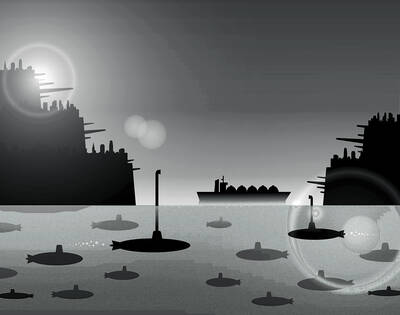
In the event of a war with China, Taiwan has some surprisingly tough defenses that could make it as difficult to tackle as a porcupine: A shoreline dotted with swamps, rocks and concrete barriers; conscription for all adult men; highways and airports that are built to double as hardened combat facilities. This porcupine has a soft underbelly, though, and the war in Iran is exposing it: energy. About 39,000 ships dock at Taiwan’s ports each year, more than the 30,000 that transit the Strait of Hormuz. About one-fifth of their inbound tonnage is coal, oil, refined fuels and liquefied natural gas (LNG),
To counter the CCP’s escalating threats, Taiwan must build a national consensus and demonstrate the capability and the will to fight. The Chinese Communist Party (CCP) often leans on a seductive mantra to soften its threats, such as “Chinese do not kill Chinese.” The slogan is designed to frame territorial conquest (annexation) as a domestic family matter. A look at the historical ledger reveals a different truth. For the CCP, being labeled “family” has never been a guarantee of safety; it has been the primary prerequisite for state-sanctioned slaughter. From the forced starvation of 150,000 civilians at the Siege of Changchun
The two major opposition parties, the Chinese Nationalist Party (KMT) and the Taiwan People’s Party (TPP), jointly announced on Tuesday last week that former TPP lawmaker Chang Chi-kai (張啟楷) would be their joint candidate for Chiayi mayor, following polling conducted earlier this month. It is the first case of blue-white (KMT-TPP) cooperation in selecting a joint candidate under an agreement signed by their chairpersons last month. KMT and TPP supporters have blamed their 2024 presidential election loss on failing to decide on a joint candidate, which ended in a dramatic breakdown with participants pointing fingers, calling polls unfair, sobbing and walking
In recent weeks, Taiwan has witnessed a surge of public anxiety over the possible introduction of Indian migrant workers. What began as a policy signal from the Ministry of Labor quickly escalated into a broader controversy. Petitions gathered thousands of signatures within days, political figures issued strong warnings, and social media became saturated with concerns about public safety and social stability. At first glance, this appears to be a straightforward policy question: Should Taiwan introduce Indian migrant workers or not? However, this framing is misleading. The current debate is not fundamentally about India. It is about Taiwan’s labor system, its


 RSS
RSS