


On May 17, the Chinese Nationalist Party (KMT) and the Taiwan People’s Party (TPP) joined forces to create a horrible spectacle. They began their plan to expand the powers of the legislature and gut the power of the incoming administration, which could potentially “Hong-Kong-ify” the legislature. They are using unscrupulous methods to make inroads into the judiciary, threatening that they would lock up officials or legislators for certain offenses, leading to public ire and worry.
The Chinese Communist Party’s (CCP) subjugation of Hong Kong came about through four major stages.
First: The CCP broadly looked for people it could coordinate with to buy out media outlets for public discourse.
Second: It curtailed democratic freedoms, forcing Hong Kong’s Legislative Council (LegCo) to be loyal to CCP policies and power.
Third: The CCP joined forces with criminal elements to infiltrate social movements and stir up chaos.
Fourth: The police became involved in maintaining security and Chinese military units stationed in Hong Kong joined in. This was done to advance control over all vestiges of authority in the territory, and to puppeteer the entire government.
When the UK handed Hong Kong over to China in 1997, although it was made to appear to be a specially administered region with self-rule, Hong Kong’s chief executive has since then always been controlled and manipulated by the CCP.
After Hong Kongers gradually developed their own identity, the territory saw the Umbrella Movement protests unfold in 2014 with the goal of obtaining the right to vote for all officials.
The number of democratic councilors who were elected rose significantly following the protests. In 2019, the anti-extradition movement was launched against China’s hoisted legislation to extradite anyone in Hong Kong to mainland China, with at least 1 million people taking to the streets on June 9 and 16.
Pan-democrat candidates won across the board in subsequent district elections throughout the territory later that year — Hong Kongers had finally awoken.
The CCP could not allow the seeds of democracy to blossom in Hong Kong, so it passed Article 23 of the Basic Law and invalidated the credentials of pan-democrat councilors. It also used methods to suppress politics, finding anyone who wanted to participate in elections to be guilty of some charge or another.
In the end, China’s control of the legislative council became absolute as the only legislators left were pro-China ones. There were no more pan-democrats.
There is no universal suffrage, and LegCo has been substantially manipulated. The authorities send out the police and Chinese military to suppress any protests.
During the White Terror period, Taiwanese experenced political suppression under the KMT’s one-party rule and its authoritarian system.
Taiwan successfully transitioned to a democracy after holding its first direct presidential election in 1996. Taiwan’s democracy and freedom at the time could be called nascent, and it was certainly not obtained without a decades-long fight and much sacrifice.
However, the KMT and the TPP camps are now joining hands and looking to turn back the clock on our nation’s democracy. Former president Ma Ying-jeou (馬英九) last month traveled to China and when he returned, he called for an amendment of the Anti-Infiltration Act (反滲透法).
Late last month, KMT caucus whip Fu Kun-chi (?) and 16 other legislators also visited China and upon their return, pushed for the passage of unconstitutional amendments that would expand the power of the legislature without any concern for proper procedures.
This abandonment of ways and means is not only an abandonment of Taiwan, but even more so, it is meant to rattle Taiwanese. Beneath the KMT shadow lies the grinning CCP tiger gazing upon its prey.
Taiwan, how long might you have left before you would fall? Which of the four stages is Taiwan at on the timeline to Hong Kong’s fall?
There are too many CCP talking heads and media outlets to count. There is also Douyin and TikTok and Xiaohongshu, with their wide array of misinformation.
The KMT and the TPP hold more than half the seats in the legislature and they have no regard for the principle of bills originating in committees.
They willfully passed unconstitutional reforms through two readings. They did not want any reviews or deliberations — they just wanted to blindly pass them. Perhaps the protest refrain “Today Hong Kong, Tomorrow Taiwan” is true.
The KMT and the TPP want to pass their unconstitutional raft of bills that would expand legislative power. The situation is serious and we must have recourse to respond to their actions.
First, Taiwan’s five national security laws should be strictly implemented against pro-China advocates spewing CCP rhetoric, and we should expedite reviews to rid ourselves of any possibility of harm to national security.
Second, when it comes to the KMT and the TPP holding a majority of seats in the legislature, we might have lost the numbers, but the narrative must be won. We must be ready to dissolve the legislature and hold new elections if necessary.
Third, the National Security Bureau and the National Police Agency must bolster their capabilities against Chinese spies and provocateurs.
Fourth, we need to hold fast to democratic values and carry out judicial and military reforms to protect our country.
The KMT and the TPP want to use legislative powers to limit the Executive Yuan and “Hong-Kong-ify” the legislature. The new administration must lead the public in resisting pro-China forces opposed to democracy.
Chen Yu-hsin is a former deputy chair of the National Council of Physical Fitness and Sports and a former Taichung County deputy commissioner.
Translated by Tim Smith
A gap appears to be emerging between Washington’s foreign policy elites and the broader American public on how the United States should respond to China’s rise. From my vantage working at a think tank in Washington, DC, and through regular travel around the United States, I increasingly experience two distinct discussions. This divergence — between America’s elite hawkishness and public caution — may become one of the least appreciated and most consequential external factors influencing Taiwan’s security environment in the years ahead. Within the American policy community, the dominant view of China has grown unmistakably tough. Many members of Congress, as
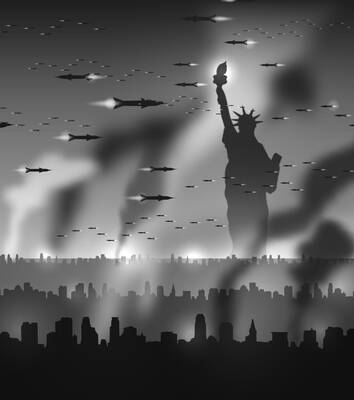
After declaring Iran’s military “gone,” US President Donald Trump appealed to the UK, France, Japan and South Korea — as well as China, Iran’s strategic partner — to send minesweepers and naval forces to reopen the Strait of Hormuz. When allies balked, the request turned into a warning: NATO would face “a very bad” future if it refused. The prevailing wisdom is that Trump faces a credibility problem: having spent years insulting allies, he finds they would not rally when he needs them. That is true, but superficial, as though a structural collapse could be caused by wounded feelings. Something
Former Taipei mayor and Taiwan People’s Party (TPP) founding chairman Ko Wen-je (柯文哲) was sentenced to 17 years in prison on Thursday, making headlines across major media. However, another case linked to the TPP — the indictment of Chinese immigrant Xu Chunying (徐春鶯) for alleged violations of the Anti-Infiltration Act (反滲透法) on Tuesday — has also stirred up heated discussions. Born in Shanghai, Xu became a resident of Taiwan through marriage in 1993. Currently the director of the Taiwan New Immigrant Development Association, she was elected to serve as legislator-at-large for the TPP in 2023, but was later charged with involvement
Out of 64 participating universities in this year’s Stars Program — through which schools directly recommend their top students to universities for admission — only 19 filled their admissions quotas. There were 922 vacancies, down more than 200 from last year; top universities had 37 unfilled places, 40 fewer than last year. The original purpose of the Stars Program was to expand admissions to a wider range of students. However, certain departments at elite universities that failed to meet their admissions quotas are not improving. Vacancies at top universities are linked to students’ program preferences on their applications, but inappropriate admission


 RSS
RSS