


Taiwan People’s Party (TPP) Chairman Ko Wen-je (柯文哲) was last in the three-way presidential election, but his name was everywhere in news media and on political talk shows in the past week.
Some have said Ko and the TPP performed well for a four-year-old party — Ko won 26.46 percent of the presidential vote and the TPP received 22.07 percent of the party votes — yet more attention was put on how some supporters hinted at electoral fraud and whether he has been “swimming naked” in his polling claims.
Following the elections, unverified short videos of election workers reciting and tallying votes were posted on social media, claiming that vote-rigging might have occurred. The videos went viral after a few influencers shared them, including a popular and outspoken Ko supporter on YouTube.
The Central Election Commission said election procedures were transparent and allowed parties’ overseers and the public to monitor the vote counting. The Taiwan FactCheck Center and MyGoPen also dismissed the claims.
However, Ko said that “it is impossible to conduct large-scale election fraud in Taiwan,” but left room for speculation. He wrote on Facebook that he received clips from supporters showing hidden layers in ballot boxes, hundreds of stolen ballots and recited numbers not matching tallies.
Even before the elections, Ko hinted at the possibility in a Pingtung rally on Dec. 24, saying: “I’ve wondered if they would dare to conduct election fraud, but I found they aren’t even afraid of cutting 44 seconds, so if our overseer teams have time, please monitor the vote count in case they really carry out vote-rigging to make us lose.” The TPP claimed a YouTube live broadcast of the televised presidential debate cut out 44 seconds as Ko was presenting his policies.
Moreover, when Ko and the Chinese Nationalist Party (KMT) were negotiating an ultimately doomed joint presidential ticket in November last year, nearly all polling showed higher support for New Taipei City Mayor Hou You-yi (侯友宜), and as later polls showed the same pattern, Ko refused to accept them.
He said new media and polling organizations were conducting bad polling and on Dec. 19 challenged them, saying he would record the poll results and “see which of them have been swimming naked when the tide goes out.”
Ko and the TPP said he was the runner-up in the three-way election and only lost to Vice President William Lai (賴清德) by a small margin.
However, many politicians and pundits pored over poll results, finding most of them were more accurate than Ko’s claim, which was based on TPP internal polling.
Ko on Wednesday released a YouTube video in which he said the TPP’s polling is “at least not fake,” but that the discrepancy was due to supporters being “young, highly educated and independent voters,” who “need to work,” thus resulting in a low turnout, and that Taiwan’s voting system is “outdated” and should include absentee and online voting, blaming the system for his polling inaccuracy and loss.
As Ko built support among aloof or politically unfamiliar young people or first-time voters by stirring up frustration and resentment, paying lip service to low salaries, inflation and housing price issues, his remarks display poor sportsmanship and irresponsibility.
By hinting at counting flaws, blaming low turnout and the voting system and KMT “dump-save” effect manipulation, while insisting on TPP polling authenticity and being unwilling to directly concede defeat and congratulate the winner, Ko is eroding young people’s confidence in election integrity and sowing distrust, including on polls and telling supporters that news media were paid to ignore or paint him in a bad light, only for the partisan benefit of supporter retention.
A gap appears to be emerging between Washington’s foreign policy elites and the broader American public on how the United States should respond to China’s rise. From my vantage working at a think tank in Washington, DC, and through regular travel around the United States, I increasingly experience two distinct discussions. This divergence — between America’s elite hawkishness and public caution — may become one of the least appreciated and most consequential external factors influencing Taiwan’s security environment in the years ahead. Within the American policy community, the dominant view of China has grown unmistakably tough. Many members of Congress, as
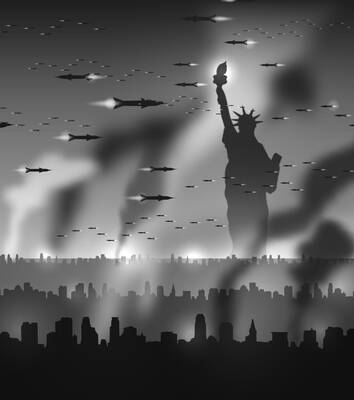
After declaring Iran’s military “gone,” US President Donald Trump appealed to the UK, France, Japan and South Korea — as well as China, Iran’s strategic partner — to send minesweepers and naval forces to reopen the Strait of Hormuz. When allies balked, the request turned into a warning: NATO would face “a very bad” future if it refused. The prevailing wisdom is that Trump faces a credibility problem: having spent years insulting allies, he finds they would not rally when he needs them. That is true, but superficial, as though a structural collapse could be caused by wounded feelings. Something
Former Taipei mayor and Taiwan People’s Party (TPP) founding chairman Ko Wen-je (柯文哲) was sentenced to 17 years in prison on Thursday, making headlines across major media. However, another case linked to the TPP — the indictment of Chinese immigrant Xu Chunying (徐春鶯) for alleged violations of the Anti-Infiltration Act (反滲透法) on Tuesday — has also stirred up heated discussions. Born in Shanghai, Xu became a resident of Taiwan through marriage in 1993. Currently the director of the Taiwan New Immigrant Development Association, she was elected to serve as legislator-at-large for the TPP in 2023, but was later charged with involvement
Out of 64 participating universities in this year’s Stars Program — through which schools directly recommend their top students to universities for admission — only 19 filled their admissions quotas. There were 922 vacancies, down more than 200 from last year; top universities had 37 unfilled places, 40 fewer than last year. The original purpose of the Stars Program was to expand admissions to a wider range of students. However, certain departments at elite universities that failed to meet their admissions quotas are not improving. Vacancies at top universities are linked to students’ program preferences on their applications, but inappropriate admission


 RSS
RSS