


When Typhoon Doksuri reached northern China at the end of last month, several days of torrential rains in and around Beijing caused disastrous flooding in the region. The authorities had no choice but to release floodwater into other areas to protect Beijing. In the city of Zhuozhou in China’s Hebei Province, a minority of city residents received text messages advising them to evacuate, but things happened too quickly. Before there was time to warn everyone, still less to take flood-prevention measures, Beijing’s floodwater was released and this vulnerable region was very quickly underwater.
Zhuozhou is one of China’s most important centers for book publishing, warehousing and logistics. The warehouses of hundreds of publishing companies are concentrated there, including big publishers and dealers such as BooksChina.com and CNTime. BooksChina’s warehouse, which contains 4 million volumes, and Modern Chinese’s warehouse, which contains 3.6 million, were completely swamped by the floodwater. The whole industrial park has suffered losses totaling more than 1 billion yuan (US$139 million).
CNTime chief executive officer Ran Zi-jian (冉子健) said that the company had not received any advance notice of the floodwater discharge. To make matters worse, none of the books were covered by insurance. There are specific reasons why China’s book industry has hardly any insurance.
One of the principal reasons is that there is an exceedingly great a difference between the listed retail price of books and their actual selling price. It is commonplace for e-commerce platforms to sell books at half price. With the emergence in recent years of livestream e-commerce, also known as live commerce, it is not uncommon that books can be purchased for just 1 yuan each during livestreams.
Moreover, books are highly inflammable and susceptible to moisture damage, so insurance companies prefer to stay clear of them.
China’s paper media and publishing industry were already struggling to get by, relying on the passion of writers and artists. China is world-famous for its low-price books. People can even buy hardcover books for 10 to 20 yuan and paperbacks for less than 10 yuan.
Books sell for little more than their cost price. After deducting International Standard Book Numbers registration fees, copyright royalties and the costs of printing, paper, proofreading, binding, logistics and marketing, how many cents of profit can be made from each book? With the industry in such an impoverished condition, the government and the public’s weak awareness of intellectual property rights is what has really driven it into a downward cycle.
Zhuozhou’s “sea of books” is a reflection of the microcosm of China’s knowledge industry. Anyone who works in the field of literature and arts must be heartbroken to see tens of thousands of books soaking in water while not being able to do anything about it. What lies there soaking is not just the pulp that was used to make those almost 10 million books, but also the spiritual culture of the current era.
At time of writing (Friday last week), Zhuozhou is still entirely cut off from supplies of water, electricity and goods, with hundreds of thousands of residents waiting to be rescued. The rainstorm has officially killed 20 people in the city, and that number continues to rise. In addition, countless people are still missing.
As the capital city, Beijing is indeed important, but while protecting the cities of Beijing, Xiongan and Tianjin no matter what the cost, who will protect the safety and property of Zhuozhou’s 700,000 residents?
Bai Zhao is a Chinese freelance artist living in London.
Translated by Julian Clegg
A gap appears to be emerging between Washington’s foreign policy elites and the broader American public on how the United States should respond to China’s rise. From my vantage working at a think tank in Washington, DC, and through regular travel around the United States, I increasingly experience two distinct discussions. This divergence — between America’s elite hawkishness and public caution — may become one of the least appreciated and most consequential external factors influencing Taiwan’s security environment in the years ahead. Within the American policy community, the dominant view of China has grown unmistakably tough. Many members of Congress, as
The Hong Kong government on Monday gazetted sweeping amendments to the implementation rules of Article 43 of its National Security Law. There was no legislative debate, no public consultation and no transition period. By the time the ink dried on the gazette, the new powers were already in force. This move effectively bypassed Hong Kong’s Legislative Council. The rules were enacted by the Hong Kong chief executive, in conjunction with the Committee for Safeguarding National Security — a body shielded from judicial review and accountable only to Beijing. What is presented as “procedural refinement” is, in substance, a shift away from
The shifting geopolitical tectonic plates of this year have placed Beijing in a profound strategic dilemma. As Chinese President Xi Jinping (習近平) prepares for a high-stakes summit with US President Donald Trump, the traditional power dynamics of the China-Japan-US triangle have been destabilized by the diplomatic success of Japanese Prime Minister Sanae Takaichi in Washington. For the Chinese leadership, the anxiety is two-fold: There is a visceral fear of being encircled by a hardened security alliance, and a secondary risk of being left in a vulnerable position by a transactional deal between Washington and Tokyo that might inadvertently empower Japan
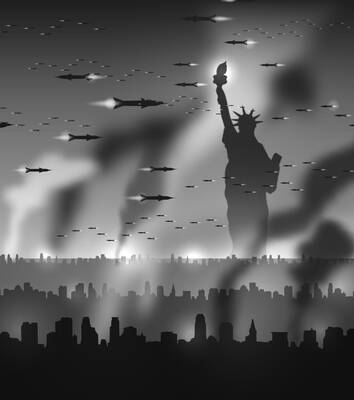
After declaring Iran’s military “gone,” US President Donald Trump appealed to the UK, France, Japan and South Korea — as well as China, Iran’s strategic partner — to send minesweepers and naval forces to reopen the Strait of Hormuz. When allies balked, the request turned into a warning: NATO would face “a very bad” future if it refused. The prevailing wisdom is that Trump faces a credibility problem: having spent years insulting allies, he finds they would not rally when he needs them. That is true, but superficial, as though a structural collapse could be caused by wounded feelings. Something


 RSS
RSS