


On April 30, the Central Epidemic Command Center was disbanded, and from Monday last week, the status of COVID-19 was downgraded from a category 5 notifiable communicable disease to category 4. In other words, three years after the outbreak of the COVID-19 pandemic, Taiwan’s disease control measures have officially been removed.
Over the past three years, due to the horrendous pandemic, almost everyone has experienced some form of self-isolation or lockdown. Each person had to deal with it in their own way.
In the post-pandemic era, they will have to make a further adjustment, and return to a life in which they need to communicate and interact with others more.
Everyone needs to cope with the aftermath of the pandemic, as a substantial number of people contracted the virus. Even though the symptoms eventually went away for many people, some experienced “long COVID” or are afraid of the post-pandemic conditions.
The condition of young and healthy people can be improved more quickly through regular exercise.
On the other hand, many never caught COVID-19, but during the pandemic, they experienced anxiety and depression.
Today, they would have to be more resilient psychologically. They must believe that they are in an environment that is safe and secure. They should also think positively and remain optimistic, try to be joyful, grateful and hopeful, so that they can retain their health, both physical and mental.
As a result of disease control measures, many employees were required to work from home and communicate with the outside world through the Internet. Some welcomed it, whereas some felt isolated and disconnected. In either case, many must adapt to a new mode of interaction in the post-pandemic era.
It is regrettable that some have lost their jobs during the pandemic, but today, many companies are dealing with a shortage of workers. The issue involves some psychological matters and it will take some time to resolve.
The situation has been especially difficult for elderly people, who require more social support and resources. During the pandemic, they must have felt more lonely and helpless.
In the post-pandemic era, long-term care services should be enhanced. Government agencies should arrange more care visits and telephone check-ins, improve their use of social networking platforms, meal delivery and medical care services, as well as promote health awareness in a more effective way. In doing so, elderly people would be less affected by anxiety and depression, and less prone to have suicidal tendencies.
The government should be aware of the current situation and prepare for more challenges. Indeed, many will find fault with the government and blame officials for everything related to the pandemic, such as economic losses, price hikes and inflation, failures in vaccine procurement and development, and all kinds of social incidents.
The government must do more to communicate with the public, so that people can appreciate its disease control measures. No matter how challenging it is, the government should endeavor to win people’s support.
Chen Chiao-chicy is a psychiatrist at Mackay Memorial Hospital and an adjunct professor.
Translated by Emma Liu
A gap appears to be emerging between Washington’s foreign policy elites and the broader American public on how the United States should respond to China’s rise. From my vantage working at a think tank in Washington, DC, and through regular travel around the United States, I increasingly experience two distinct discussions. This divergence — between America’s elite hawkishness and public caution — may become one of the least appreciated and most consequential external factors influencing Taiwan’s security environment in the years ahead. Within the American policy community, the dominant view of China has grown unmistakably tough. Many members of Congress, as
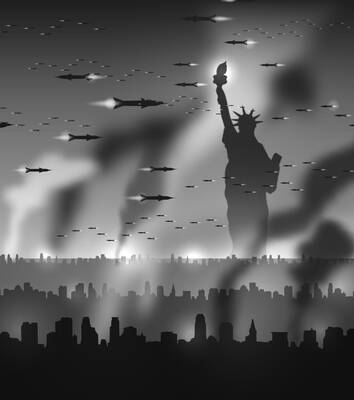
After declaring Iran’s military “gone,” US President Donald Trump appealed to the UK, France, Japan and South Korea — as well as China, Iran’s strategic partner — to send minesweepers and naval forces to reopen the Strait of Hormuz. When allies balked, the request turned into a warning: NATO would face “a very bad” future if it refused. The prevailing wisdom is that Trump faces a credibility problem: having spent years insulting allies, he finds they would not rally when he needs them. That is true, but superficial, as though a structural collapse could be caused by wounded feelings. Something
Former Taipei mayor and Taiwan People’s Party (TPP) founding chairman Ko Wen-je (柯文哲) was sentenced to 17 years in prison on Thursday, making headlines across major media. However, another case linked to the TPP — the indictment of Chinese immigrant Xu Chunying (徐春鶯) for alleged violations of the Anti-Infiltration Act (反滲透法) on Tuesday — has also stirred up heated discussions. Born in Shanghai, Xu became a resident of Taiwan through marriage in 1993. Currently the director of the Taiwan New Immigrant Development Association, she was elected to serve as legislator-at-large for the TPP in 2023, but was later charged with involvement
Out of 64 participating universities in this year’s Stars Program — through which schools directly recommend their top students to universities for admission — only 19 filled their admissions quotas. There were 922 vacancies, down more than 200 from last year; top universities had 37 unfilled places, 40 fewer than last year. The original purpose of the Stars Program was to expand admissions to a wider range of students. However, certain departments at elite universities that failed to meet their admissions quotas are not improving. Vacancies at top universities are linked to students’ program preferences on their applications, but inappropriate admission


 RSS
RSS