


Taiwan’s New Southbound Policy aims to improve economic, cultural and academic ties with countries in Southeast Asia, including Indonesia. As part of this policy, Taiwan has implemented several initiatives to attract more Southeast Asian students to study in Taiwan. These include scholarships, exchange programs and partnerships between universities in Taiwan and the region. By promoting education and cultural exchanges, Taiwan hopes to build stronger connections with Southeast Asian nations and foster mutual understanding and cooperation.
Recognizing Indonesian students in Taiwan is important for several reasons.
First, it acknowledges the contributions of Indonesian students to Taiwan’s academic and cultural communities.
Second, it promotes cross-
cultural understanding and strengthens bilateral ties.
Finally, recognizing Indonesian students can help to create a supportive and inclusive environment for them to thrive and succeed in their studies and beyond.
Taiwan’s industry-academia collaboration program is an excellent opportunity for Indonesian students to gain valuable skills and experience in their field of study, have access to cutting-edge facilities and equipment, and learn from experienced professionals. However, the program can further be improved.
One of the primary concerns is the lack of clear information about the recruitment process. Without clear guidelines and information, students might struggle to navigate the application process and miss out on valuable opportunities. This can be particularly challenging for students who do not have access to resources or guidance to help them with the application process.
An initial study conducted by the Institute for Human Resources Study and Development of Nahdlatul Ulama Taiwan special branch (LAKPESDAM) found that more than 40 percent of education information in Taiwan is obtained through Web sites and social media, while some are obtained through migrant worker agencies.
Another issue is the placement policy for internships. If students are assigned to internships or projects not aligned with their interests or career goals it can lead to frustration and dissatisfaction. Additionally, if the placement process is not transparent, students might feel that they have been unfairly treated or overlooked for opportunities.
The LAKPESDAM study found that more than 40 percent of participants in industry-academia collaboration programs reported that their internship company did not match their major.
Then there are the requirements for working hours. If students are expected to work more than 20 hours per week, they might struggle to balance their academic workload with their internship responsibilities. More than 60 percent of participants in industry-academia collaboration programs work more than 20 hours per week, the study found. This can lead to increased stress and burnout, which can negatively affect their academic and professional performance.
The program’s tuition fee waivers can be beneficial for students who do not have the financial means to pay for their education.
However, if transparency on the criteria for eligibility is lacking, some students might be left feeling uncertain about their eligibility, creating feelings of inequality and unfairness. If the program does not adequately prepare students for their future careers or provide them with the skills and knowledge they need to succeed, they might feel that the program has not lived up to their expectations. If it does not provide enough opportunities for students to engage with industry professionals or work on real-world projects, they might feel that they have not gained enough practical experience.
Clear guidelines and information about the application process, transparent placement policies, reasonable working hours, fair tuition waivers and a well-designed curriculum are vital to a successful program.
To improve the program, certain measures can be implemented.
First, it is important to produce transparent and clear recruitment information to ensure that all eligible students have access to the program. This can be achieved through the creation of a centralized platform that provides information about the program, its requirements and application procedures.
Second, conducting capacity building for all stakeholders involved in the program would help enhance its effectiveness. This can include training sessions for program administrators, industry partners and academic supervisors to improve their skills and knowledge in managing the program, and providing guidance and support to students.
Collaboration on research and development in designing the appropriate program would help ensure that the program meets the needs and expectations of Indonesian students and their Taiwanese counterparts. This can involve conducting surveys and focus groups to gather feedback from students and industry partners, and using this information to tailor the program to their needs.
By implementing these strategies, the industry-academia collaboration program for Indonesian students can become more effective, transparent and inclusive, promoting mutual understanding and cooperation between Taiwan and Indonesia.
Asri Jalal is a fellow researcher at LAKPESDAM and a graduate student at Kaohsiung Medical University’s College of Nursing.
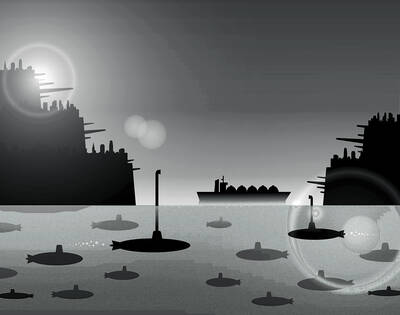
In the event of a war with China, Taiwan has some surprisingly tough defenses that could make it as difficult to tackle as a porcupine: A shoreline dotted with swamps, rocks and concrete barriers; conscription for all adult men; highways and airports that are built to double as hardened combat facilities. This porcupine has a soft underbelly, though, and the war in Iran is exposing it: energy. About 39,000 ships dock at Taiwan’s ports each year, more than the 30,000 that transit the Strait of Hormuz. About one-fifth of their inbound tonnage is coal, oil, refined fuels and liquefied natural gas (LNG),
To counter the CCP’s escalating threats, Taiwan must build a national consensus and demonstrate the capability and the will to fight. The Chinese Communist Party (CCP) often leans on a seductive mantra to soften its threats, such as “Chinese do not kill Chinese.” The slogan is designed to frame territorial conquest (annexation) as a domestic family matter. A look at the historical ledger reveals a different truth. For the CCP, being labeled “family” has never been a guarantee of safety; it has been the primary prerequisite for state-sanctioned slaughter. From the forced starvation of 150,000 civilians at the Siege of Changchun
The two major opposition parties, the Chinese Nationalist Party (KMT) and the Taiwan People’s Party (TPP), jointly announced on Tuesday last week that former TPP lawmaker Chang Chi-kai (張啟楷) would be their joint candidate for Chiayi mayor, following polling conducted earlier this month. It is the first case of blue-white (KMT-TPP) cooperation in selecting a joint candidate under an agreement signed by their chairpersons last month. KMT and TPP supporters have blamed their 2024 presidential election loss on failing to decide on a joint candidate, which ended in a dramatic breakdown with participants pointing fingers, calling polls unfair, sobbing and walking
In recent weeks, Taiwan has witnessed a surge of public anxiety over the possible introduction of Indian migrant workers. What began as a policy signal from the Ministry of Labor quickly escalated into a broader controversy. Petitions gathered thousands of signatures within days, political figures issued strong warnings, and social media became saturated with concerns about public safety and social stability. At first glance, this appears to be a straightforward policy question: Should Taiwan introduce Indian migrant workers or not? However, this framing is misleading. The current debate is not fundamentally about India. It is about Taiwan’s labor system, its


 RSS
RSS