

Pets beaten to death. Parents forced to separate from their children. Elderly folks unable to access medical care. Locked-up residents chanting “we want to eat” and “we want freedom.”
As much of the world moves on from the COVID-19 pandemic, the desperate scenes seeping out of China’s most global city have shocked even citizens who were once staunch supporters of Chinese President Xi Jinping’s (習近平) zero COVID-19 strategy to eliminate the virus. The struggle to obtain daily necessities like food and medical care has triggered rare pushback from residents, with some saying the Chinese Communist Party’s (CCP) cure is worse than the disease.
“In this country it’s not the virus that scares us, but the chaotic anti-COVID measures that have caused risks to the well-being of the elderly, the children and companion animals,” said Lily Chen, who lives in Shanghai with her three cats. “I now realize we can only rely on ourselves — not the government — to protect our own families.”
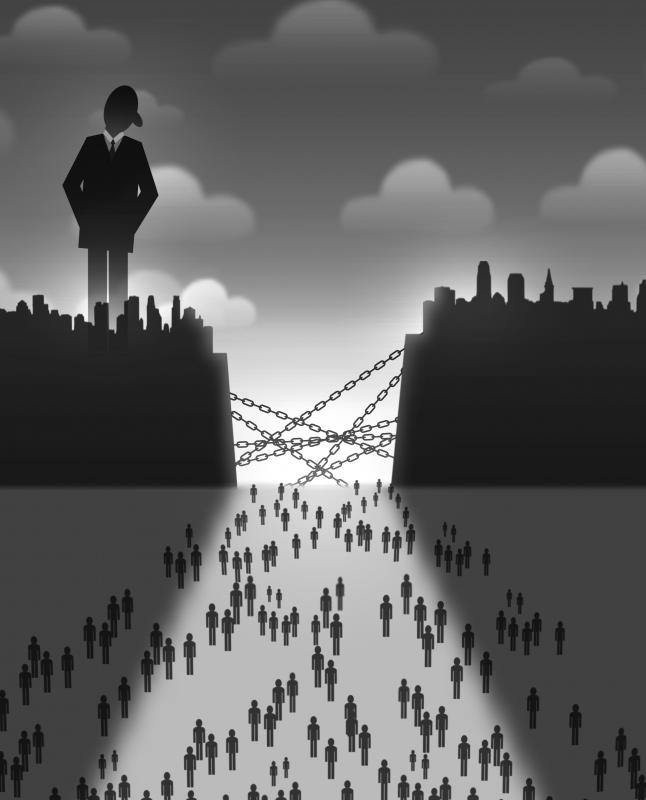
Illustration: Yusha
Another Shanghai resident, Regina Li, said she had long supported the government and even defended the strict measures at the start of the lockdown, which began in parts of the city on March 28 before spreading to cover nearly everywhere. However, the widespread difficulties of vulnerable people started to change her mind, and she broke down in tears after seeing social-media posts of a disease prevention worker beating a dog to death.
“I feel I no longer know the city,” Li said. “The only thing in my mind is to protect my dogs. Anyone who wants to kill them, come kill me first.”
The growing angst risks becoming one of the biggest challenges to Xi perhaps since he took power in 2012, and comes just months before he is expected to secure a precedent-breaking third term at a twice-a-decade party congress later this year. The outbreak has virtually paralyzed one of China’s most sophisticated and recognizable cities, with businesses shuttered and factories of companies like Tesla halting production.
Although the CCP remains firmly in control, the rare grassroots criticism undercuts Xi’s ability to trumpet his COVID-19 strategy as evidence of China’s superior model of governance — a key justification for him to stay in power. The Chinese Ministry of Foreign Affairs has regularly blasted the US and Europe for allowing so many deaths, while saying Xi’s policy was “beyond reproach.”
Greater pushback by residents in Shanghai could also inspire other cities to resist lockdowns and other stringent measures used by China to fight the virus. The northeastern province of Jilin, an automaking and farming hub, has also been locked down for nearly a month, prompting residents to complain on social media about running out of food, cancer medication and baby formula.
The situation could still get worse in other parts of the country. China’s outbreak is surpassing a level not seen since February 2020, when a one-day correction in the way it tracked cases pushed daily infections past 15,000, largely in Wuhan.
“There is the risk of a slow-burn discontent if lockdown measures spread across China,” National Taiwan University associate professor of political science Chen Shih-min (陳世民) said. “And if its virus strategy goes out of control and heavily affects its economy, this will not look good as Xi attempts a third term. At that point, Xi will have no choice, but to ramp up his nationalism agenda.”
The CCP is feeling the heat. On Wednesday last week it issued a rare call imploring rank-and-file members to help contain COVID-19 in Shanghai, where daily cases rose to more than 19,900.
“We must dare to draw our swords and fight against all kinds of behaviors that interfere with and undermine the overall situation of the fight against the epidemic,” the CCP’s top branch in Shanghai wrote to members in an open letter.
It urged them to “take the initiative to speak out against all kinds of noises, especially rumors, to clarify right and wrong, and to unite a strong force to overcome the difficulties together.”
Shanghai officials are also racing to reassure residents they can access essential supplies in a city home to top banks and the biggest stock exchange in the world’s No. 2 economy. The lockdowns and virus-containment measures threaten to slow China’s growth this year to below the government’s 5.5 percent target, Bloomberg Economics said.
Shanghai Deputy Mayor Chen Tong (陳通) on Thursday pledged to “unlock” wholesale markets, fulfillment centers, e-commerce warehouses and central kitchens to ease the supply crunch for goods like infant formula.
At the same briefing, Meituan vice president Mao Fang (毛方) said the food delivery company would bring in 1,000 sorting workers from outside the city to speed up deliveries.
Officials have ramped up assistance in recent days. Some residents have begun receiving food packs from the government that include eggs, milk, vegetables and luncheon meat. In certain places, those locked in have joined together to sing patriotic songs like Me and My Motherland from their balconies and chant “Shanghai, keep fighting.”
The letter from the CCP committee in Shanghai on Wednesday appealed to patriotism.
“Today, we communists in Shanghai must carry forward the founding spirit of the party, and let the party flag stand high on the front line of the fight against the epidemic,” it said.
Still, even that was met with scorn from some Internet users.
“Where’s the party flag? Where’s your fortress and vanguard?” Weibo user Ah Dai Is Speechless wrote. “We don’t see anything but chaos, disorder and discrimination.”
The government has tried to censor the unrest, with Bloomberg reporting earlier this month that videos of a rare protest in a locked-down housing compound were deleted from a social media platform by tech giant Tencent Holdings. Other incidents that have gone viral on Chinese social media platforms are still accessible on places like Twitter and YouTube.
One in particular captured an older man who said that Shanghainese are practically being put in prison.
“Really shame on you. Treat us like animals,” the man said in the clip. “In other countries, you can’t even treat a cat or a dog like this. There is no humanity left.”
Taiwan’s domestic political situation is following recognizable political rhythms, while the international environment surrounding Taiwan is undergoing a major transformation. Within Taiwan, there are ongoing battles between the legislative and executive branches over the budget, and between cities and the central government over resources. Tensions between political parties dominate headlines and consume much of the attention of party leaders. Jockeying is underway for local elections this November and national elections in 2028. And the longstanding philosophical debate inside Taiwan over how best to protect Taiwan and promote the good life remains unresolved. Amidst all of this, Taiwan continues to function well. It
In an article published on Tuesday in The Atlantic, titled “Will Taiwan Just Give Up?”, journalist Simon Shuster emphasizes the unpredictability of the US as an ally under US President Donald Trump and cites diminishing faith in the US as a contributor to what he sees as waning determination to resist China. As the title suggests, Shuster views a deal between Taiwan and China as an increasingly inevitable alternative to a costly war — one that Taiwan, lacking reliable allies and military capabilities, would eventually be destined to lose. He focuses on Chinese Nationalist Party (KMT) Chairwoman Cheng Li-wun (鄭麗文) — her
Taiwan does not need a CIA deputy director to explain that Beijing treats commerce as a battlefield. It has been living that lesson for decades, watching its chip designers get poached, its retired officers get recruited for cash, and its companies get pressured to choose between the Chinese market and their own government’s security priorities. What changed this month is that Washington finally said the quiet part out loud. CIA Deputy Director Michael Ellis told a Washington audience that China’s threat to the US is now “fundamentally different,” because the competition is economic, not military, and that a Chinese company cannot
With candidate registration for this year’s local elections closed on Sept. 4 and the elections less than 80 days away, Democratic Progressive Party (DPP) Legislator and Taipei mayoral candidate Puma Shen’s (沈伯洋) rapidly growing popularity has become the focus of political talk shows and online discussions over the past week, heating up the mayoral election race in Taipei. Local media headlines and political pundits have picked up his supporters’ slogan “ocean current” (洋流) — a play on the last character of Shen’s name, which literally means “ocean” (洋), and the character (流), which can mean “current,” “flow” or “trend” — to


 RSS
RSS