


Taiwan's relationship to the international news media outlets that write about it is that of an island to a mainland. The island, of course, is Taiwan, and the mainland is the news media. They control the news, they define the words, they print the print.
Most news outlets around the world continue to play the game of appeasing China by pretending that Taiwan is a mere island and not a nation, and they routinely send out news bulletins, editorials and multipage feature articles referring to this bustling nation as a mere "island." From the Associated Press to Reuters, from the New York Times to the Los Angeles Times, from BBC to Le Monde, Taiwan is just an island, and never a country.
When asked why, a high-placed editor in New York once told this writer: "We must remain neutral and not take sides."
But one must counter that argument with this question: Just how does referring to Taiwan as an island and not as a nation in print make an international news agency "neutral"?
Every once in a while, however, small victories for Taiwan's nationhood pop up in the international press, and it happened again just the other day in that now-famous profile of New York Yankees star pitcher Wang Chien-ming (王建民) that made headlines around the world.
The reporter, Tyler Kepner, an American staff writer at the New York Times, did an end-run around his copy desk masters in Manhattan and was able to call Taiwan a "country" in the published article, writing: "At 26, [Wang] is a national hero in his home country."
The Times reporter did not say "home island" or "home province," as the propaganda ministers in China would have preferred. Kepner called Taiwan a country in the prestigious pages of the New York Times. Score another victory for Taiwan as it advances its agenda on the world scene. A minor victory, an almost invisible victory, and one that no doubt will be met by complaints and an angry letter to the Times' editors from China's ambassador to the UN in New York, but a victory nevertheless.
According to the copy desk at the New York Times in Manhattan, Taiwan is not to be referred to as a country or a nation or even an island nation, except in a quoted comment by a person being interviewed. The Times' reporters themselves are commanded to refer to Taiwan in every instance as an island and never a country. It is a written rule of the newsroom, re-examined every few years, but never changed.
Kepner, in his insightful profile of Wang, didn't follow the rules of the newsroom and managed to get in that one small reference to Taiwan as a "country."
Imagine, Wang actually comes from a country, a real nation, not some imaginary island province off the coast of some equally imaginary "mainland."
Sports has often served to further the agenda of freedom and liberty in the international community, and the recent New York Times article pushed the heavy stone of Taiwan's profile up the hill just a few inches, and those inches count. Thank you, Tyler Kepner.
Dan Bloom is a freelance writer in Chiayi.
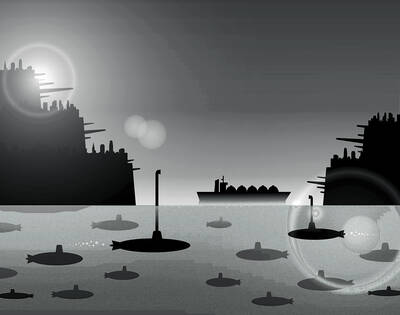
In the event of a war with China, Taiwan has some surprisingly tough defenses that could make it as difficult to tackle as a porcupine: A shoreline dotted with swamps, rocks and concrete barriers; conscription for all adult men; highways and airports that are built to double as hardened combat facilities. This porcupine has a soft underbelly, though, and the war in Iran is exposing it: energy. About 39,000 ships dock at Taiwan’s ports each year, more than the 30,000 that transit the Strait of Hormuz. About one-fifth of their inbound tonnage is coal, oil, refined fuels and liquefied natural gas (LNG),
On Monday, the day before Chinese Nationalist Party (KMT) Chairwoman Cheng Li-wun (鄭麗文) departed on her visit to China, the party released a promotional video titled “Only with peace can we ‘lie flat’” to highlight its desire to have peace across the Taiwan Strait. However, its use of the expression “lie flat” (tang ping, 躺平) drew sarcastic comments, with critics saying it sounded as if the party was “bowing down” to the Chinese Communist Party (CCP). Amid the controversy over the opposition parties blocking proposed defense budgets, Cheng departed for China after receiving an invitation from the CCP, with a meeting with
Chinese Nationalist Party (KMT) Chairwoman Cheng Li-wun (鄭麗文) is leading a delegation to China through Sunday. She is expected to meet with Chinese President Xi Jinping (習近平) in Beijing tomorrow. That date coincides with the anniversary of the signing of the Taiwan Relations Act (TRA), which marked a cornerstone of Taiwan-US relations. Staging their meeting on this date makes it clear that the Chinese Communist Party (CCP) intends to challenge the US and demonstrate its “authority” over Taiwan. Since the US severed official diplomatic relations with Taiwan in 1979, it has relied on the TRA as a legal basis for all
Taiwan ranks second globally in terms of share of population with a higher-education degree, with about 60 percent of Taiwanese holding a post-secondary or graduate degree, a survey by the Organisation for Economic Co-operation and Development showed. The findings are consistent with Ministry of the Interior data, which showed that as of the end of last year, 10.602 million Taiwanese had completed post-secondary education or higher. Among them, the number of women with graduate degrees was 786,000, an increase of 48.1 percent over the past decade and a faster rate of growth than among men. A highly educated population brings clear advantages.


 RSS
RSS