

Macronix International Co (旺宏), a major supplier of NOR and NAND flash memory chips, on Tuesday reported a record-high net profit of NT$10.95 billion (US$337.8 million) in the third quarter, a surge of 42 percent from NT$7.74 billion in the previous quarter, reversing a net loss of NT$862 million a year earlier.
Gross margin rose to an all-time high of 70.5 percent last quarter from 64.4 percent in the previous quarter and 13.5 percent in the same period last year, the company said.
Despite investors’ concerns over cooling multilevel cell NAND flash prices, “there is still room for growth for Macronix,” Macronix chairman Miin Wu (吳敏求) said at an earnings conference.
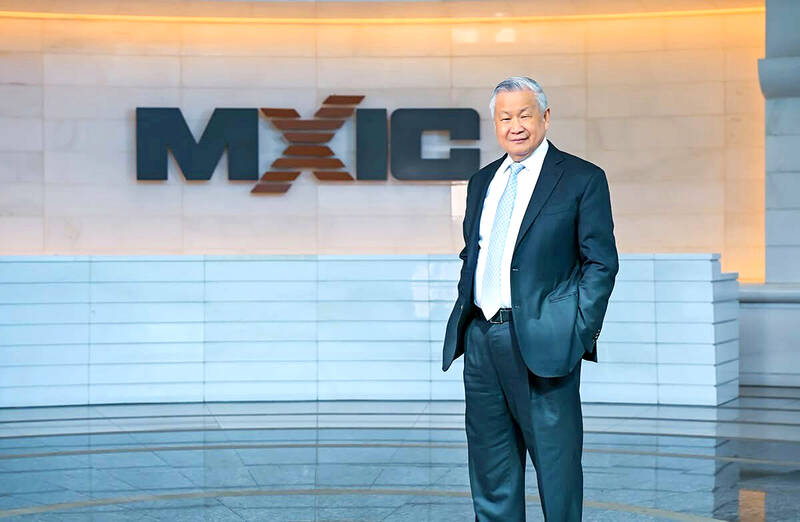
Photo courtesy of Macronix International Co
“Any investment nowadays requires a waiting period of at least a year,” Wu said. “In the short term, the company is unlikely to rely on capacity expansion for rapid growth. Instead, near-term growth will be driven primarily by price increases.”
Macronix said it expects chip price hikes to persist this quarter, driven by a capacity crunch and robust demand for artificial intelligence memory chips.
The company plans to begin boosting output in the second half of next year based on its first-phase capital expenditure of NT$22 billion, Wu said.
The company does not expect another NT$15.8 billion capacity investment to yield output until 2028, he said, citing delays in manufacturing equipment delivery.
The new capacity would be reserved for producing NAND flash memory chips used in embedded multimedia cards (eMMCs) or 3D NAND chips, the company said.
Macronix said that, following the exit of key suppliers such as Samsung Electronics Co, it expanded its eMMC NAND business severalfold over the past year, and anticipates vast growth opportunities for new 3D NAND chips next year.
The shift “is not due to slowing demand for NOR flash. Rather, we are allocating capacity to NAND, a high-growth segment that will drive Macronix’s long-term expansion,” Wu said.
“Demand for NOR used in data centers is very robust. Customers are chasing us for more capacity, demanding that we deliver more NOR flash solutions for data centers,” he said.
The company’s NOR flash business would focus on high-value segments, including space communications, automotive, industrial and medical devices, he said.
At the same time, Macronix is gradually phasing out of ROM production, Wu said.
ROMs are used in Nintendo Co’s Switch game consoles.
Separately, Wu was awarded an honorary doctorate by National Central University yesterday. The university said it recognized his “unwavering” commitment to developing proprietary technologies and an independent brand over the past 50 years.

Luxury powerhouses including Hermes and Cartier are suffering steeper slumps in China, in a sign that a spending pullback by the country’s wealthy consumers is hitting even the most resilient brands. Sales at the brands in mainland China fell as much as double-digits in August and last month compared to the same period a year ago, two research firms surveyed by Bloomberg that track industry data said. The drop is significant as Hermes International SCA and Cie Financiere Richemont SA’s Cartier had been relatively unaffected in the country as a broader slowdown in luxury consumption took hold in June, the firms’
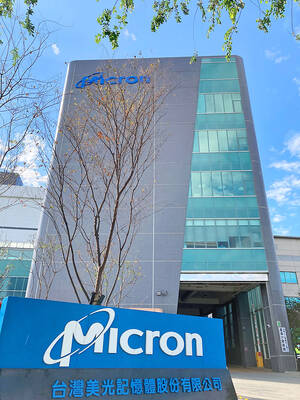
STOCK, CASH: Quarterly profit-sharing bonuses would supplement payments under the Incentive Pay Plan, offering ‘transparency’ and ‘predictability,’ an executive said Micron Memory Taiwan Co (台灣美光) yesterday unveiled a new profit-sharing program and structural wage hikes as part of its efforts to build a predictable and transparent compensation framework in response to feedback from unions. The memorychip maker, a subsidiary of US-based Micron Technology Inc, announced the major compensation structural overhaul during an online news conference following a milestone agreement with the union representing more than 10,000 workers at its Taichung facility. Under the new framework, quarterly profit-sharing bonuses would supplement payments under the Incentive Pay Plan (IPP), the company said. The IPP formula has also been substantially enhanced, it said. “Profit-sharing mechanisms are common
Taiwan Semiconductor Manufacturing Co (TSMC, 台積電) is exploring alternatives to rare earth components in factory equipment, three people familiar with the matter said, aiming to reduce the risk that Beijing’s export controls could disrupt operations at plants that make the world’s most advanced chips. The move underscores how China’s grip on rare earths has become a vulnerability for the global semiconductor industry after the country last year put some rare earth materials, magnets and related processing technology under export controls, requiring licences. Rare earth magnets are commonly used in motors that power moving parts in industrial equipment, including machinery in highly automated

The US Department of the Treasury proposed a rule on Thursday to crack down on US high-tech investments such as supercomputing and artificial intelligence (AI) in China, Russia, North Korea and other “countries of concern.” The US government has been working for years to deny China and other adversaries investments that could help them boost their military power. That program began in 2023 when then-US president Joe Biden signed an executive order putting restrictions on outbound US investments in sectors such as semiconductors, quantum computing and AI going into China. The Treasury later established the Outbound Investment Security Program. In December last year,


 RSS