

Taiwan’s fast-growing actively managed exchange-traded fund (ETF) market is facing a test of managers’ stock-picking skills as volatility and closer scrutiny of artificial intelligence (AI) investments widen performance gaps across the sector.
The 20 Taiwan-focused active ETFs in the latest performance rankings posted an average return of just 0.60 percent over the past three months, with fewer than half generating gains.
The gap between the best and worst performers reached 17.61 percentage points, according to the Securities Investment Trust and Consulting Association. Cathay Taiwan High Dividend Momentum Active ETF (00400A) topped the rankings with a 7.91 percent return, outperforming the category average by 7.31 percentage points, the association’s data showed.
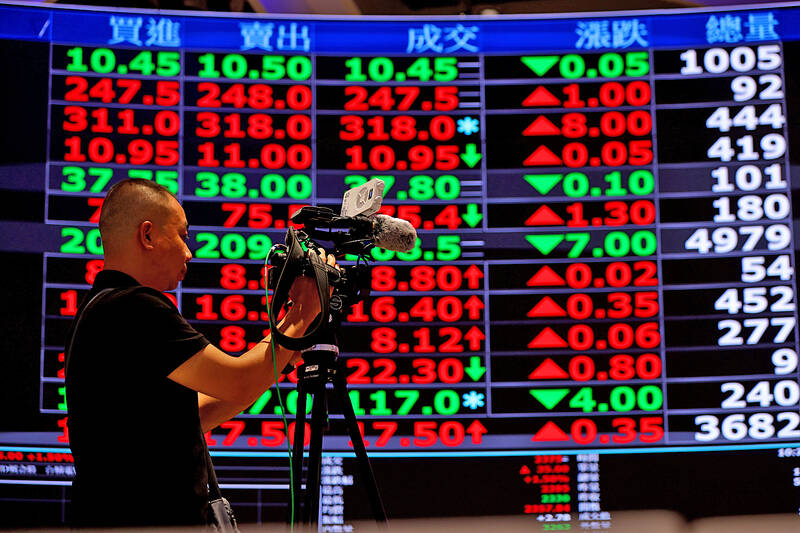
Photo: EPA/Ritchie B. Tongo
The divergence comes as investors increasingly demand evidence that heavy spending on AI infrastructure can translate into sustainable revenue and earnings growth. Even within the same supply chain, differences in order quality, profit margins and earnings prospects can lead to sharply divergent share-price performance.
Taiwan’s active ETF market has expanded rapidly, with 40 funds managing a combined NT$988.6 billion (US$30.41 billion) at the end of last month, nearing the NT$1 trillion milestone. Together, the funds had more than 4.25 million beneficiary accounts, association data showed.
Despite overlapping portfolio holdings, active ETFs have delivered widely differing returns, as performance depends not only on which stocks managers select, but also on when they buy, how much they invest and when they adjust their positions.
Cathay fund manager Liang En-yi (梁恩溢) said recent volatility reflected investors’ reassessment of corporate prospects as the AI investment theme entered a phase in which earnings must justify expectations.
Although AI-related stocks have propelled Taiwan’s equity market to new highs this year, investors are looking beyond the hype to determine which companies can turn AI demand into sustainable profits, he said.
The supply chain spans semiconductors, servers, cooling systems and power infrastructure, with demand and earnings growth varying across segments, he added.
Rapid shifts in investor preferences make it increasingly critical for fund managers to adjust their portfolios as industry conditions change, Liang said.
A market correction does not necessarily mean growth opportunities have disappeared, but it can expose differences in companies’ earnings prospects and valuations, he said.
For active managers, the challenge is to identify companies whose earnings can justify their valuations while managing the risks of concentrated positions in a volatile market, Liang said.

Luxury powerhouses including Hermes and Cartier are suffering steeper slumps in China, in a sign that a spending pullback by the country’s wealthy consumers is hitting even the most resilient brands. Sales at the brands in mainland China fell as much as double-digits in August and last month compared to the same period a year ago, two research firms surveyed by Bloomberg that track industry data said. The drop is significant as Hermes International SCA and Cie Financiere Richemont SA’s Cartier had been relatively unaffected in the country as a broader slowdown in luxury consumption took hold in June, the firms’
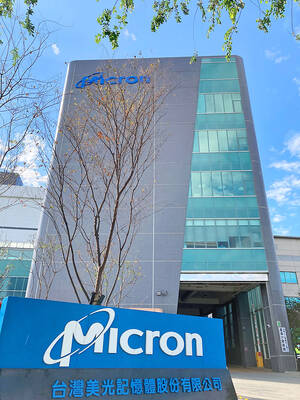
STOCK, CASH: Quarterly profit-sharing bonuses would supplement payments under the Incentive Pay Plan, offering ‘transparency’ and ‘predictability,’ an executive said Micron Memory Taiwan Co (台灣美光) yesterday unveiled a new profit-sharing program and structural wage hikes as part of its efforts to build a predictable and transparent compensation framework in response to feedback from unions. The memorychip maker, a subsidiary of US-based Micron Technology Inc, announced the major compensation structural overhaul during an online news conference following a milestone agreement with the union representing more than 10,000 workers at its Taichung facility. Under the new framework, quarterly profit-sharing bonuses would supplement payments under the Incentive Pay Plan (IPP), the company said. The IPP formula has also been substantially enhanced, it said. “Profit-sharing mechanisms are common
Micron Memory Taiwan and a union representing workers at its Taichung operations today said they had signed a labor-management agreement covering multiple issues, prompting both sides to withdraw from mediation scheduled for tomorrow. The joint statement did not disclose the terms of the agreement, saying the company and the union would separately communicate details to affected employees in the coming days. Idaho-based Micron, the world's third-largest memory chipmaker, employs about 15,000 people in Taiwan, a key manufacturing base where it produces DRAM and high-bandwidth memory chips used in artificial intelligence (AI) servers. Any disruption to Micron's Taiwan operations could affect already strained global
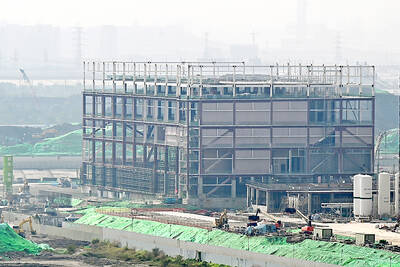
Taiwan Semiconductor Manufacturing Co (TSMC, 台積電) is suspending some construction work after an accident at one of its building sites in southern Taiwan led to the deaths of four workers. The incident took place on Tuesday during steel structure construction at TSMC’s Fab 22 in Kaohsiung, the company said. Workers fell from a height while performing steel structure hoisting and installation, a report from the Central News Agency said. A cause might be aged bolts, it said, citing a preliminary assessment by the Southern Taiwan Science Park Bureau. The bureau said that work would only resume after Shang Hao Machinery Co (上昊機械),


 RSS