

Shares in Taiwan tumbled nearly 961 points yesterday, tracking an overnight sell-off in US technology stocks after a Houthi attack on a Saudi Arabian airport sent crude oil prices soaring.
South Korean and Japanese shares also led losses across Asian stock markets as technology firms plunged on fresh worries about the outlook for the artificial intelligence (AI) investment boom.
The TAIEX closed down 960.65 points, or 1.95 percent, at 48,341.31, with leading chipmaker Taiwan Semiconductor Manufacturing Co (台積電) down 1.97 percent.
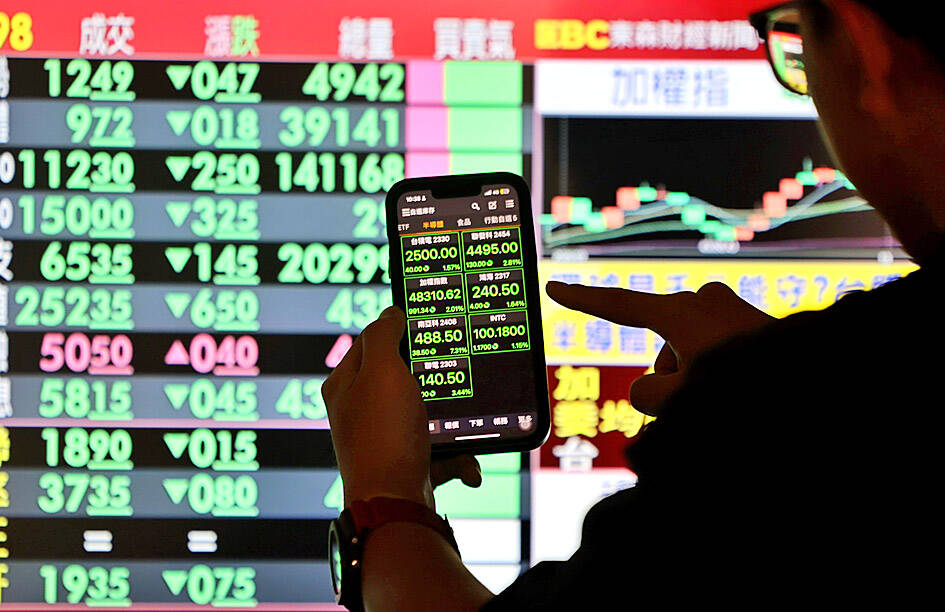
Photo: CNA
Turnover on the local main board totaled NT$1.125 trillion (US$35.22 billion), compared with NT$894.52 billion on Monday, Taiwan Stock Exchange data showed.
The three major institutional investors sold a combined net NT$198.446 billion, of which foreign investors sold a net NT$165.342 billion, the third-largest net sell-off on record, exchange data showed.
“The initial losses came after heavy losses among US semiconductor stocks overnight after attacks on a Saudi airport, sending oil prices higher,” Moore Securities Investment Consulting Co (摩爾投顧) analyst Adam Lin (林漢偉) said, referring to the Philadelphia Semiconductor Index’s 2.67 percent decline.
“Selling intensified as investors were stunned by falling technology stocks in Seoul this morning amid speculation about several developments, including a delay in shipments of Nvidia Corp’s Vera Rubin platform,” Lin said. “The expanded turnover showed that investors appeared to be panicking and scrambling to trim their positions.”
Memory supplier Nanya Technology Corp (南亞科技) slid 7.4 percent, tracking heavy losses by South Korean counterparts Samsung Electronics Co and SK Hynix Inc.
South Korea’s KOSPI tanked more than 6 percent at one point as Samsung and SK Hynix took a beating following reports that China’s CXMT Corp (長鑫存儲) had made progress on new technology to boost memory density, which other firms have been working on.
The firm was looking at releasing a new server-memory product based on the structure by the end of the year, the reports said.
Seoul closed down 5.5 percent, with SK Hynix off 10 percent and Samsung more than 7 percent down.
Japanese stocks were also sharply lower, with the Nikkei 225 losing 1.8 percent as chipmaker Kioxia Holdings Corp tumbled more than 13 percent, while Tokyo Electron Ltd was down more than 7 percent and Advantest Corp more than 8 percent.
Adding to the unease among traders were comments from Broadcom Inc CEO Hock Tan (陳福陽), who likened the recent investor AI buying frenzy to gambling.
“A lot of investors have no clue what they are investing in,” he said, adding that they “set very extreme expectations only to find out that it’s almost like they are in a casino.”
Tan also said that the industry had not yet found a sustainable model, pointing out that ChatGPT-maker OpenAI reported billions of dollars in losses.
“For now it’s still losing money, because they’re spending a lot on training,” Tan said. “So frankly, it doesn’t tell anything at this point except that there is a lot of potential revenue growth out of providing frontier generative AI models.”

INFRINGEMENT: The investigation comes after a complaint from Vicor Corp, with the company seeking a limited exclusion order as well as cease-and-desist orders, the ITA said The US International Trade Commission (USITC) has launched a Section 337 investigation naming Taiwanese technology companies, including Hon Hai Precision Industry Co (鴻海), Delta Electronics Inc (台達電) and Quanta Computer Inc (廣達), as respondents. The Ministry of Economic Affairs (MOEA) pledged assistance if needed. The USITC said on Friday in a statement that it had voted to institute an investigation under Section 337 of the US Tariff Act of 1930 into certain vertical power delivery systems, related components and computing devices incorporating such systems. The investigation covers 20 companies from Taiwan, China, Germany and the US, the commission said, adding that it
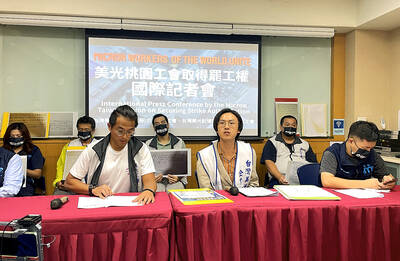
INDUSTRY STANDARD: Most global semiconductor companies have tied employee bonuses directly to corporate profits, the union said, urging Micron to do the same Micron Memory Taiwan Co’s (台灣美光) Taoyuan union secured strike authorization yesterday after a six-day vote, ramping up pressure on management to build a reasonable profit-sharing mechanism. Before the strike, the Taoyuan union “encourages” members to join a protest in Taipei on Oct. 19, union chairman Jerry Lin (林哲瑞) told a news conference in Taipei. The union did not rule out staging a snap strike, Lin said. The union has 2,258 registered members, with 88.3 percent backing the strike, he said. The vote comes as Micron’s board of directors is meeting today and tomorrow in the US. The union expects the board to respond

Elon Musk said his business empire would build and operate Terafab independently, quashing speculation about industry leader Taiwan Semiconductor Manufacturing Co (TSMC, 台積電) swooping in to run his ambitious chipmaking venture. Based in Texas, the Terafab project is Musk’s effort to break into the business of fabricating chips, in service of his companies Tesla Inc and SpaceXAI. While Musk had said that he was in discussions with TSMC, the trillionaire clarified in an X post yesterday that the only matter under consideration is for TSMC potentially leasing some part of the planned site and would not involve any operational role. “Maybe TSMC
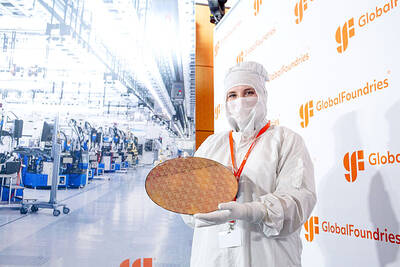
PACKAGING PUSH: The chipmaker said that it would begin ramping up silicon interposer production in New York in the first half of 2028 to support AI systems GlobalFoundries Inc shares gained as much as 7 percent after the chip manufacturer announced a five-year, US$2 billion deal to provide US production capacity to Taiwan Semiconductor Manufacturing Co (TSMC, 台積電). Under the agreement, announced on Thursday, GlobalFoundries is to help supply components known as silicon interposers. The US company is to rely on manufacturing at its facility in Malta, New York, and said it has the option to expand capacity “as customer demand grows.” An interposer is a small layer of silicon that sits between a chip and its packaging. It is home to the wires that carry electronic signals and


 RSS
RSS