

Taiwanese developers are delaying new housing projects as tight credit, high prices and weak demand weigh on the market, with the transaction value of new-home and presale launches in northern Taiwan falling 17.6 percent in the first nine months of the year, the Chinese-language My Housing Monthly (住展雜誌) reported.
The value of residential projects launched in the region totaled about NT$766.7 billion (US$24.13 billion) through this month, down NT$163.4 billion from a year earlier, the magazine said.
The decline marks a further pullback from the market. Projects launched in the first three quarters of the year topped NT$1 trillion in the past few years, and it exceeded NT$900 billion last year.
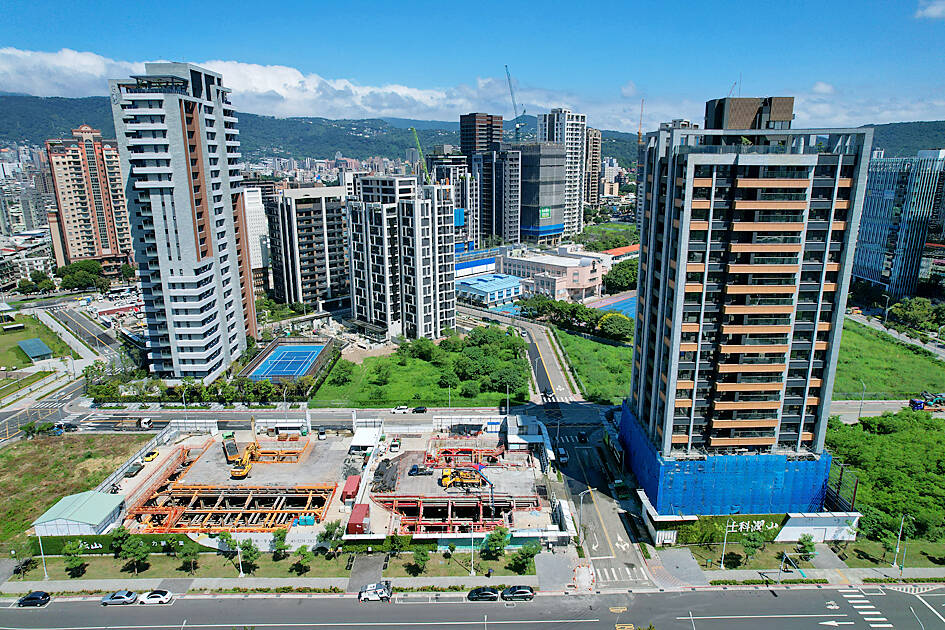
Photo: CNA
“Developers are reluctant to add to the supply pressure and are choosing to delay new projects where possible,” magazine spokesman Chen Ping-cheng (陳炳辰) said.
Developers are also facing competition for investment funds from Taiwan’s stock market, which attracted substantial capital in the first half, Chen said.
Tighter mortgage conditions have further constrained buyers’ ability to finance home purchases, he said.
The central bank’s decision to raise the loan-to-value cap for second-home buyers to 70 percent, along with signals that it would not further tighten property curbs, has yet to generate a meaningful pickup in demand, Chen said.
A stock market pullback in July also failed to send significant funds into the property sector, as some investors remained stuck in losing equity positions, while others held back in expectation of a recovery in stocks, he said.
The slowdown was broad across northern Taiwan, the magazine said. Project launches in Taoyuan fell 32.2 percent to NT$195.1 billion, while in Taipei they dropped 30.7 percent to NT$143.1 billion, it said.
New Taipei City declined 19.8 percent to NT$280.2 billion, as developers become increasingly selective, the magazine said.
Hsinchu County was an exception, with the value of new projects more than doubling to NT$118.5 billion. Several large developments in the county’s Jhubei City (竹北) and Jhudong Township (竹東) helped drive the increase, as developers brought forward projects delayed during an earlier period of consolidation, it said.
Northern Taiwan would need about NT$233.3 billion of new launches in the fourth quarter to push the full-year total above NT$1 trillion, Chen said.
However, that target could be difficult to reach, as the central bank’s latest easing of property restrictions has yet to materially improve market sentiment, with some buyers likely to defer purchases toward the end of this year, while some large projects could be pushed into next year, he added.

Federal Reserve Bank of Philadelphia President Anna Paulson on Thursday joined the chorus of policymakers saying additional interest-rate increases may be needed to ensure inflation returns to the central bank’s 2 percent goal. “Looking ahead, if conditions evolve as I expect, some modest further tightening may be warranted,” Paulson said on Thursday at an event in Philadelphia. Earlier on Thursday, New York Fed President John Williams said he and his colleagues “still have a lot of work to do” in dealing with lingering inflation risks. Several other officials have aired similar comments, in line with the signal given last week when policymakers voted
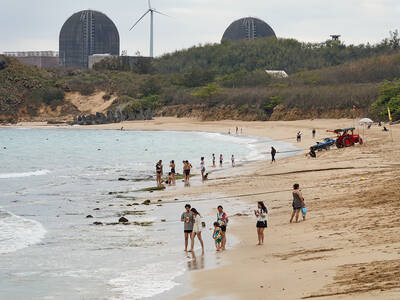
COURSE CHANGE: The shift comes amid pressure from chipmakers for stable, low-carbon electricity. Officials said Ma-anshan could be restarted as early as 2028 Taiwan has approved a preliminary plan to restart an idled atomic power plant, marking a reversal of the ruling party’s anti-nuclear stance as the nation pursues greater energy security. The Nuclear Safety Commission has cleared its review of an initial proposal to restart the Ma-anshan Nuclear Power Plant, it said in a statement on Thursday. Taiwan Power Co (台電) will still need to carry out follow-up work including safety inspections, before submitting another report on implementation for review, the commission said. The earliest the plant could resume operations is 2028, according to previous reports in local media, citing Minister of Economic Affairs

GlobalFoundries Inc yesterday said it plans to accelerate global capacity optimization and expansion to accommodate exponential growth in radio frequency (RF) and other chips driven by the artificial intelligence (AI) boom. Singapore will pay a vital role in the company’s capacity expansion, alongside production line optimizations across its manufacturing sites, GlobalFoundries Asia Pacific head Vincent Feng (范曾文) told a news conference in Hsinchu City. “Many might be surprised to hear that the RF market is thriving now. We are gearing up for a massive capacity expansion, and it is all being driven by AI,” Feng said. He declined to disclose details of the
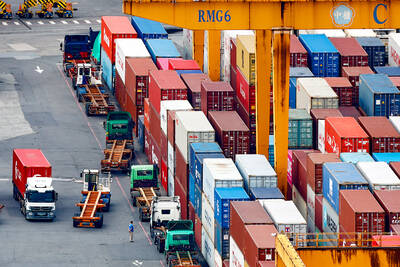
LOPSIDED DEVELOPMENT: While AI firms are riding the wave as far it can take them, traditional industries and their workers are not floated by the same flood While Taiwan is benefiting from a global artificial intelligence (AI) boom, many traditional industries have seen little of the benefit, widening the country’s “K-shaped” economic divide, an economist said. A “K-shaped” economy is one in which some sectors expand rapidly while others struggle, head of the commerce development and strategy research division at the Commerce Development Research Institute Ju Haw (朱浩) said in an interview. In Taiwan’s case, high-tech and AI-related industries have continued to grow while traditional industries have come under increasing pressure, he said. AI development has created crowding-out effects, as large high-tech firms generating strong profits are better able


 RSS
RSS