

MediaTek Inc (聯發科) yesterday unveiled a new smartphone chip made using Taiwan Semiconductor Manufacturing Co’s (TSMC, 台積電) most advanced manufacturing technology, targeting the premium handset market with semiconductors capable of running more artificial intelligence (AI) features directly on the device.
It is part of an effort to gain ground on US rival Qualcomm Inc in premium phones, where higher-priced devices and AI features offer chipmakers better margins.
MediaTek said the Dimensity 9600 Pro is its first mobile processor built using TSMC’s cutting-edge 2-nanometer process. It also introduced the Dimensity 9600M, made using TSMC’s 3nm process and aimed at a broader segment of the flagship smartphone market.
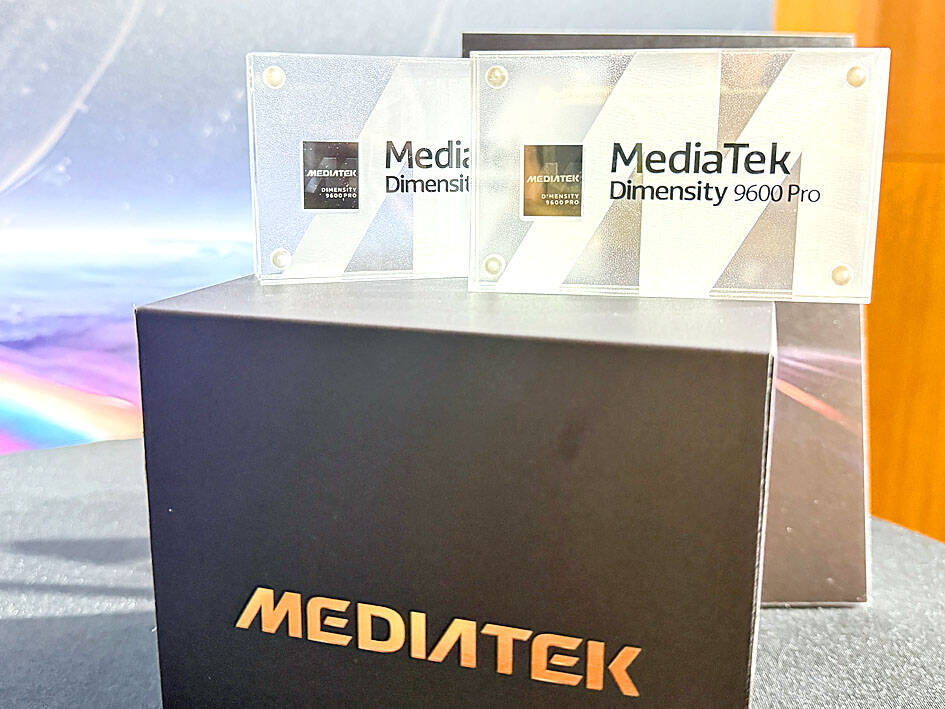
Photo: Reuters
The first smartphones powered by the two chips will be launched soon, the company said. It has supplied chips to Chinese smartphone customers such as Xiaomi Corp (小米), Oppo Mobile Telecommunications Corp (歐珀) and Vivo Communication Technology Co (維沃).
The 9600 Pro includes a dedicated AI processor, known as a neural processing unit (NPU), that MediaTek said can handle more complex generative-AI applications on the phone itself. It said that the NPU delivered a 51 percent improvement over the last generation in processing a user’s prompt before an AI model begins generating a response, without offering details.
MediaTek’s market value surpassed that of Qualcomm earlier this year.
MediaTek corporate senior vice president J.C. Hsu (徐敬全) said the company was working with handset makers on ways to limit the effect of higher component costs on consumers as the AI boom strains supply chains.
Hsu saw opportunities for MediaTek as advanced hardware and new AI features make higher price tags increasingly common.
“As the overall market moves to higher prices, I believe there is still room for us to increase our share of the flagship segment,” Hsu said.
Apple Inc’s new foldable iPhone, announced last week, retails for as much as US$3,199 in the US for the highest-storage model.
MediaTek, one of the world’s largest designers of smartphone chips, has been expanding its AI business into datacenter and custom chip products, as technology companies pour billions of dollars into AI infrastructure.
Its first AI accelerator designed for a major US cloud service provider is expected to enter mass production in the fourth quarter of this year.
The company raised US$3.9 billion last month through a convertible bond sale, with Nvidia Corp investing US$3.5 billion in the offering, while Alphabet Inc, a long-term MediaTek partner in AI infrastructure, also participated.
FOUNDRY DATA: Demand pushed production on some TSMC lines to full utilization, while Samsung’s market share of 5.9 percent dropped, TrendForce said Taiwan Semiconductor Manufacturing Co’s (TSMC, 台積電) foundry market share edged up to 72.5 percent in the second quarter from 72.3 percent in the previous quarter, propelled by robust artificial intelligence (AI) and smartphone chip revenue, data compiled by market researcher TrendForce Corp (集邦科技) showed yesterday. TSMC’s revenue last quarter grew 12 percent sequentially to US$40.2 billion, outpacing the 11.5 percent average growth among the world’s top 10 foundry companies, the researcher said. Combined revenue of the top 10 is expected to grow further this quarter from US$53.49 billion last quarter, supported by strong demand and price hikes, it said. The increased demand has

Global notebook computer shipments are expected to fall 8 percent year-on-year to 167.9 million units this year, dragged by weak demand, high component prices and supply constraints, the Market Intelligence and Consulting Institute (MIC) said on Tuesday. Next year, shipments are expected to decline by a further 4.7 percent to 160 million units as higher retail prices weigh on consumption, MIC deputy director-general Edward Lin (林柏齊) told a news conference in Taipei. The downtrend is expected to extend into 2028, with replacement demand unlikely to recover before supplies of key components rebound and costs decline, Lin said. Surging demand for artificial intelligence (AI)
Kioxia Holdings Corp’s top executive brushed aside the likelihood of deeper ties with rival and stakeholder SK Hynix Inc, while pledging to keep surging memory prices at bay to avoid denting long-term artificial intelligence (AI) demand. Makers of memory chips are embarking on costly production capacity increases to meet soaring orders from AI service providers that are fueling double or even triple-digit price rises. Investors including the chairman of SK Hynix’s parent, SK Inc, have said manufacturing partnerships might help lower the risk of huge capital commitments needed. However, oft-floated closer ties with SK Hynix would run into antitrust hurdles and be

EQUAL SHARE: A row over Micron’s payouts coincides with a global debate about who deserves a cut of the sudden wealth generated by the artificial intelligence boom Micron Technology Inc is to provide its engineers in Taiwan a cash bonus of NT$1 million (US$31,600) plus equity rewards, as the company’s local unions are demanding an additional payout to reflect their contribution to the chipmaker’s blowout profits. The Idaho-based chipmaker said in a statement yesterday that its entry-level, Taiwan-based engineers’ average compensation would reach NT$3.4 million for the past fiscal year after the cash and equities awards. All employees in Taiwan would receive equities as part of the annual merit grants, the company added. Before the announcement, Micron’s unions asked for a one-time cash payout equal to about seven years


 RSS
RSS