

The Micron Taiwan workers’ union yesterday rejected a one-time payout unveiled by US-based Micron Technology Inc last week, saying it wants a long-term mechanism under which employees would share 15 percent of the company’s operating profits.
While the union and the company are still in talks over the dispute, the reward package was proposed unilaterally by the employer without reaching an agreement with the union, union head Jerry Lin (林哲瑞) told reporters.
Lin said he suspected the company was seeking to influence public opinion with the move.
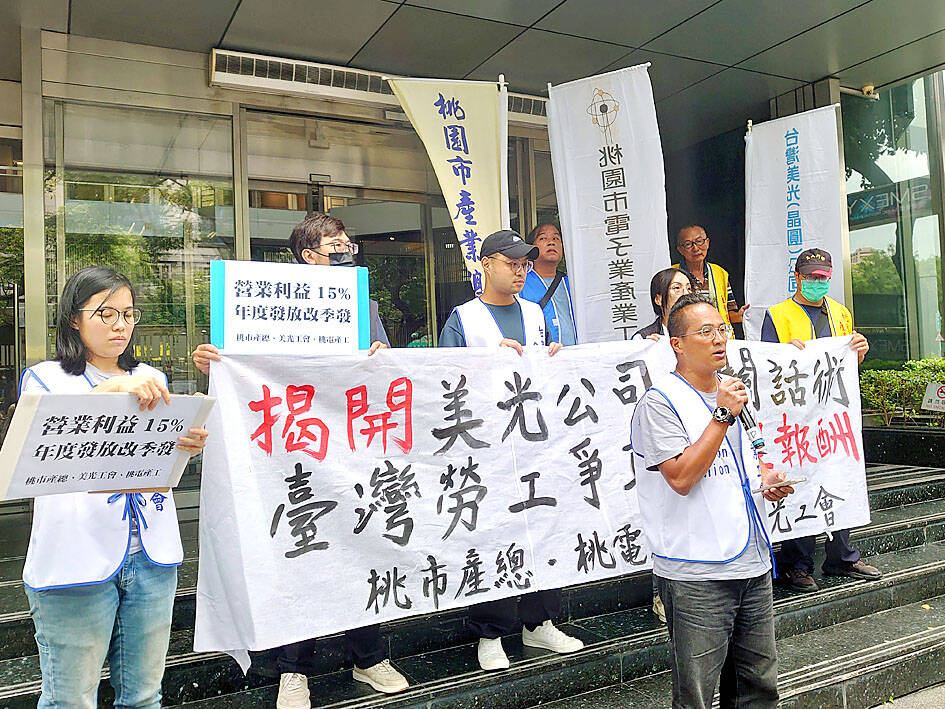
Photo: CNA
On Friday last week, Micron announced a reward package under which employees in Taiwan would receive compensation equivalent to 35 to 68 months’ pay for this fiscal year, after the union threatened to strike.
Under the one-time payout, employees in Taiwan would receive at least NT$1.7 million (US$53,379) in cash compensation for this fiscal year, while entry-level engineers would receive an average of NT$2.9 million in compensation, including stock rewards.
Average compensation is expected to reach NT$3.4 million.
Lin said the union was not seeking a one-time payout but instead wanted a long-term, fair system for distributing profits. He urged Micron to establish a transparent and verifiable profit-sharing mechanism under which 15 percent of the company’s operating profits would be distributed to employees.
Lin said whether the union stages a strike would depend on the outcome of two rounds of negotiations scheduled for this Friday and Monday next week.
He said that if the company continues to seek to influence the talks, the union would declare that negotiations have broken down and hold a vote among its members on whether to strike.
Global demand for memory chips has risen amid the artificial intelligence (AI) boom, tightening supplies and driving up prices. The trend has allowed companies including Micron, South Korea’s Samsung Electronics Co and SK Hynix Inc to post record sales and profits.
Micron workers in Taiwan have expressed dissatisfaction with bonuses they have received, with some workers considering going on strike in protest.
Taiwan is Micron’s largest memory production base, accounting for about 60 percent of its total production capacity and primarily producing DRAM and high-bandwidth memory chips. A strike could tighten supplies and exacerbate the supply-demand imbalance amid the AI boom, industry sources said.
Micron yesterday said it would continue to listen to its employees and participate in the mediation process in good faith. The company’s reward package was intended to allow all employees to share in its achievements, it said.
Micron, which employs about 15,000 people in Taiwan and has invested more than NT$1.6 trillion in the country, posted record sales of US$41.46 billion and net income of US$28.24 billion in its fiscal third quarter ending on May 28, company data showed.
FOUNDRY DATA: Demand pushed production on some TSMC lines to full utilization, while Samsung’s market share of 5.9 percent dropped, TrendForce said Taiwan Semiconductor Manufacturing Co’s (TSMC, 台積電) foundry market share edged up to 72.5 percent in the second quarter from 72.3 percent in the previous quarter, propelled by robust artificial intelligence (AI) and smartphone chip revenue, data compiled by market researcher TrendForce Corp (集邦科技) showed yesterday. TSMC’s revenue last quarter grew 12 percent sequentially to US$40.2 billion, outpacing the 11.5 percent average growth among the world’s top 10 foundry companies, the researcher said. Combined revenue of the top 10 is expected to grow further this quarter from US$53.49 billion last quarter, supported by strong demand and price hikes, it said. The increased demand has

Global notebook computer shipments are expected to fall 8 percent year-on-year to 167.9 million units this year, dragged by weak demand, high component prices and supply constraints, the Market Intelligence and Consulting Institute (MIC) said on Tuesday. Next year, shipments are expected to decline by a further 4.7 percent to 160 million units as higher retail prices weigh on consumption, MIC deputy director-general Edward Lin (林柏齊) told a news conference in Taipei. The downtrend is expected to extend into 2028, with replacement demand unlikely to recover before supplies of key components rebound and costs decline, Lin said. Surging demand for artificial intelligence (AI)
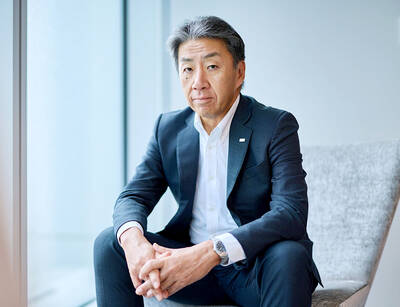
Kioxia Holdings Corp’s top executive brushed aside the likelihood of deeper ties with rival and stakeholder SK Hynix Inc, while pledging to keep surging memory prices at bay to avoid denting long-term artificial intelligence (AI) demand. Makers of memory chips are embarking on costly production capacity increases to meet soaring orders from AI service providers that are fueling double or even triple-digit price rises. Investors including the chairman of SK Hynix’s parent, SK Inc, have said manufacturing partnerships might help lower the risk of huge capital commitments needed. However, oft-floated closer ties with SK Hynix would run into antitrust hurdles and be

EQUAL SHARE: A row over Micron’s payouts coincides with a global debate about who deserves a cut of the sudden wealth generated by the artificial intelligence boom Micron Technology Inc is to provide its engineers in Taiwan a cash bonus of NT$1 million (US$31,600) plus equity rewards, as the company’s local unions are demanding an additional payout to reflect their contribution to the chipmaker’s blowout profits. The Idaho-based chipmaker said in a statement yesterday that its entry-level, Taiwan-based engineers’ average compensation would reach NT$3.4 million for the past fiscal year after the cash and equities awards. All employees in Taiwan would receive equities as part of the annual merit grants, the company added. Before the announcement, Micron’s unions asked for a one-time cash payout equal to about seven years


 RSS
RSS