

The artificial intelligence (AI)-linked rally that has seen world stock markets soar over the last two years is showing growing signs of vulnerability, global central bank umbrella body, the Bank for International Settlements (BIS), said yesterday.
Investors were becoming "increasingly cautious" about the profitability of future AI investments, especially as the leverage of major US tech firms continued to rise, the BIS said in a report.
"The AI momentum, which had propelled equity markets and contributed to the resilience of the global economy of the last year, has begun to show growing signs of vulnerability," BIS economic analysis head Frank Smets told reporters on Friday ahead of the report’s publication.
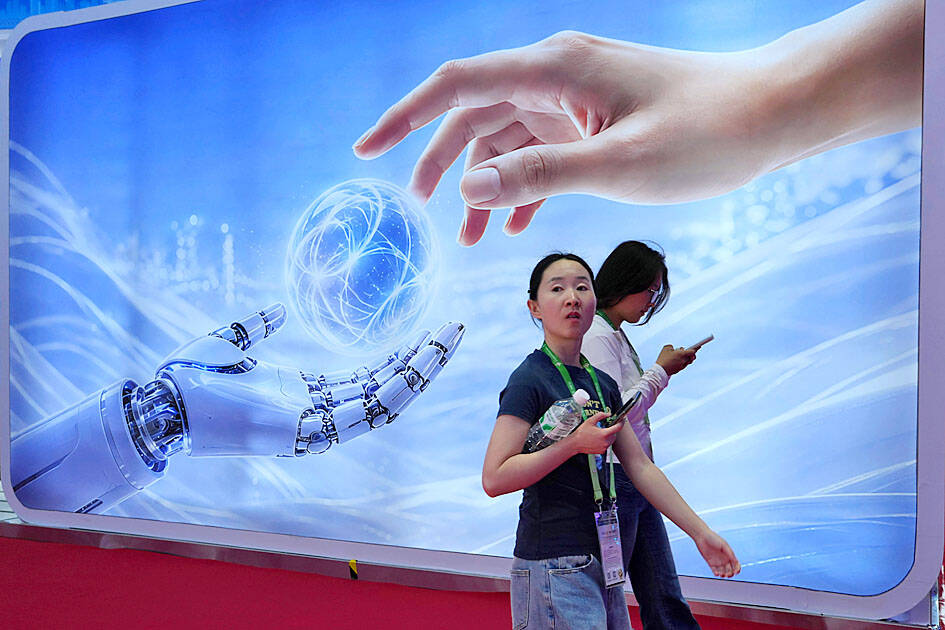
Photo: Ng Han Guan, AP
AI-connected stocks were down sharply yesterday after the heads of a number of top AI firms warned at the weekend that the pace of the technology’s development needed to be slowed to prevent threats to humanity.
The BIS report also pointed to an uncertain global backdrop of strains on public finances, exacerbated by geopolitical tensions and volatile energy prices.
The hundreds of billions of dollars worth of debt AI firms have been issuing could also be contributing to the rise in government bond market borrowing costs, known as yields, on top of the long-held concerns about the sustainability of debt levels.
"It’s related to the fiscal fragility that comes also with higher uncertainty in the world economy," Smets said referring to the recent pressures in bond markets.
Nevertheless, he added that there were "no signs of stress" overall and that investors’ risk appetite had remained "remarkably resilient" in recent months.
Dubbed the central bank to the world’s central banks, the BIS has given regular warnings about both global debt levels and potential stock market bubbles in recent years.
"Whether this resilience (in markets) can be sustained, especially if upward pressures on yields continue, remains, however, uncertain," Smets said.
He also echoed BIS chief Pablo Hernandez de Cos’ warning last week of the financial stability risks posed by AI.
"What we are most concerned on in this (AI) area is the rapid increase in debt and leverage," Smets said. "And the fact that many of these financing deals are quite opaque. They’re often off balance sheet. They have sort of circularity in them."
The report also looked in depth at the private market funding that has been pouring into AI in recent years.
Aggregate borrowing by tech firms has risen from around US$22 billion, or 22 percent of total private credit, in 2010 to over US$1 trillion, or 44 percent, by last year. In total, outstanding loans of any type amount to almost US$2.5 trillion, it added.
Another of its studies used AI to analyse thousands of central bank speeches and reports. It showed that "core inflation" metrics that strip out energy price peaks and troughs are being cited more frequently and in greater variety.
While the trend reflected changing economic conditions, it said "the growing complexity of central bank messaging may pose challenges for effective communication with the public."
FOUNDRY DATA: Demand pushed production on some TSMC lines to full utilization, while Samsung’s market share of 5.9 percent dropped, TrendForce said Taiwan Semiconductor Manufacturing Co’s (TSMC, 台積電) foundry market share edged up to 72.5 percent in the second quarter from 72.3 percent in the previous quarter, propelled by robust artificial intelligence (AI) and smartphone chip revenue, data compiled by market researcher TrendForce Corp (集邦科技) showed yesterday. TSMC’s revenue last quarter grew 12 percent sequentially to US$40.2 billion, outpacing the 11.5 percent average growth among the world’s top 10 foundry companies, the researcher said. Combined revenue of the top 10 is expected to grow further this quarter from US$53.49 billion last quarter, supported by strong demand and price hikes, it said. The increased demand has

Global notebook computer shipments are expected to fall 8 percent year-on-year to 167.9 million units this year, dragged by weak demand, high component prices and supply constraints, the Market Intelligence and Consulting Institute (MIC) said on Tuesday. Next year, shipments are expected to decline by a further 4.7 percent to 160 million units as higher retail prices weigh on consumption, MIC deputy director-general Edward Lin (林柏齊) told a news conference in Taipei. The downtrend is expected to extend into 2028, with replacement demand unlikely to recover before supplies of key components rebound and costs decline, Lin said. Surging demand for artificial intelligence (AI)
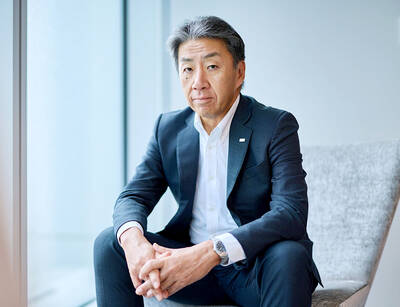
Kioxia Holdings Corp’s top executive brushed aside the likelihood of deeper ties with rival and stakeholder SK Hynix Inc, while pledging to keep surging memory prices at bay to avoid denting long-term artificial intelligence (AI) demand. Makers of memory chips are embarking on costly production capacity increases to meet soaring orders from AI service providers that are fueling double or even triple-digit price rises. Investors including the chairman of SK Hynix’s parent, SK Inc, have said manufacturing partnerships might help lower the risk of huge capital commitments needed. However, oft-floated closer ties with SK Hynix would run into antitrust hurdles and be

EQUAL SHARE: A row over Micron’s payouts coincides with a global debate about who deserves a cut of the sudden wealth generated by the artificial intelligence boom Micron Technology Inc is to provide its engineers in Taiwan a cash bonus of NT$1 million (US$31,600) plus equity rewards, as the company’s local unions are demanding an additional payout to reflect their contribution to the chipmaker’s blowout profits. The Idaho-based chipmaker said in a statement yesterday that its entry-level, Taiwan-based engineers’ average compensation would reach NT$3.4 million for the past fiscal year after the cash and equities awards. All employees in Taiwan would receive equities as part of the annual merit grants, the company added. Before the announcement, Micron’s unions asked for a one-time cash payout equal to about seven years


 RSS
RSS