

A new generation of mining projects targeting rare earth and critical minerals could transform Malawi’s economy — but experts warn of the Africa-wide challenges in turning resource wealth into broad-based prosperity.
One of the world’s poorest countries, Malawi has long depended on agriculture, aid and a handful of exports such as tobacco, tea and sugar.
Now discoveries of rare earths and critical minerals potentially worth tens of billions of dollars are drawing the small southern African nation into the global scramble for materials essential for the energy transition and advanced manufacturing.
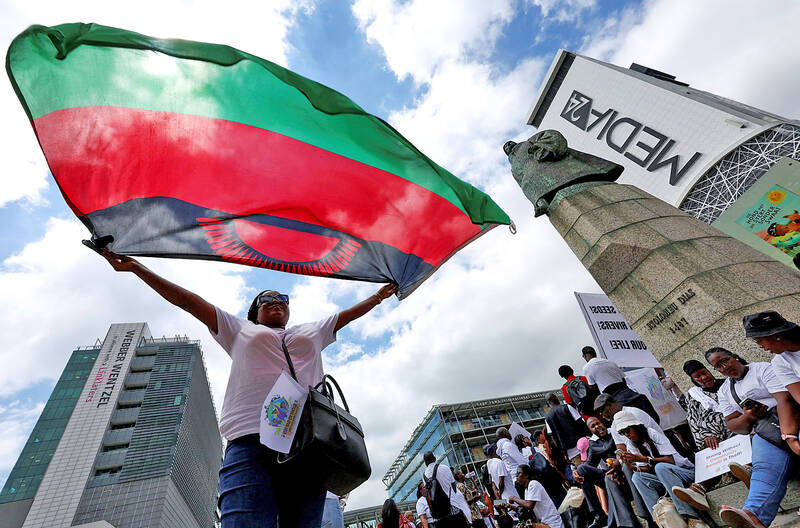
Photo: Reuters
Critics warn that without stronger institutions, local participation and domestic processing, Malawi could repeat a pattern familiar in Africa of exporting valuable resources while reaping few benefits at home.
“This means a lot to us and expectations are very high,” said Malawian Member of Parliament Lawrence Chakakala Chaziya, whose constituency includes central Kasiya where Sovereign Metals, an Australian company, is advancing a major critical minerals project.
Sovereign Metals says the operation sits atop the world’s largest natural deposit of rutile — used in titanium production — and one of the largest of graphite, an important component of lithium-ion batteries.
“Given the large quantities of deposits here, we expect the mining project to bring tangible benefits to our people, particularly in terms of improved social services,” Chaziya said. “I have already urged our people not to sell their land.”
In the south, another Australian company is developing a project to extract rare earths used in powerful magnets for electric vehicles, wind turbines and other advanced technologies. Canadian and Australian groups are also developing other rare earths projects and reviving a long-dormant uranium mine.
Mining contributes about 1 percent of Malawi’s GDP, according to figures cited by the Malawian Chamber of Mines and Energy.
The World Bank estimates the sector could account for about 12 percent of GDP by next year. Cumulative mineral exports could reach US$30 billion from this year to 2040, with annual revenues approaching US$3 billion by 2034.
“Mining offers Malawi a realistic chance to diversify the economy, earn foreign exchange, create skilled jobs and build industries beyond agriculture,” said Gowokani Chijere-Chirwa, an economist at the University of Malawi.
The Malawian government has already moved to improve its hand by passing a law in 2023 removing a 10 percent ceiling on state participation in the sector.
It also plans a state mining company to pursue exploration, joint ventures and mineral beneficiation or upgrading of raw ores, Malawian Mining and Minerals Regulatory Authority Director-General Mphatso Chikoti said.
The country needs to produce skilled professionals, from geologists to lawyers with mining expertise, said Ahmed Dassu, a mining expert.
It should also shore up its geological mapping to “negotiate from a stronger position, attract credible investors and avoid giving away valuable resources without fully understanding their potential,” Dassu told reporters.
Like many resource-rich African countries, Malawi faces the challenge of breaking free from a colonial-era model that treats the continent as “a project of extractivism,” said Deprose Muchena from the Open Society Foundations, which supports African governments in policy development.
Muchena cited examples of major chromium producer Zimbabwe exporting virtually all its output, while the Democratic Republic of the Congo provides about 70 percent of the world’s cobalt, but processes only a fraction domestically.
Africa holds about 30 percent of the world’s critical mineral reserves, including cobalt, copper, lithium, nickel and rare earths, according to the UN, making it a focus of competition between the US and China for strategic resources.
Weak tax regimes and corruption further erode potential gains, with Africa losing about US$88 billion annually to illicit outflows such as underpricing exports or overpricing imports, Muchena said.
Mining projects should not be operating as a separate international enclave, but brought into economies to spur industrialization, he told reporters.
“Malawi has a very small window to turn around the discovery of minerals, of rare earths, into an opportunity for economic development,” he said.
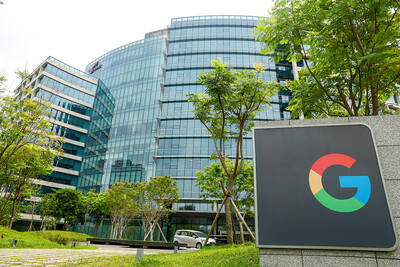
READJUSTMENT? Despite the rumors, a senior Google official said that the company plans to expand its AI research center in Taipei’s Shilin District Google Taiwan is reducing its workforce as the company continues to adjust operations to improve efficiency and focus resources on core goals, the Chinese-language Liberty Times (sister paper of the Taipei Times) reported yesterday. The Alphabet Inc unit said the organizational adjustments have begun and would continue, even though it did not put a figure on the number of potential job cuts or specify the affected departments in its Taiwan operations. The company’s response came after rumors circulated on social media about major job cuts at Google Taiwan. Some posts said the downsizing would target the company’s consumer electronics-related departments
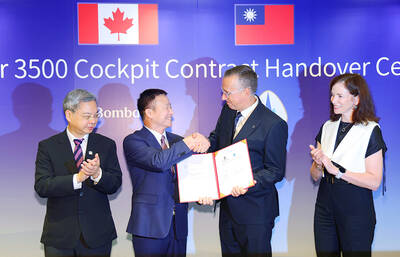
Taiwanese aircraft maker Aerospace Industrial Development Corp (AIDC, 漢翔航空) yesterday announced that it has secured a 20-year partnership agreement with Canada-based Bombardier Inc. The two companies held a ceremony in Taipei yesterday to exchange signed copies of the agreement, launching the 20-year partnership under which AIDC would supply cockpit and forward fuselage structural components for Bombardier’s super-midsize Challenger 3500 business jets, the Taiwanese company said. The agreement represents a new milestone in cooperation between the two companies, which dates back to 1999, with the Taiwanese supplier having provided rear fuselage structural components for more than 1,000 Challenger 3500 aircraft, it
FOUNDRY DATA: Demand pushed production on some TSMC lines to full utilization, while Samsung’s market share of 5.9 percent dropped, TrendForce said Taiwan Semiconductor Manufacturing Co’s (TSMC, 台積電) foundry market share edged up to 72.5 percent in the second quarter from 72.3 percent in the previous quarter, propelled by robust artificial intelligence (AI) and smartphone chip revenue, data compiled by market researcher TrendForce Corp (集邦科技) showed yesterday. TSMC’s revenue last quarter grew 12 percent sequentially to US$40.2 billion, outpacing the 11.5 percent average growth among the world’s top 10 foundry companies, the researcher said. Combined revenue of the top 10 is expected to grow further this quarter from US$53.49 billion last quarter, supported by strong demand and price hikes, it said. The increased demand has

Global notebook computer shipments are expected to fall 8 percent year-on-year to 167.9 million units this year, dragged by weak demand, high component prices and supply constraints, the Market Intelligence and Consulting Institute (MIC) said on Tuesday. Next year, shipments are expected to decline by a further 4.7 percent to 160 million units as higher retail prices weigh on consumption, MIC deputy director-general Edward Lin (林柏齊) told a news conference in Taipei. The downtrend is expected to extend into 2028, with replacement demand unlikely to recover before supplies of key components rebound and costs decline, Lin said. Surging demand for artificial intelligence (AI)


 RSS
RSS