

Taiwan’s housing market showed little sign of emerging from a prolonged downturn last month, as developers held back new projects and buyers remained on the sidelines amid high prices, tight credit and a seasonal slowdown.
The new housing indicator in northern Taiwan fell to 33.9 points last month, remaining in the “yellow-blue” range that signals a contracting market, according to My Housing Monthly (住展雜誌).
“Demand has yet to show any meaningful recovery,” My Housing Monthly research director and spokesman Chen Ping-chen (陳炳辰) said.
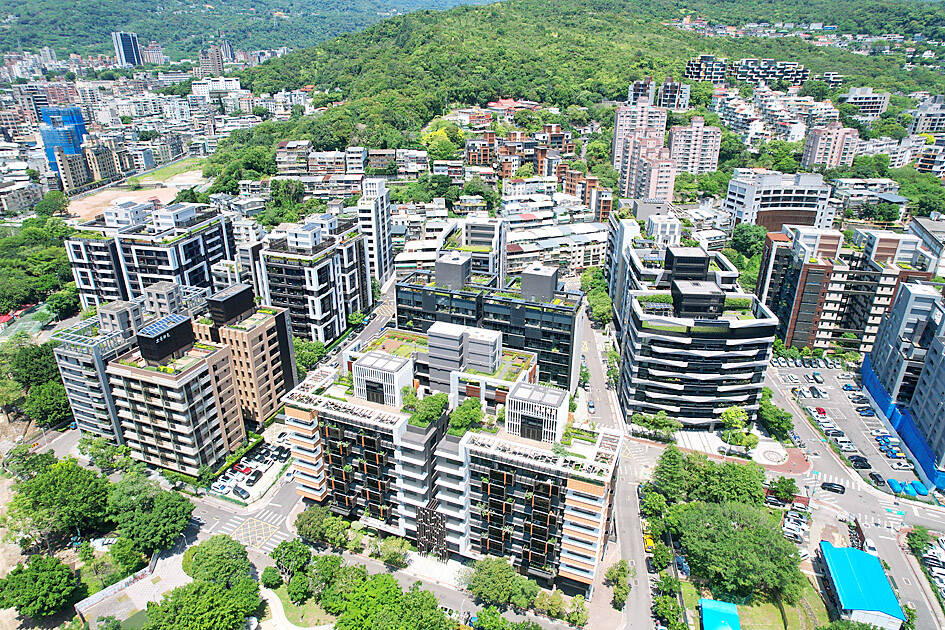
Photo: CNA
Ghost Month, heavy rains and summer travel all weighed on buyer activity, while developers largely waited for this month, a traditional sales season, he said.
Two of the indicator’s six components — presale launches and completed-home units — deteriorated, while buyer visits, transactions, bargaining rates and unsold projects were unchanged.
The value of presale projects launched last month fell by nearly NT$9 billion (US$284.54 million) from the previous month, with only a few projects carrying sales values of more than NT$2 billion, My Housing Monthly said.
Completed-home launches were even weaker, with about 60 units unveiled, compared with a typical monthly level of more than 100. Completed new homes generally command higher prices than other properties, while inflexible payment terms for presale projects have made them harder to sell in a weak market, Chen said.
Weekly visits to development sites averaged fewer than 10 groups, while transactions averaged less than one.
Some newly launched projects attracted potential buyers because of their developer brands or popular locations, but older projects in less-preferred areas have struggled to generate sales.
The weakness is also putting pressure on sales agencies, with some projects changing agents and smaller firms exiting after failing to generate sufficient transactions.
Developers’ restraint has helped prevent inventories from rising further. The number of unsold projects fell 2.6 percent to 1,559 last month from about 1,600 in July. However, that remains above the fewer than 1,000 projects seen during stronger market conditions, highlighting the scale of the inventory overhang.
Taipei and Taoyuan could face difficulty clearing inventory because of high prices and large stockpiles, Chen said.
A further deterioration could also increase the risk of contract cancellations, he added.
However, developers have largely resisted cutting prices. Bargaining rates have remained below 10 percent, with transactions concentrated in established brands and top-tier locations.
A broad recovery appears unlikely with only one quarter left in the year, Chen said.
Policymakers are also likely to remain cautious ahead of local elections for mayors and councilors in November, he said.
The earliest potential catalyst might instead come from the central bank’s December meeting, after the election, Chen said.
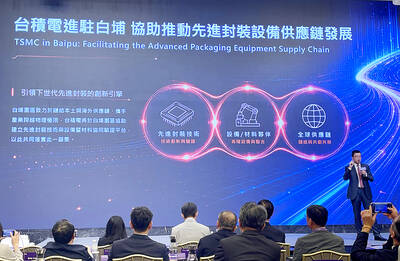
EXPANSION: The 3-hectare site would include small clean rooms and laboratories as well as a world-class training base for advanced packaging talent, the company said Taiwan Semiconductor Manufacturing Co (TSMC, 台積電) is to establish a presence in the Baipu Industrial Park (白埔產業園區) in Kaohsiung to accelerate the testing and validation of semiconductor materials and equipment, a company executive said on Tuesday. The company is working with the Ministry of Economic Affairs and the Kaohsiung City Government on the plan, which is expected to improve validation efficiency by 25 to 50 percent, TSMC vice president of advanced packaging technology and service Jun He (何軍) said at a 3D IC global summit held ahead of the Semicon Taiwan trade show, which opened in Taipei yesterday. TSMC would also conduct

Taiwan Semiconductor Manufacturing Co (TSMC, 台積電) is accelerating capacity expansion fivefold this year, but it is still unable to keep up with the booming demand for artificial intelligence (AI), TSMC deputy cochief operating officer Cliff Hou (侯永清) said yesterday. This year alone, the company is building 25 chip manufacturing fabs and advanced packaging facilities worldwide, including 13 plants in Taiwan, which is unprecedented, Hou said at a CEO Summit fireside chat at Semicon Taiwan in Taipei. In the past, the company was able to build five or six factories a year, said Hou, who is also chairman of the Taiwan Semiconductor Industry
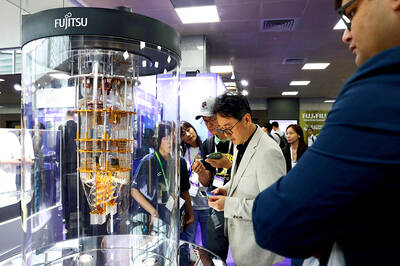
Visitors look at a 64-qubit superconducting quantum computer on display at the Fujitsu booth at the Semicon Taiwan trade show in Taipei yesterday.

Silicon photonics would play a dominant role next year and make chip-level co-packaged optics (CPO) packaging possible, Taiwan Semiconductor Manufacturing Co (TSMC, 台積電) said yesterday. “For years, critics questioned the reliability of CPO. The doubts are being thoroughly dismantled by real-world data and market validation,” TSMC vice president of advanced packaging technology development K.C. Hsu (徐國晉) said at a SEMI forum in Taipei. The company is on track to enter production of CPO later this year, Hsu said in another forum arranged by Imec in Taipei yesterday, about four months after TSMC announced its progress in CPO development in May.


 RSS
RSS