

The Department of Investment Review yesterday approved six major investment cases, including a NT$9.835 billion (US $310 million) investment by US semiconductor equipment supplier Lam Research Corp in its Taiwan subsidiary, the Ministry of Economic Affairs said.
The department approved two foreign investments in Taiwan and four overseas investments by Taiwanese companies, totaling NT$12.835 billion and US$358.36 million, respectively, the ministry said in a statement.
Lam Research will invest the equivalent of NT$9.835 billion in Lam Research Taiwan to support research, development and design operations for critical equipment used in advanced semiconductor manufacturing processes, the statement said.
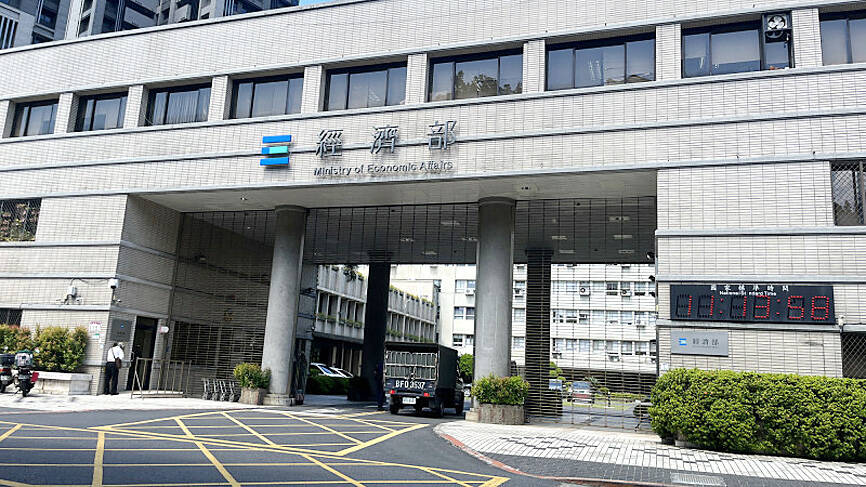
Photo: Taipei Times file
Zhen Ding Technology Holding Ltd (臻鼎科技控股), based in the Cayman Islands, will invest the equivalent of NT$3 billion in subsidiary Boardtek Electronics Corp (先豐通訊) to support printed circuit board (PCB) research and development, manufacturing and sales operations.
Meanwhile, among the companies approved to invest abroad was Taiwanese semiconductor company Nuvoton Technology Corp (新唐科技).
It will invest 15 billion yen (US$94.36 million) in Nuvoton Technology Corp Japan for integrated circuit (IC) product design, development and manufacturing.
In addition, YMA Corp (源川國際) will invest US$60 million in its US subsidiary, YMA (TX) Inc, to manufacture solid-state batteries and drone-related components.
Li Yi International Investment Co (利億國際投資), a subsidiary of Hon Hai Precision Industry Co (鴻海精密), will invest the equivalent of US$57.01 million in Mitsubishi Fuso Bus Manufacturing Co to support bus manufacturing and sales operations.
Grand Health Holdings Co (宏康控股) acquired Cayman Islands-based Midas Health Co for US$147 million, indirectly obtaining shares in Taiwan-based Midas Investment Co and its subsidiary Microlife Group (百略醫學集團).
Through the acquisition, Grand Health is hoping to expand its professional medical equipment distribution channels and smart healthcare applications market, the department said.

In China’s hilly Guizhou Province, a cluster of European-style buildings complete with clock tower and multi-arched bridge emits a low, permanent hum — a clue to its unexpected identity as tech giant Huawei’s largest data center. The town-like complex is unique in design, but not in its placement. Dozens of data centers have been constructed in the southwestern province in the past few years. They are part of a government strategy that has seen much of the digital infrastructure for breakneck artificial intelligence (AI) development across China’s eastern seaboard established in the country’s less populated, rural west. The build-out is ongoing. China
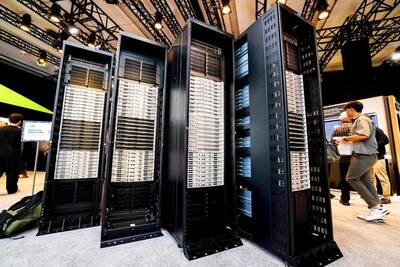
AM Intelligence, an Indian artificial intelligence (AI) infrastructure company, has ordered 9,000 Nvidia Corp Vera Rubin systems, seeking to become one of the first adopters of the advanced computing platform in Asia. Servers equipped with the rack-scale systems are slated to come online next year in southern India, the Hyderabad-based company said in a statement yesterday. Customers include major cloud service providers, AI labs and organizations aiming to develop homegrown Indian AI models, it said. Supplies of high-end Nvidia compute clusters remain tight. Demand from data centers and companies such as Microsoft Corp, Alphabet Inc’s Google and Amazon.com Inc to train AI models
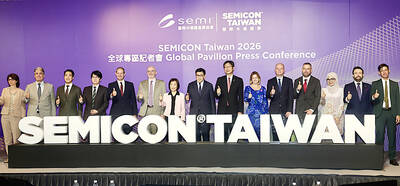
EXPANDING: Firms are accelerating commercialization of the technologies as the industry moves beyond chip-level speeds to upgrading rack-to-rack links, SEMI said Silicon photonics and copackaged optics (CPO), technologies seen as critical to meeting the surging bandwidth demands of artificial intelligence (AI) infrastructure, would be among the main themes at the Semicon Taiwan trade show, which opens on Wednesday, event organizer SEMI said yesterday. The forum runs until Friday at the Taipei Nangang Exhibition Center, with technical forums beginning today. The event is expected to set a record in terms of the number of participants, SEMI said, projecting more than 1,300 exhibitors from 65 countries across 4,300 booths and more than 100,000 attendees. Optical interconnects underpinning AI infrastructure would be one of the highlights, with
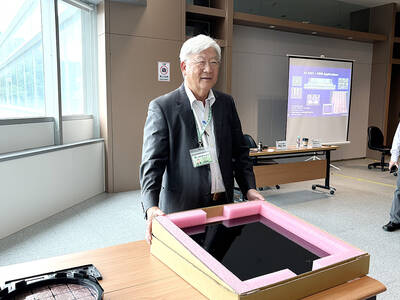
STRATEGIC GAMBLE: After developing FOPLP for six years, the chip packager has secured a 100 percent utilization rate for the new technology, its chairman said Chip packaging service provider Powertech Technology Inc (力成科技) yesterday said that its advanced fan-out panel-level packaging (FOPLP) production line has secured a 100 percent utilization rate through 2030 ahead of its scheduled volume production next year. Powertech made the remarks during the first public unveiling of its FOPLP production capabilities. The company expressed strong confidence in its long-term order pipeline, saying that robust market traction has mitigated any client acquisition concerns. “Our capacity has been fully booked by two major customers. Customers are not an issue through 2030,” Powertech chairman Tsai Du-kung (蔡篤恭) told reporters at the company’s plant in the Hsinchu


 RSS
RSS