

Taiwan-based contract chipmaker Vanguard International Semiconductor Corp (VIS, 世界先進) today said that operations at one of its facilities in Taoyuan were little affected by a fire late last night.
In a statement, VIS, in which Taiwan Semiconductor Manufacturing Co (TSMC, 台積電) owns a 19 percent stake, said the fire broke out on the top floor of its Fab 3 in Taoyuan at 11:28pm yesterday.
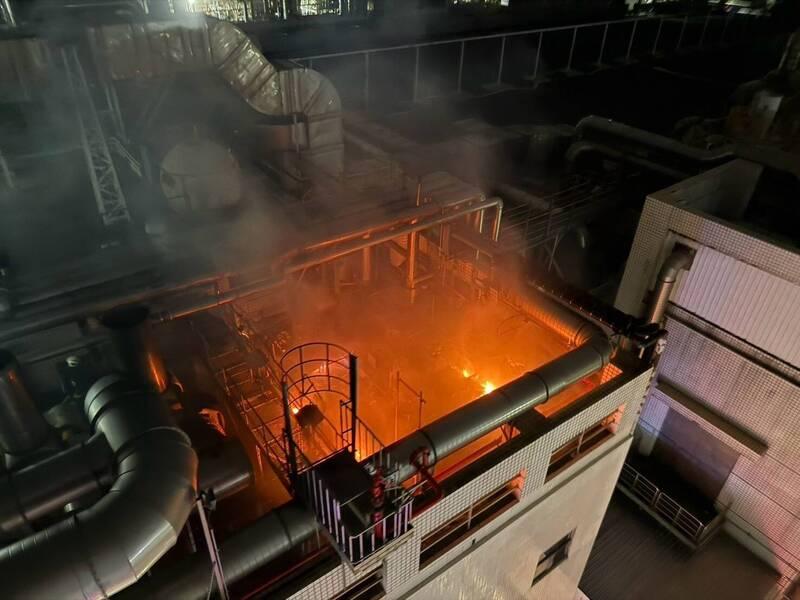
Photo courtesy of the Taoyuan Fire Department
The fire immediately activated the company's emergency response procedures and the about 200 on-site personnel evacuated safely, VIS said.
According to the Taoyuan Fire Department, firefighters brought the fire under control at 12:14am.
The department said the fire, which spanned about 20m² on the top floor of the four-story plant, was fully extinguished at 12:21am, with no reported injuries.
VIS, which specializes in mature wafer production, said staff returned to their production lines once the working environment was confirmed safe.
As the fire did not damage the plant's main facilities, power systems and production equipment, most production lines are running normally, VIS said.
The chipmaker added that the air pollution control equipment and certain connected equipment affected by the fire are expected to be reconnected by the end of this week.
VIS said it was investigating the cause of the fire and other possible impacts.
VIS currently runs five 8-inch wafer fabs worldwide, with four in Taiwan and one in Singapore.
It said it plans to roll out 3.3 million 8-inch wafers this year.
According to Taipei-based market advisory firm TrendForce, VIS is the world's ninth-largest contract chipmaker, with a market share of 0.8 percent in the first quarter of this year.
TSMC is top with 72.3 percent.

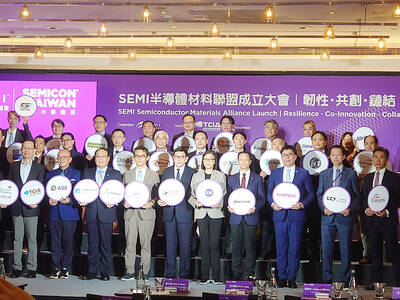
SPECIALTY SUPPLIES: Taiwan is ushering in a major shift in industrial upgrades and a local alliance will reinforce supply chain resilience, SEMI president Terry Tsao said SEMI Taiwan launched a semiconductor materials alliance yesterday to fortify industry resilience, capitalizing on surging domestic demand fueled by advanced nodes and next-generation packaging. Taiwan has been the world’s largest semiconductor materials consumer for 16 years in a row, the industry association said. Taiwan purchased about US$21.7 billion of semiconductor materials last year, driven by artificial intelligence (AI)-related demand, SEMI data showed. The spending accounted for 30 percent of global semiconductor materials consumption, totaling US$73.2 billion, the data showed. “Demand for specialty gases, chemicals and key raw materials are rising in Taiwan, fueled by the technology advancements to 2-nanometer and advanced packaging technologies,” SEMI
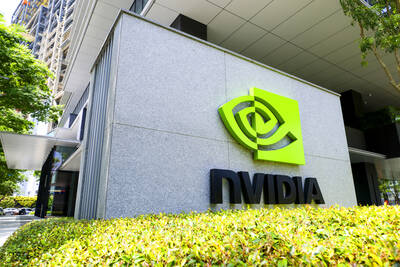
HAND-IN-HAND: Nvidia’s inability to hold the line on prices reflects how much leverage memorychip makers have amid the surge in demand for AI infrastructure Some of Nvidia Corp’s biggest customers have been told that the prices of servers containing its artificial intelligence (AI) chips are going up more than 15 percent in many cases with memory costs soaring. The price hikes would go into effect on systems shipped early next year and impact systems including those with the flagship Vera Rubin and Grace Blackwell chips, people familiar with the process said on condition of anonymity. The increases would depend on the generation of Nvidia chips and the memory configurations, they said. Companies who build the servers under contract for large data center operators such as Microsoft

YouTube is offering millions of dollars to popular channels if they upload their videos to the site exclusively for a certain period of time, in an effort to halt Netflix Inc’s pursuit of its biggest stars, people familiar with the conversations said. The payment would come in a couple of different forms. YouTube has discussed directly financing some programs, and it has also offered to allot a portion of major brand deals to creators. Although YouTube has not finalized deals with any creators, it is close an agreement with several partners, said the people, who declined to be identified because
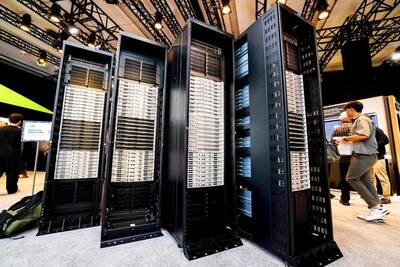
AM Intelligence, an Indian artificial intelligence (AI) infrastructure company, has ordered 9,000 Nvidia Corp Vera Rubin systems, seeking to become one of the first adopters of the advanced computing platform in Asia. Servers equipped with the rack-scale systems are slated to come online next year in southern India, the Hyderabad-based company said in a statement yesterday. Customers include major cloud service providers, AI labs and organizations aiming to develop homegrown Indian AI models, it said. Supplies of high-end Nvidia compute clusters remain tight. Demand from data centers and companies such as Microsoft Corp, Alphabet Inc’s Google and Amazon.com Inc to train AI models


 RSS
RSS