

Automated optical inspection equipment supplier V5 Technologies Co (倍利科技) yesterday said revenue growth is expected to accelerate this quarter and next quarter, as the artificial intelligence (AI) boom drives demand for advanced packaging inspection tools.
The growth momentum is expected to extend into the third quarter next year amid strong demand for its inspection equipment used in advanced chip-on-wafer-on-substrate (CoWoS) packaging by outsourced semiconductor assembly and test (OSAT) and foundry companies, V5 Technologies said.
“Advanced packaging technology is in high demand as it helps the semiconductor industry solve an economic issue and break through a technology bottleneck,” V5 chairman Quincy Lin (林坤禧) told an earnings conference in Taipei.
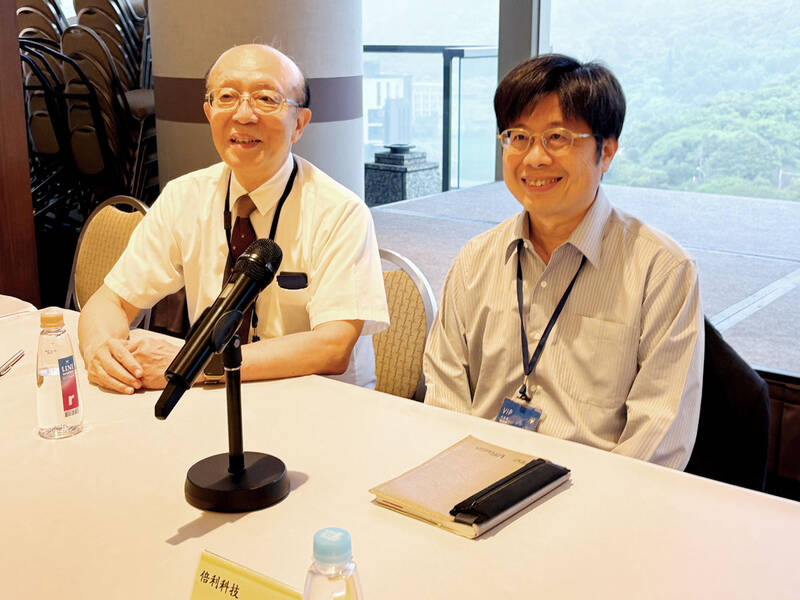
Photo: Lisa Wang, Taipei Times
“As advanced [AI] processors can cost up to US$10 million each, factories must detect and fix mistakes throughout the production process [to maintain good yields], leading to a significant increase in demand for inspection equipment,” Lin said.
Lin’s remarks come as Taiwan Semiconductor Manufacturing Co (台積電), the world’s biggest contract chipmaker and CoWoS capacity supplier, is outsourcing CoWoS production to other firms due to strong demand, while ASE Technology Holding Co (日月光投控), the world’s biggest OSAT company, has increased its capital expenditure to a record US$10.5 billion for this year.
A CoWoS production line with installed monthly production of 10,000 wafers requires 8 to 12 units of inspection equipment, V5 Technologies president Michael Huang (黃建中) said.
The company’s contract liabilities — which represent its obligations to deliver equipment to customers after receiving payments — jumped 21 percent to NT$993 million (US$31.09 million) last quarter from NT$820 million in the quarter before, indicating a robust revenue growth outlook, V5 Technologies said.
In the second quarter, the company made NT$735 million in revenue, up 7.5 percent from NT$684 million in the first quarter and rising 68 percent from NT$437 million a year earlier.
Net profit expanded 15 percent quarter-on-quarter and 111 percent year-on-year to a historical high of NT$236 million, with earnings per share rising to NT$5.18, from NT$4.92 in the prior quarter and NT$2.68 a year ago.
Gross margin improved to 60 percent from 59 percent in the previous quarter, but dropped from 62 percent a year ago.

E.Sun Financial Holding Co (玉山金控) is to formally merge with Mercuries Life Insurance Co (三商美邦人壽) on Sept. 1, creating Taiwan’s fifth-largest listed financial holding company by assets and paving the way for capital injections totaling NT$22 billion (US$683.91 million) to shore up the insurer’s finances, top executives said yesterday. “The first priority after the merger will be to bring the insurer back to health through capital injections,” E.Sun Financial chairman Joseph Huang (黃男州) told a news conference in Taipei ahead of a company earnings call. E.Sun would inject NT$16 billion into Mercuries Life next month, followed by another NT$6 billion next year,
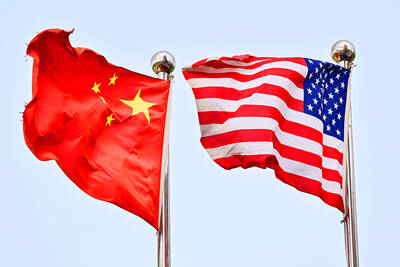
RIVAL BLOCS: Kazakhstan has signed on to the US’ and China’s AI frameworks; a US official said it was difficult to see how a country can be trusted while in a competing pact The US is preparing to tell dozens of countries they must pick sides in the artificial intelligence (AI) race with China, warning they would be excluded from a US-led AI coalition if they also sign up for Beijing’s competing framework, according to a US official and an internal draft reviewed by Reuters. Washington last year launched the Pax Silica initiative aimed at securing supply chains for AI models, semiconductors and critical minerals, amid a fierce technology rivalry with Beijing. About two dozen countries have joined, including Kazakhstan, a key potential source of critical minerals that has also joined China’s coalition,
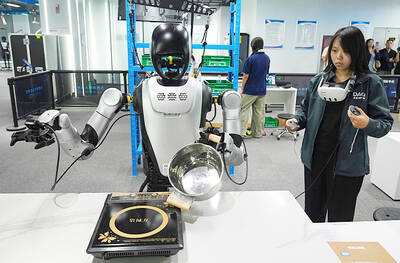
Taiwan and other technology democracies have a "golden but narrowing" three-to-five-year window to lay the foundations for an advanced robotics supply chain outside China, particularly for humanoid robots, a Taiwan-based researcher said yesterday. A report released on Monday by the Research Institute for Democracy, Society and Emerging Technology (DSET) examines China-West competition in physical artificial intelligence (AI) and Taiwan’s potential role in developing alternatives to Chinese robot supply chains. Humanoid robots remain unproven, meaning China’s lead in shipments currently has a limited impact on the real economy, Nathanael Cheng (鄭秉信), a policy analyst in the DSET Economic Security Program, said in a
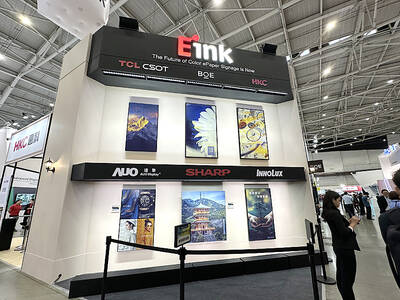
E-PAPER TRANSITION: Increasing memory prices have caused customers to postpone new product launches, with the firm expecting a later peak season this year E Ink Holdings Inc (元太科技), the world’s biggest e-paper display supplier, yesterday revised downward its revenue growth forecast for this year to between 10 and 15 percent, from the 20 to 25 percent it previously estimated, as surging memory prices are hurting demand for its e-readers and e-notes. The company had expected a transition from monochrome color e-paper displays to color displays used in e-readers and e-notes to continue this year. However, rapidly increasing memory prices have caused customers to postpone new product launches, while demand for models from previous generations has also dwindled due to higher prices, E Ink said. That created


 RSS
RSS