

HSBC Bank (Taiwan) Ltd has collaborated with the British Chamber of Commerce in Taipei (BCCTaipei) to become the first enterprise in Taiwan to join the Hidden Disabilities Sunflower program, reinforcing its support for customers with non-visible disabilities.
Starting Aug. 18, all 26 HSBC branches across Taiwan offer Sunflower wristbands to customers who may benefit from additional assistance, enabling them to access appropriate support without disclosing personal details. The initiative reflects HSBC’s commitment to creating a welcoming and accessible environment, while helping raise public awareness and understanding of hidden disabilities.
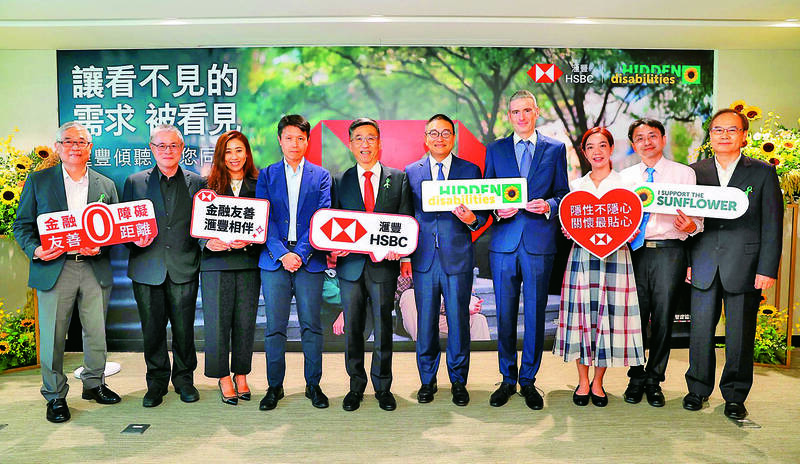
Photo courtesy of HSBC
“HSBC has long been committed to a customer-centric approach. Across markets such as the UK, Hong Kong, the UAE and Singapore, HSBC has established strong collaborations with Hidden Disabilities Sunflower. We’re honored to be the first company in Taiwan to join the program, so that every customer visiting HSBC feels valued, welcomed and supported, with the concept of ‘Treat Customer Fairly (TCF)’ embedded in our day-to-day service,” HSBC Taiwan CEO and Head of Banking Adam Chen said.
Chen added that the initiative also aligns with the Financial Supervisory Commission’s newly launched ‘Giving Back to Society by Financial Institutions’ program, and HSBC hopes to lead by example — encouraging others to help build a more inclusive and supportive financial environment.
Hidden disabilities — such as cognitive or emotional challenges, or chronic pain — can be difficult to identify and are often misunderstood. The Hidden Disabilities Sunflower provides a discreet way for individuals to indicate that they have a non-visible disability and may benefit from extra support, for example by wearing a Sunflower lanyard or accessory, without disclosing personal details.
“We’re delighted to welcome the announcement that HSBC is the first business in Taiwan to launch the Hidden Disabilities Sunflower, supporting both staff and customers with non-visible disabilities. The Sunflower helps foster a culture of disability inclusion by raising awareness of the barriers that people with non-visible disabilities can face in their everyday lives. This milestone demonstrates HSBC’s commitment to creating a more inclusive and accessible banking experience, where individuals can feel understood, respected and supported. We’re proud to work with HSBC and look forward to the positive impact in Taiwan,” Hidden Disabilities Sunflower CEO Paul White said.
In addition to offering Sunflower wristbands in branches for those who need them, all HSBC branch staff in Taiwan have completed specialized training and will wear Sunflower pins to signal a welcoming and supportive service culture. Staff will apply four core service principles — no assumptions, proactive enquiry, maintaining friendliness and focused listening — to tailor assistance to individual needs and help ensure fair treatment in every customer interaction.
The announcement event, held on Monday at HSBC Taiwan’s Taipei branch, brought together guests from industry, government and academia to mark the launch and advocate for greater awareness of hidden disabilities. Attendees included Taipei City Government Deputy Secretary-General Wang Chung-pin, British Office Taipei Director of Trade and Investment Joel Derbyshire and BCCTaipei CEO Vicki Wu. The event also featured two leading medical experts on hidden disabilities, who shared the daily dilemmas and challenges faced by individuals with non-visible disabilities and called for a more diverse and inclusive environment.
Underscoring HSBC’s commitment to TCF and leadership accountability, HSBC Taiwan’s three independent directors also attended the announcement event and conducted a site visit to the branch on Monday. They reviewed the bank’s accessibility measures — including accessible ATMs and communications support such as sign language interpretation and real-time transcription services — and recognized colleagues’ efforts in fostering a customer-centric culture.

E.Sun Financial Holding Co (玉山金控) is to formally merge with Mercuries Life Insurance Co (三商美邦人壽) on Sept. 1, creating Taiwan’s fifth-largest listed financial holding company by assets and paving the way for capital injections totaling NT$22 billion (US$683.91 million) to shore up the insurer’s finances, top executives said yesterday. “The first priority after the merger will be to bring the insurer back to health through capital injections,” E.Sun Financial chairman Joseph Huang (黃男州) told a news conference in Taipei ahead of a company earnings call. E.Sun would inject NT$16 billion into Mercuries Life next month, followed by another NT$6 billion next year,
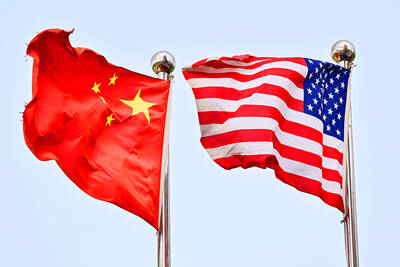
RIVAL BLOCS: Kazakhstan has signed on to the US’ and China’s AI frameworks; a US official said it was difficult to see how a country can be trusted while in a competing pact The US is preparing to tell dozens of countries they must pick sides in the artificial intelligence (AI) race with China, warning they would be excluded from a US-led AI coalition if they also sign up for Beijing’s competing framework, according to a US official and an internal draft reviewed by Reuters. Washington last year launched the Pax Silica initiative aimed at securing supply chains for AI models, semiconductors and critical minerals, amid a fierce technology rivalry with Beijing. About two dozen countries have joined, including Kazakhstan, a key potential source of critical minerals that has also joined China’s coalition,
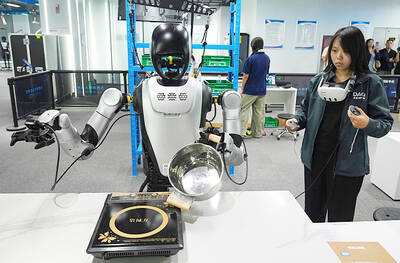
Taiwan and other technology democracies have a "golden but narrowing" three-to-five-year window to lay the foundations for an advanced robotics supply chain outside China, particularly for humanoid robots, a Taiwan-based researcher said yesterday. A report released on Monday by the Research Institute for Democracy, Society and Emerging Technology (DSET) examines China-West competition in physical artificial intelligence (AI) and Taiwan’s potential role in developing alternatives to Chinese robot supply chains. Humanoid robots remain unproven, meaning China’s lead in shipments currently has a limited impact on the real economy, Nathanael Cheng (鄭秉信), a policy analyst in the DSET Economic Security Program, said in a
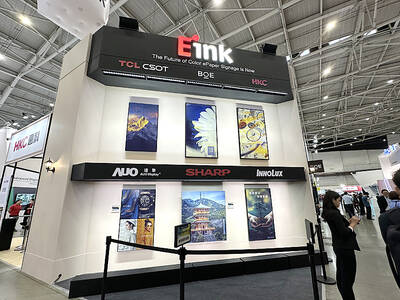
E-PAPER TRANSITION: Increasing memory prices have caused customers to postpone new product launches, with the firm expecting a later peak season this year E Ink Holdings Inc (元太科技), the world’s biggest e-paper display supplier, yesterday revised downward its revenue growth forecast for this year to between 10 and 15 percent, from the 20 to 25 percent it previously estimated, as surging memory prices are hurting demand for its e-readers and e-notes. The company had expected a transition from monochrome color e-paper displays to color displays used in e-readers and e-notes to continue this year. However, rapidly increasing memory prices have caused customers to postpone new product launches, while demand for models from previous generations has also dwindled due to higher prices, E Ink said. That created


 RSS
RSS