

A version of Chinese start-up DeepSeek’s (深度求索) flagship artificial intelligence (AI) model is by far the least expensive to run on benchmark tests among well-known models globally and more than 100 times cheaper to run than Anthropic PBC’s Claude Fable 5, San Francisco-based Artificial Analysis said.
DeepSeek’s R1 model became a global sensation early last year, triggering a sell-off in global technology stocks and raising questions about the large amounts US companies were spending on AI.
The start-up officially released its V4-Flash model on Friday, its latest attempt to regain momentum by doing what it is best known for — offering ultra-low-cost AI alternatives.
Photo: Reuters
The V4-Flash charges US$0.14 per million input tokens and US$0.28 per million output tokens, Artificial Analysis said.
A token is a unit of data used to measure AI usage.
The research firm estimated V4-Flash’s average cost at US$0.03 per test, compared with US$0.86 for Kimi K3 from Chinese rival Moonshot AI Technology Co (月之暗面), US$1.86 for OpenAI’s GPT-5.6 Sol and US$3.15 for Claude Fable 5.
The comparison provides a more realistic measure of value than pricing alone because it accounts for the amount of data a model must process and generate to complete a task. A model with low headline price can still prove expensive if it requires significantly more steps to produce an answer.
DeepSeek once commanded most of the headlines about Chinese AI development, but was quickly besieged by many domestic rivals including other start-ups such as Moonshot, MiniMax Group Inc (稀宇科技) and Z.AI Co (智譜), as well as tech giants like ByteDance Ltd (字節跳動) and Alibaba Group Holding Ltd (阿里巴巴). All are vying with US tech firms for global adoption, targeting businesses seeking cheaper ways to deploy AI at scale.
Artificial Analysis said DeepSeek’s V4-Flash model scored 50 out of 100 on its Intelligence Index, which combines results from nine benchmarks spanning coding, reasoning and workplace-style assignments.
That is the same score as Google’s Gemini 3.6 Flash, and one point behind Meta Platforms Inc’s Muse Spark 1.1 and GLM-5.2 from Z.AI, which is also known as Zhipu.
However, Moonshot’s Kimi K3 scored a 57 while Anthropic’s Claude Opus 5, Fable 5, and OpenAI GPT-5.6 scored nine or more points higher.
DeepSeek is also preparing a more powerful version of its model, called V4-Pro. It has not given a date for that version’s official release.
Separately, Alibaba yesterday unveiled its largest and most capable AI model to date, Qwen3.8-Max, which is not far behind in size when compared with an offering from domestic rival Moonshot AI launched last month.
This year's Fortune Global 500 ranking listed Taiwan Semiconductor Manufacturing Co (TSMC, 台積電) among its top 100 companies for the first time. TSMC climbed 44 places to 82nd, with revenue of US$122.26 billion, a report published on Tuesday by New York-based Fortune magazine said. TSMC's entry into the top 100 for the first time underscored how surging demand for advanced chips is reshaping the scale and influence of companies in Asia and around the world, the report said. Besides TSMC, Taiwanese electronics manufacturer Wistron Corp (緯創) climbed 298 places to 198th on this year's list — the largest jump among all companies ranked
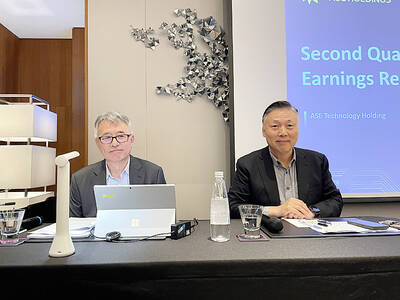
‘STRONGER DEMAND’ : Company executives said that a lot of new investments are needed, although there are capacity bottlenecks for automation and innovation ASE Technology Holding Co (日月光投控) yesterday increased its capital expenditure for this year to US$10.5 billion, up 23.5 percent from its previous budget of US$8.5 billion, amid robust demand for artificial intelligence (AI) applications. The world’s largest supplier of packaging and testing services plans to allocate about 70 percent of the increased spending to capacity expansion, mainly for leading-edge advanced packaging (LEAP) technology, with LEAP revenue forecast to exceed US$3.5 billion this year, ASE said. “Obviously we are seeing a stronger demand ... from not just customers, but also our foundry partner,” ASE chief financial officer Joseph Tung (董宏思) told an earnings
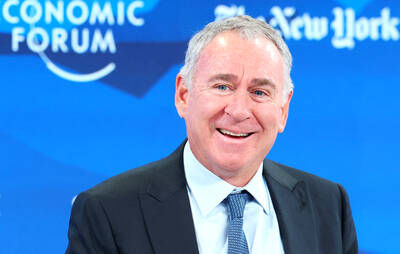
When rival hedge funds face catastrophic losses, billionaire investor Ken Griffin has a habit of identifying opportunities and showing up with a checkbook. Citadel’s founder last week reprised his role as one of Wall Street’s rescue buyers, stepping in to salvage California hedge fund Situational Awareness as it buckled under souring bets on artificial intelligence (AI) stocks. Amid market rumblings that at least one firm was in trouble, Griffin, 57, assembled his top lieutenants to investigate, five people with knowledge of the matter said. By Wednesday morning, Citadel executives had reached out to Situational Awareness, and Griffin spoke directly with Leopold Aschenbrenner,
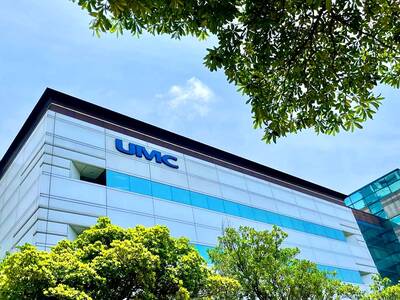
RUNNING HOT: The contract chipmaker is planning to both deepen and broaden its capacity, with more facility space and more advanced chips on offer United Microelectronics Corp (UMC, 聯電), the world’s fourth-largest contract chipmaker, plans to invest US$5 billion over the next two to three years to expand silicon photonics and advanced packaging capacity as artificial intelligence (AI)-driven demand accelerates. The company views silicon photonics and advanced packaging as vital businesses to its growth, and expects AI-related revenue to reach about US$300 million this year and surpass US$1 billion in three years, it said yesterday. “We actually feel pretty optimistic about advanced packaging, and that’s why we started facility deployment,” UMC CEO Jason Wang (王石) said at an earnings conference. “The overall [advanced packaging] addressable market


 RSS
RSS