

Japan’s auto and chip manufacturers yesterday halted production at plants on the island of Kyushu struck by a deadly earthquake that disrupted operations in a region key to the supply chains of both industries.
Toyota Motor Corp said it would halt operations at three plants in the region through tomorrow as it weighed the quake’s effects on suppliers and logistics, just hours after resuming production it had stopped the previous day.
Tuesday’s 7.1-magnitude quake in the Kumamoto region damaged roads and knocked out power to thousands of homes, raising concerns about supply chains and logistics and affecting other manufacturers besides Toyota.
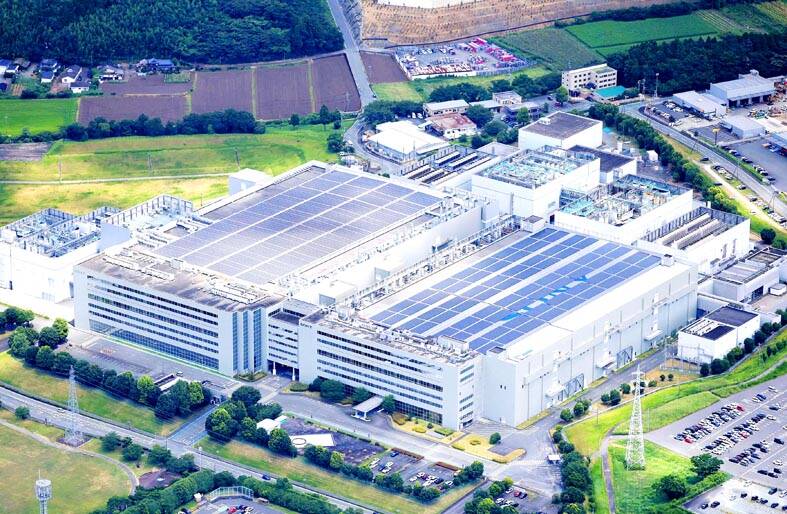
Photo: Kyodo via Reuters
“The situation, including aftershocks and recovery efforts, is changing daily,” the world’s biggest automaker said in a statement about the suspensions at its Miyata, Kanda and Kokura plants from yesterday untiltomorrow.
Kyushu is a key base for Japan’s automotive and semiconductor industries, which account for roughly two-fifths of regional industrial output, the Japanese Ministry of Economy, Trade and Industry says.
However, factory shutdowns at automakers and chip manufacturers appeared to be driven largely by precautions for workers, rather than by damage to production facilities, analysts said.
“The negative impact on production activity and supply chains will likely be relatively temporary,” Nomura Research Institute executive economist Takahide Kiuchi said.
By contrast, the 2011 Tohoku earthquake temporarily crippled part of Japan’s auto supply chain, disrupting the industry globally.
Toyota makes a wide range of Lexus luxury models at its Miyata plant, which has annual production capacity of about 430,000 vehicles, and hybrid car units and engines at the other two.
Honda Motor Co said it would extend an operation suspension at its Kumamoto motorcycle plant, also until tomorrow, to allow repairs to quake-damaged parts of the factory.
Kumamoto has attracted chip investment from leading players such as Taiwan Semiconductor Manufacturing Co (TSMC, 台積電) over the past few years.
The world’s largest contract chipmaker evacuated staff at the Kumamoto fab of its Japanese unit, Japan Advanced Semiconductor Manufacturing Inc, following the quake.
All personnel were safe, TSMC said on Tuesday, adding that it is inspecting facilities and assessing the quake impact.
Chipmaker Renesas Electronics Corp said it halted operations at two Kumamoto plants, which had reported fallen ceiling panels, cracks in walls and some water leaks.
Nissan Motor Co said it had no plans for a suspension at its plant in Fukuoka, north of Kumamoto, where it makes the Rogue sports utility vehicle, known locally as the X-Trail, but added that it was monitoring its supplier and logistics situation.
Sony Group Corp said it had evacuated employees and halted operations at its semiconductor-making facilities in Kumamoto.
Tokyo Electron Ltd said it had not confirmed any major damage at two plants there.
Kiuchi said the earthquake’s economic impact was likely to be smaller than that of recent major Japanese quakes, since it caused relatively slight damage to homes and infrastructure.
Losses were likely to keep below ¥1 trillion (US$6.12 billion), he said.

Qualcomm Inc, the biggest maker of smartphone processors, plans to increase prices by a percentage in the double digits, a move that is likely to ripple through much of the tech industry. The San Diego-based company sent a letter to customers on Friday informing them of price hikes, according to a copy of the document seen by Bloomberg News. The rise would go into effect for products shipped after Sept. 1, Qualcomm said. The company said it had exhausted its ability to absorb higher costs from suppliers and had made attempts to secure alternative components from new sources. Like the rest of the

When fund managers in Taiwan arrive at work each morning, they must lock away their mobile phones before the stock and bond markets open, and cannot retrieve their devices until the end of the trading day. The strict rules have been in place for about two years, and some investment firms are pushing for change. The Securities Investment Trust and Consulting Association is studying a proposal to let portfolio managers use cellphones during Taiwan’s trading hours from 9am to 1:30 pm, people familiar with the matter said. The rule on mobile phones was formalized in 2024 to guard against insider
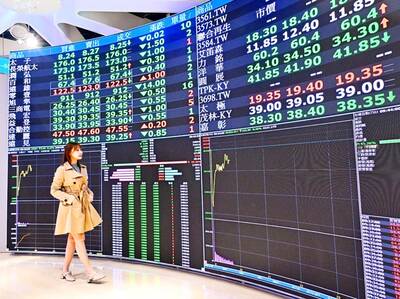
CRASH DIVE: Tech stocks across Asia are taking it in the teeth among war-induced uncertainties, worries about a bubble and more, as the TAIEX plunged precipitously The TAIEX suffered its third-largest point decline on record yesterday as investors continued a global retreat from tech shares amid concerns over the artificial intelligence (AI) boom, plunging 2,030.83 points, or 4.65 percent, to close at 41,603.36. The loss was exacerbated by a sharp selloff in global semiconductor stocks that triggered broad-based risk aversion across Asian markets, CTBC Securities Investment Service Co (中國信託證券投顧) said. The decline was driven mainly by market positioning rather than a deterioration in corporate fundamentals, CTBC said, citing the unwinding of leveraged trades and automated trading. “The selloff reflected panic in global markets, forced deleveraging and cascading program-driven selling
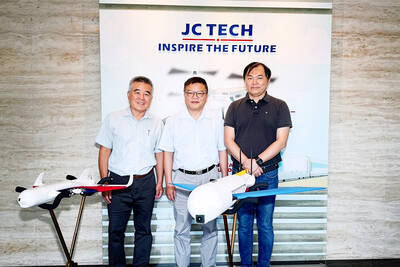
JC Tech, a Taiwanese drone systems integrator, has signed a strategic cooperation agreement with a leading international defense radar company, securing the exclusive distribution rights in Taiwan for its artificial intelligence-powered Active Electronically Scanned Array (AI AESA) Counter-Unmanned Aircraft Systems (Counter-UAS) radar solutions. Integrating the “spear” of indigenous strike drone technologies with the “shield” of advanced Counter-UAS radar capabilities, the partnership establishes Taiwan’s first fully integrated low-altitude defense platform, combining offensive operations, defensive protection and systems integration. The agreement also includes an Original Design Manufacturing (ODM) partnership to manufacture Counter-UAS radar systems in Taiwan, combining Taiwan-developed drone technologies with locally manufactured


 RSS
RSS