

The TAIEX suffered its third-largest point decline on record yesterday as investors continued a global retreat from tech shares amid concerns over the artificial intelligence (AI) boom, plunging 2,030.83 points, or 4.65 percent, to close at 41,603.36.
The loss was exacerbated by a sharp selloff in global semiconductor stocks that triggered broad-based risk aversion across Asian markets, CTBC Securities Investment Service Co (中國信託證券投顧) said.
The decline was driven mainly by market positioning rather than a deterioration in corporate fundamentals, CTBC said, citing the unwinding of leveraged trades and automated trading.
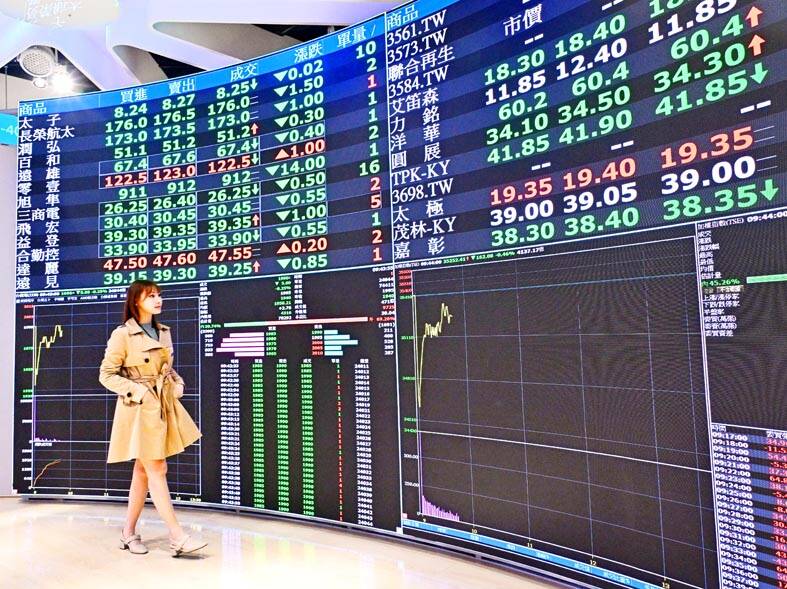
Photo: Fang Pin-chao, Taipei Times
“The selloff reflected panic in global markets, forced deleveraging and cascading program-driven selling that created a temporary liquidity imbalance, rather than any meaningful deterioration in corporate earnings or the long-term outlook for technology companies,” it said.
The rout spread across the region, with South Korea’s KOSPI — the hardest-hit market — slumping 10.84 percent, while Japan’s Nikkei 225 fell 3.95 percent.
In Taipei, the technology sector bore the brunt of the selling, with Taiwan Semiconductor Manufacturing Co (TSMC, 台積電), the world’s largest producer of advanced chips, down 2.98 percent despite the company raising its sales outlook and signaling continued strong demand.
Selling quickly spread beyond chipmakers, affecting memory manufacturers, silicon wafer suppliers, IC designers and other AI-related stocks. Turnover did not reach levels typically associated with a capitulation, with trading volume reaching NT$809.482 billion (US$25 billion), Taiwan Stock Exchange data showed.
Foreign investors led the selloff, dumping a net NT$87.56 billion of Taiwanese shares on the main board, and proprietary traders recorded net selling of NT$31.73 billion, while mutual funds were net buyers of NT$2.35 billion, the exchange’s data showed.
The retreat reflected growing investor concerns over the sustainability of the AI-driven rally, according to a Bank of America global fund manager survey, which showed that while confidence in markets remained resilient, worries over crowded positions in semiconductor and AI-related stocks had risen sharply.
The survey found that 82 percent of fund managers viewed the long semiconductor trade as overcrowded, while about 45 percent cited AI as a potential bubble risk — the biggest tail risk identified by investors, ahead of concerns over “a second wave of inflation,” cited by 26 percent.
JP Morgan Asset Management’s Taiwan unit said the findings highlight a widening gap among investors: confidence in AI’s long-term growth prospects remains strong, but institutions are becoming increasingly cautious about stretched valuations and concentrated positions that could magnify market swings.
The selloff underscores a key challenge for Taiwan’s market: while AI demand continues to support economic growth and corporate earnings, investors are becoming increasingly focused on whether the pace of investment and current valuations are sustainable, it said.

Qualcomm Inc, the biggest maker of smartphone processors, plans to increase prices by a percentage in the double digits, a move that is likely to ripple through much of the tech industry. The San Diego-based company sent a letter to customers on Friday informing them of price hikes, according to a copy of the document seen by Bloomberg News. The rise would go into effect for products shipped after Sept. 1, Qualcomm said. The company said it had exhausted its ability to absorb higher costs from suppliers and had made attempts to secure alternative components from new sources. Like the rest of the
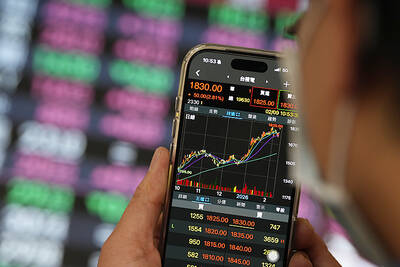
When fund managers in Taiwan arrive at work each morning, they must lock away their mobile phones before the stock and bond markets open, and cannot retrieve their devices until the end of the trading day. The strict rules have been in place for about two years, and some investment firms are pushing for change. The Securities Investment Trust and Consulting Association is studying a proposal to let portfolio managers use cellphones during Taiwan’s trading hours from 9am to 1:30 pm, people familiar with the matter said. The rule on mobile phones was formalized in 2024 to guard against insider
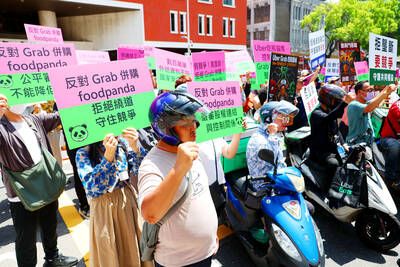
LABOR CONCERNS: Delivery workers protested outside the commission’s office urging the regulator to reject the acquisition over concerns it would stifle competition The Fair Trade Commission (FTC) yesterday extended its review of Grab Holdings Ltd’s proposed acquisition of Delivery Hero SE’s Foodpanda business in Taiwan to Oct. 27, saying more time was needed to assess the potential impact of Uber Technologies Inc’s 13 percent stake in Grab on competition. In accordance with the Fair Trade Act (公平交易法), the commission extended the review period by 60 working days, moving the deadline from Wednesday next week to Oct. 27, it said in a statement. The commission said that questions remain over whether Uber’s stake and 3.7 percent voting rights in Grab could affect Uber
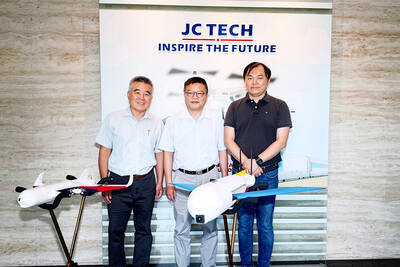
JC Tech, a Taiwanese drone systems integrator, has signed a strategic cooperation agreement with a leading international defense radar company, securing the exclusive distribution rights in Taiwan for its artificial intelligence-powered Active Electronically Scanned Array (AI AESA) Counter-Unmanned Aircraft Systems (Counter-UAS) radar solutions. Integrating the “spear” of indigenous strike drone technologies with the “shield” of advanced Counter-UAS radar capabilities, the partnership establishes Taiwan’s first fully integrated low-altitude defense platform, combining offensive operations, defensive protection and systems integration. The agreement also includes an Original Design Manufacturing (ODM) partnership to manufacture Counter-UAS radar systems in Taiwan, combining Taiwan-developed drone technologies with locally manufactured


 RSS