

Artificial intelligence (AI) server maker Quanta Computer Inc (廣達電腦) is seeking to raise as much as US$2.19 billion from a sale of global depositary shares, in an offering that could be the biggest Taiwanese stock sale in 19 years.
The Nvidia Corp partner is offering 49 million securities at US$43.91 to US$44.77 apiece, according to terms of the deal seen by Bloomberg News.
That reflects a 6 to 7.8 percent discount to the company’s closing share price of NT$309.50 yesterday in Taipei.
Photo courtesy of Quanta Computer Inc
Quanta is tapping the market just as investors are rotating out of chip shares amid growing skepticism over whether massive AI spending can deliver sufficient returns. The company’s shares have advanced nearly 16 percent over the past year, lagging behind the roughly 73 percent advance in Taiwan’s benchmark TAIEX.
Even so, the deal extends the wave of capital raising by Taiwanese companies along the AI supply chain. Earlier this month, Unimicron Technology Corp (欣興電子), an Nvidia supplier, raised US$1.36 billion from a sale of global depositary shares.
Quanta’s issuance of global depositary shares also comes after the pipeline for convertible bonds — a popular instrument among Taiwanese companies seeking to fund the infrastructure needs of the AI boom — faced challenges amid volatility in foreign-exchange markets. The swings have hampered hedging structures typically embedded in such offerings, people familiar with the matter have said.
Still, Nvidia server maker Wiwynn Corp (緯穎科技) in March sold US$2 billion in bonds that can be converted into stock.
Quanta plans to use proceeds from the sale to buy raw materials in foreign currencies, the terms showed.
The deal would be the largest offering of Taiwanese shares in US dollar terms since Royal Philips NV sold US$2.56 billion of Taiwan Semiconductor Manufacturing Co’s (台積電) American depositary receipts in 2007.
With the offering, Quanta and certain shareholders, directors and executive officers are subject to a 90-day lockup. Citigroup Inc and UBS Group AG are arranging the transaction.
Qualcomm Inc, the biggest maker of smartphone processors, plans to increase prices by a percentage in the double digits, a move that is likely to ripple through much of the tech industry. The San Diego-based company sent a letter to customers on Friday informing them of price hikes, according to a copy of the document seen by Bloomberg News. The rise would go into effect for products shipped after Sept. 1, Qualcomm said. The company said it had exhausted its ability to absorb higher costs from suppliers and had made attempts to secure alternative components from new sources. Like the rest of the

When fund managers in Taiwan arrive at work each morning, they must lock away their mobile phones before the stock and bond markets open, and cannot retrieve their devices until the end of the trading day. The strict rules have been in place for about two years, and some investment firms are pushing for change. The Securities Investment Trust and Consulting Association is studying a proposal to let portfolio managers use cellphones during Taiwan’s trading hours from 9am to 1:30 pm, people familiar with the matter said. The rule on mobile phones was formalized in 2024 to guard against insider
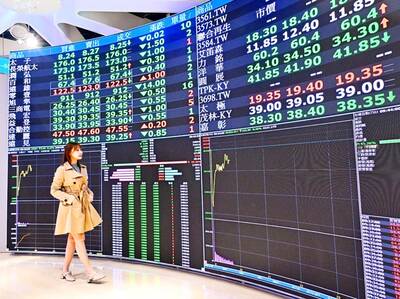
CRASH DIVE: Tech stocks across Asia are taking it in the teeth among war-induced uncertainties, worries about a bubble and more, as the TAIEX plunged precipitously The TAIEX suffered its third-largest point decline on record yesterday as investors continued a global retreat from tech shares amid concerns over the artificial intelligence (AI) boom, plunging 2,030.83 points, or 4.65 percent, to close at 41,603.36. The loss was exacerbated by a sharp selloff in global semiconductor stocks that triggered broad-based risk aversion across Asian markets, CTBC Securities Investment Service Co (中國信託證券投顧) said. The decline was driven mainly by market positioning rather than a deterioration in corporate fundamentals, CTBC said, citing the unwinding of leveraged trades and automated trading. “The selloff reflected panic in global markets, forced deleveraging and cascading program-driven selling
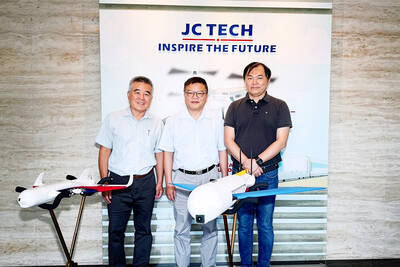
JC Tech, a Taiwanese drone systems integrator, has signed a strategic cooperation agreement with a leading international defense radar company, securing the exclusive distribution rights in Taiwan for its artificial intelligence-powered Active Electronically Scanned Array (AI AESA) Counter-Unmanned Aircraft Systems (Counter-UAS) radar solutions. Integrating the “spear” of indigenous strike drone technologies with the “shield” of advanced Counter-UAS radar capabilities, the partnership establishes Taiwan’s first fully integrated low-altitude defense platform, combining offensive operations, defensive protection and systems integration. The agreement also includes an Original Design Manufacturing (ODM) partnership to manufacture Counter-UAS radar systems in Taiwan, combining Taiwan-developed drone technologies with locally manufactured


 RSS
RSS