

Circumventing the US Supreme Court, US President Donald Trump might have found a way to resurrect his tariff wall in a fashion that analysts say could prove more durable to legal challenges.
Last week, Trump slapped sweeping new tariffs on 60 trading partners and saw 25-percent duties take effect on Brazilian products. Both cases involved an authority that has been used to impose levies before.
Trump separately tapped an untested justification for 50-percent tariffs on many Canadian goods.
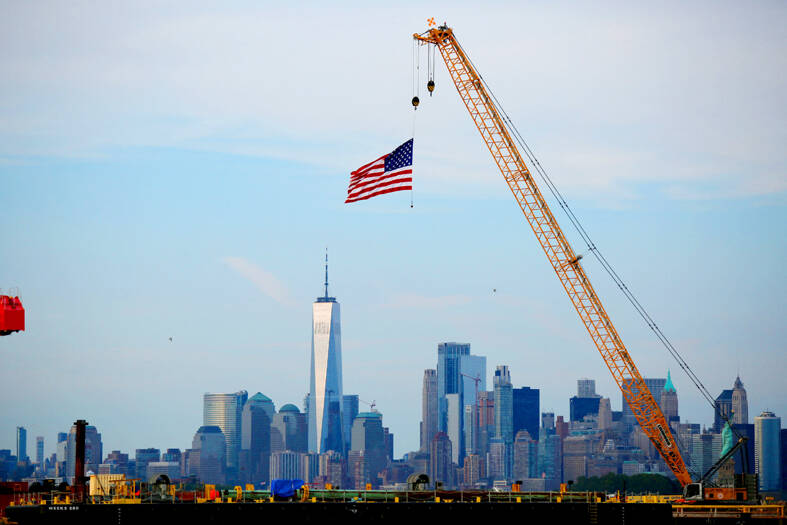
Photo: AFP
The actions and threats “underscore the president’s continued affection for tariffs, and that they are not going away as long as he is in the White House,” Asia Society Policy Institute senior vice president Wendy Cutler said.
Trump’s latest tariffs of 10 percent to 12.5 percent apply to goods from 60 economies beginning on Friday. They came after probes over forced labor concerns, under Section 301 of the Trade Act of 1974.
Cutler said this has a lower likelihood of being overridden by courts, saying Trump’s top trade official Jamieson Greer had carefully navigated procedural requirements before imposing duties.
More concerning was Trump’s targeting of Canada using the untested Section 338 of the Tariff Act of 1930, Atlantic Council international economics chair Josh Lipsky said.
The justification was Canada’s alleged discriminatory treatment of US exports, with duties effective after a month.
“That’s more tariff-as-punishment” and could signal that Washington intends to keep less conventional tools at its disposal, Lipsky said.
It is an “uncertainty generator,” Cato Institute economist Scott Lincicome said.
Trump’s newest tariffs already face legal challenges from small businesses.
As courts have earlier allowed the use of Section 301 for imposing duties, arguments against Trump’s latest salvo would likely focus on official findings that justified action, Lincicome said.
“That’s just not something that courts typically want to weigh in on,” he added.
Some said that Trump lacks such broad powers to impose sweeping tariffs.
Within months of returning to the presidency, Trump unleashed a barrage of tariffs on US trading partners.
He invoked emergency economic powers to impose a swath of these duties quickly, a move deemed illegal by the high court in February.
Trump’s sector-specific tariffs, imposed under different legal authorities on steel, automobiles and other goods, are unaffected.
Officials have launched Section 301 investigations, including on forced labor, to reinstate duties.
However, Lincicome said that past investigations were more substantive. A probe into China during Trump’s first term took a year to result in duties.
This time, probes into 60 economies including major partners such as the EU and India spanned just four months.
US tariffs are tough to undo. Former president Joe Biden, the Democrat who succeeded Trump after his first term, kept his predecessor’s tariffs on China intact.
Even if a future leader wanted to reverse Trump’s duties, revenue considerations would complicate the situation, Lipsky said.
Many countries were likely hoping the worst of trade conflict was behind them, he said, but some might have doubts.
The Trump administration has struck 19 framework or reciprocal tariff deals. Yet, threats of new duties loom with Washington investigating 16 economies including China, the EU and Japan over excess industrial capacity.
“The administration has been careful not to exceed the tariff levels agreed to in bilateral agreements,” Cutler said. “But partners are concerned that this assurance may not hold.”
Peterson Institute for International Economics senior fellow Chad Bown believes Trump is missing a chance to address bigger problems such as China’s rare earth export curbs.
Trading partners have to “fight a two-front trade war — dealing with Trump’s tariffs and China’s export restrictions — instead of just being able to focus on China,” he said.
While countries have expressed disappointment, Cutler said, there are no signs of retaliation, “knowing full well they would risk further US tariff escalation.”

HSBC yesterday announced the launch of a newly upgraded HSBC Premier proposition, aiming for the continued growth momentum in Taiwan’s affluent and high-net-worth (HNW) customer segments. Built around four pillars — Wealth, Health, Travel and International — the upgraded offering delivers an end-to-end premium experience, deepens customer relationships and engagement, and strengthens HSBC Premier’s position as a leading global brand of choice for affluent customers. “By 2030, global new wealth is expected to increase by US$124 trillion, with around one-third coming from Asia—making the region the core driver of the next wave of wealth growth,” said Kai Zhang, Head of International
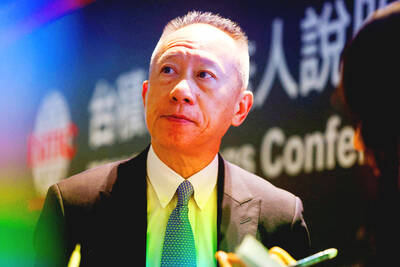
Taiwan Semiconductor Manufacturing Co (TSMC, 台積電) is adding US$100 billion to its investments in Arizona to meet strong demand from US customers and to ward off ambitious rivals, a senior executive said last week. The company, fresh off reporting expectation-beating sales and profit for the June quarter and increasing its growth forecasts, still sees challenges in fulfilling all customer orders. The artificial intelligence (AI) megatrend, as TSMC has taken to calling it, is going to drive growth for the company through at least the next few years. “We are doing everything we can, wherever we can, to expand to support the customers’
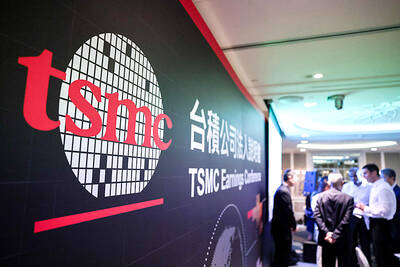
Taiwan Semiconductor Manufacturing Co (TSMC, 台積電) has held discussions with clients about chipmaking price increases of as much as 10 percent next year to cover the rising cost of manufacturing, the Nikkei reported yesterday, citing people with knowledge of the matter. The main producer for Nvidia Corp and Apple Inc began those talks last month and finalized base-price hikes this month of between 5 percent and 10 percent, the newspaper reported. The changes will take effect next year and cover both advanced and mature semiconductors, the Nikkei said. TSMC and other chipmakers are grappling with the soaring cost of a plethora of
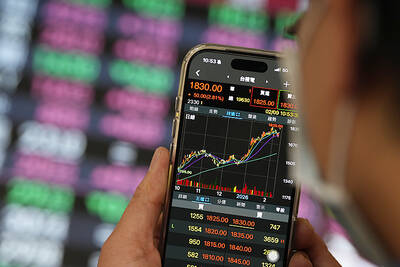
When fund managers in Taiwan arrive at work each morning, they must lock away their mobile phones before the stock and bond markets open, and cannot retrieve their devices until the end of the trading day. The strict rules have been in place for about two years, and some investment firms are pushing for change. The Securities Investment Trust and Consulting Association is studying a proposal to let portfolio managers use cellphones during Taiwan’s trading hours from 9am to 1:30 pm, people familiar with the matter said. The rule on mobile phones was formalized in 2024 to guard against insider


 RSS
RSS