

Taiwan Semiconductor Manufacturing Co (TSMC, 台積電) is adding US$100 billion to its investments in Arizona to meet strong demand from US customers and to ward off ambitious rivals, a senior executive said last week.
The company, fresh off reporting expectation-beating sales and profit for the June quarter and increasing its growth forecasts, still sees challenges in fulfilling all customer orders. The artificial intelligence (AI) megatrend, as TSMC has taken to calling it, is going to drive growth for the company through at least the next few years.
“We are doing everything we can, wherever we can, to expand to support the customers’ growth,” TSMC chief financial officer Wendell Huang (黃仁昭) said in an interview on Friday.
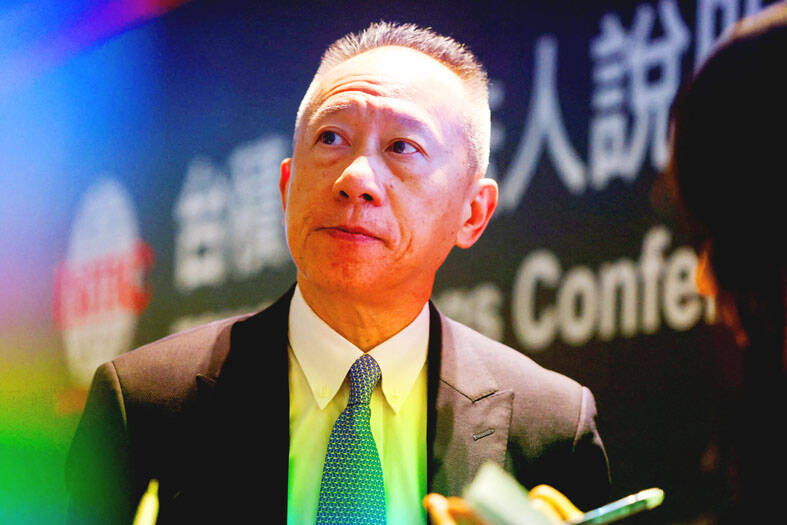
Photo: Reuters
The company faces growing competition from Intel Corp and Elon Musk’s Terafab. To that Huang added that TSMC wants to “also demonstrate that we do not intend to leave any food on the table to anybody else.”
The main chipmaker for Nvidia Corp and Apple Inc confirmed the additional investment during its earnings conference on Thursday, after Bloomberg News reported that the company’s increasing its total commitment in the US to US$265 billion as part of a larger trade deal between Washington and Taipei.
Huang said the sheer amount makes it the largest-ever foreign direct investment in the US, adding that the schedule for the completion of the total commitment will depend on the market. TSMC, which already has one chipmaking fab operational, has two more coming online by the end of this decade and will now add more facilities to its Arizona campus.
On Thursday, TSMC chief executive officer C.C. Wei (魏哲家) said the additional US$100 billion will probably lead to four more plants. That potentially will bring TSMC’s presence in Arizona to eventually include 10 chip fabrication plants and two packaging facilities.
Over the last several years, policymakers in Washington have grown increasingly concerned that the bulk of cutting-edge semiconductors — the most coveted resource in a tech-powered global economy — are produced in Taiwan: an earthquake-prone, self-governing island that China has claimed as its own and threatened to take by force.
Geopolitical considerations and a strategic decision to be closer to key AI customers in the US have also driven TSMC to steadily boost its investment plans. At the same time, the Asian company increased its capital expenditure plan for this year to at least US$60 billion.
“TSMC’s capex acceleration began in 2025, one and a half to two years after the AI cycle took off, implying share loss or demand overflow to competitors,” GF Securities Co (廣發證券) analysts said in a post-earnings note, downgrading the chipmaker as they don’t see TSMC’s margins expanding in coming quarters as the company resists aggressive pricing. Following TSMC earnings, there was a global selloff in technology stocks due to persistent and growing concerns over whether hefty AI spending can lead to meaningful returns.
Huang reiterated on Friday that while the company is expanding in the US, it will still ramp up the latest technology in Taiwan first, as developing next-generation chips requires close collaboration between the research and development teams and factories.
He also upheld the company’s previous statement that it will not use ASML Holding NV’s most cutting-edge extreme ultraviolet lithography systems — which cost upwards of 350 million euros (US$400 million) apiece — just yet, partly due to cost concerns.
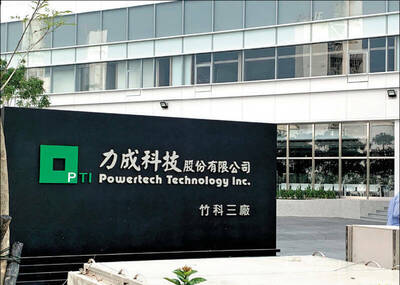
SINGAPORE PLANS: The joint venture would focus on offering technology for advanced package substrates in response to demand from an international customer Powertech Technology Inc (力成科技), a provider of memory and logic chip packaging services, on Thursday said it plans to invest US$400 million to create a new joint venture with Broadcom Inc in Singapore to cater to customer demand for advanced panel-based packaging services. The joint venture would concentrate on offering additive finer-geometry redistribution layer (RDL) technology for advanced package substrates, Powertech said in a statement after the company’s board of directors approved the deal. RDL is a crucial part of fan-out panel-level packaging (FOPLP) technology, which relies on RDL to route electrical connections beyond the physical footprint of silicon. The new investment was
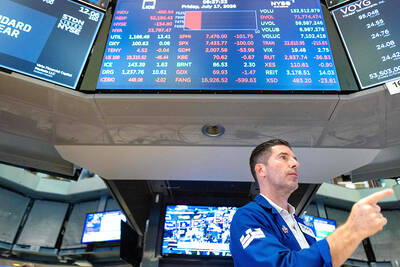
AI RETHINK: Volatility has resurfaced in AI stocks amid concerns about increased competition, possible overcapacity and whether big investments would pay off A selloff in chipmakers gathered pace last week, driving the high-profile group of stocks to a bear market on worries that the artificial intelligence (AI) spending spree is becoming harder to justify. The cohort of semiconductor powerhouses last week saw its worst week since April last year, with a key industry gauge sinking 20 percent from a record. News of a powerful Chinese AI model, Kimi K3, by start-up Moonshot AI Technology Co (月之暗面) further shook markets. Similar to when China’s DeepSeek (深度求索) announced its AI model last year, another low-cost rival to big Western AI models like ChatGPT and

HSBC yesterday announced the launch of a newly upgraded HSBC Premier proposition, aiming for the continued growth momentum in Taiwan’s affluent and high-net-worth (HNW) customer segments. Built around four pillars — Wealth, Health, Travel and International — the upgraded offering delivers an end-to-end premium experience, deepens customer relationships and engagement, and strengthens HSBC Premier’s position as a leading global brand of choice for affluent customers. “By 2030, global new wealth is expected to increase by US$124 trillion, with around one-third coming from Asia—making the region the core driver of the next wave of wealth growth,” said Kai Zhang, Head of International
ASML Holding NV plans to raise prices for its chipmaking equipment, setting up a potential clash with its biggest customer, Taiwan Semiconductor Manufacturing Co (TSMC, 台積電), The Information reported on Wednesday, citing people familiar with the matter. TSMC is already pushing back against the Dutch toolmaker’s plans, The Information reported. TSMC declined to comment. A representative for ASML pointed to comments by its chief financial officer, Roger Dassen, during its earnings call on Wednesday about pricing, but declined to comment further. ASML makes the cutting-edge extreme ultraviolet (EUV) lithography machines that are necessary for chipmakers to manufacture advanced semiconductors and is experiencing a surge


 RSS
RSS